Summary
Medicare home health cuts are now four years running, including a 1.3% aggregate cut for 2026, while the documentation needed to get paid keeps piling up.
There's a vise closing on home health, and both jaws are tightening at once. On one side, Medicare keeps cutting what it pays per patient, four years running. On the other, the documentation it demands before it pays keeps growing. Neither jaw is moving in the agency's favor.
How much has Medicare cut home health pay?
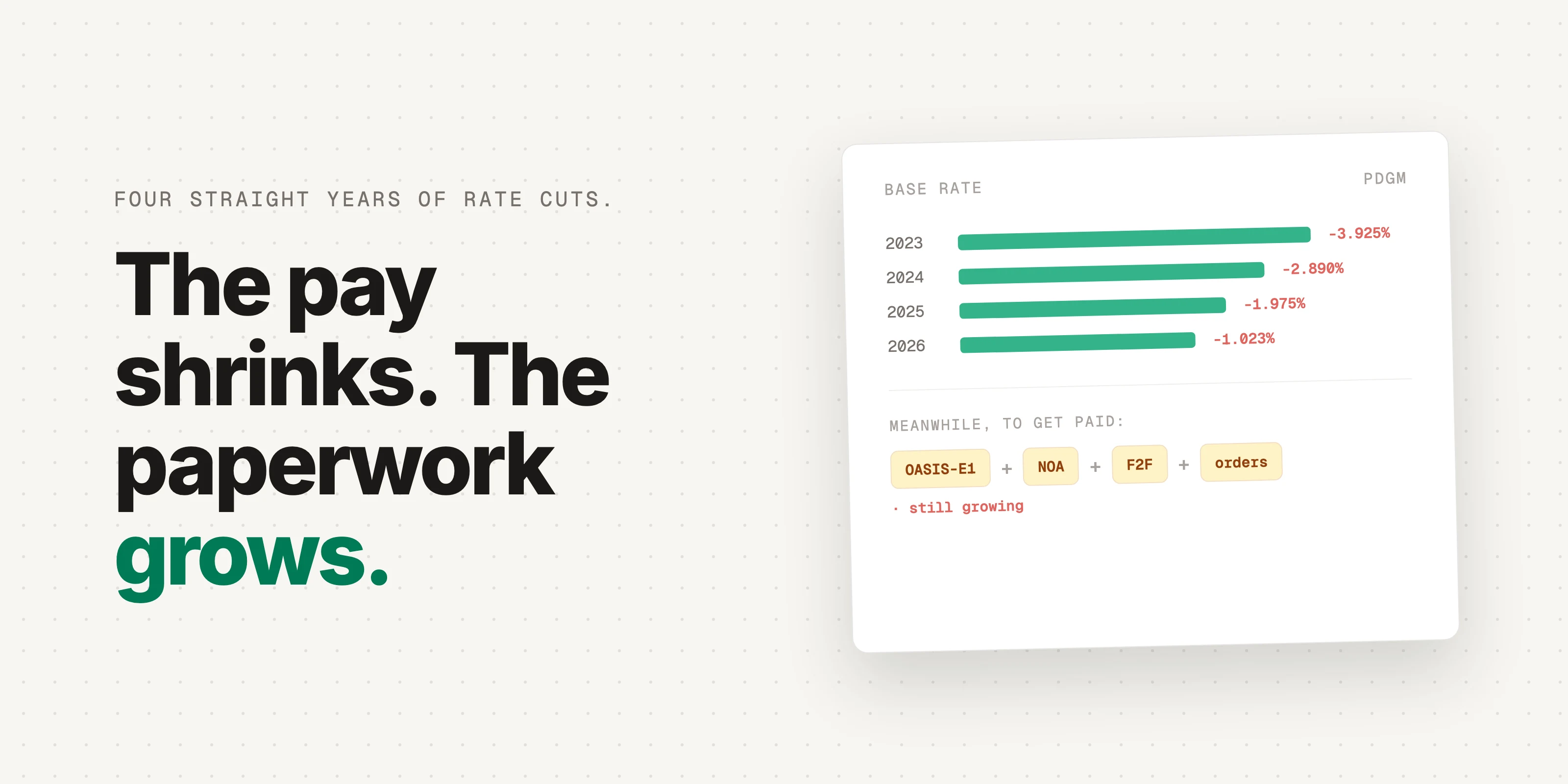
Four years in a row, and the cuts stack. In 2020, Medicare switched home health to a new payment model called PDGM. Then CMS decided agencies were "gaming" the new system, so it started applying a permanent behavioral adjustment: a standing cut to the base rate. It has not been a one-time thing:
- 2023: a permanent cut of 3.925%
- 2024: another 2.890%
- 2025: another 1.975%
- 2026: another 1.023% permanent cut, part of an aggregate 1.3% payment decrease (about $220 million) in the final rule
Read those as permanent. Each year's cut doesn't reset; it lowers the base rate going forward. Agencies sometimes got a small inflation bump on top, so the headline occasionally looked flat. But the underlying rate has been ratcheting down, on purpose, four years straight, and CMS has signaled more of the clawback is still to come.
What paperwork does Medicare require to get paid?
Now the other jaw. To get paid for a single patient, an agency has to clear a documentation gauntlet. A full OASIS assessment, which routinely eats an hour or more of clinician time per patient. A Notice of Admission filed within 5 days of starting care, or the payment gets docked day by day. Physician orders and a face-to-face encounter note that ties the visit to the reason for care.
Get any of it wrong and the claim doesn't just shrink, it disappears. In Medicare's own audit programs, documentation problems, not bad care, drive the bulk of improper home health payments, with missing or inadequate face-to-face and certification paperwork near the top of the list.
You can't win on rates. You can win on cost.
The rate is the part agencies can't change. It's set in Washington, and the trend is down. What an agency can change is how much it costs to comply, and how often it loses a claim to a fixable documentation error. Both of those are what an admission actually costs to run, and most agencies have never put a number on it.
That's the piece we're building Cardon around. If the software gets the schedule right against the orders, files clean, and catches the missing face-to-face note before the claim ever goes out, you stop bleeding revenue to denials and you stop paying nurses to fight forms. Falling rates you can't control. Rising paperwork you can. That gap is the opportunity, and quantifying it for your own agency takes about 20 minutes when you book a demo.
See how much you're losing to denials
Most agencies underestimate what documentation errors cost them over a year. Bring your last quarter's denials and we'll help you find the number, then close the leak: book a demo.
Keep reading
IndustryAugust 12, 2026
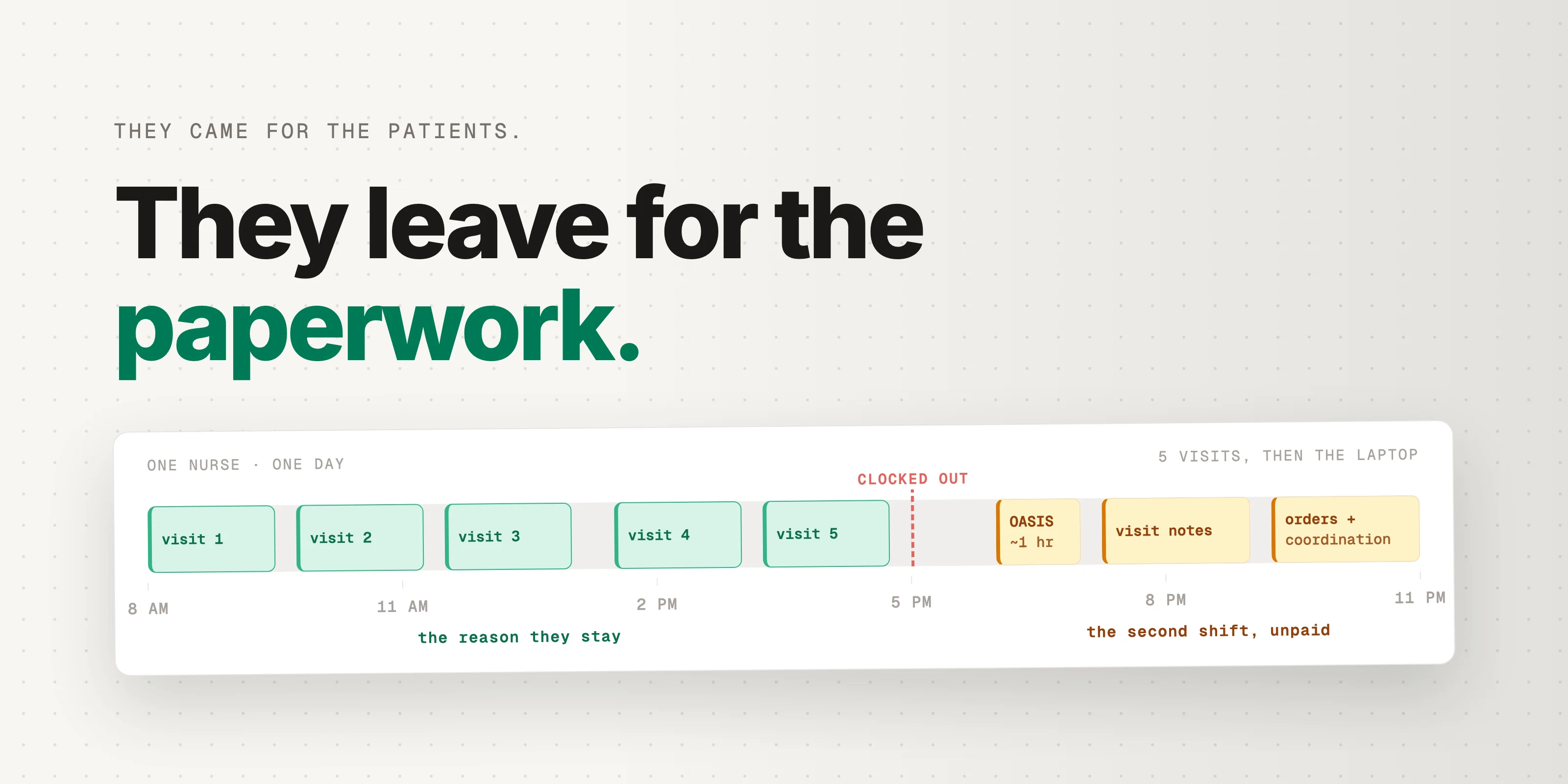
Why Home Health Nurses Quit (It's the Paperwork, Not the Patients)
Nurses don't leave home health because of the patients. They leave because of everything the software makes them do around the patients.
IndustryAugust 3, 2026
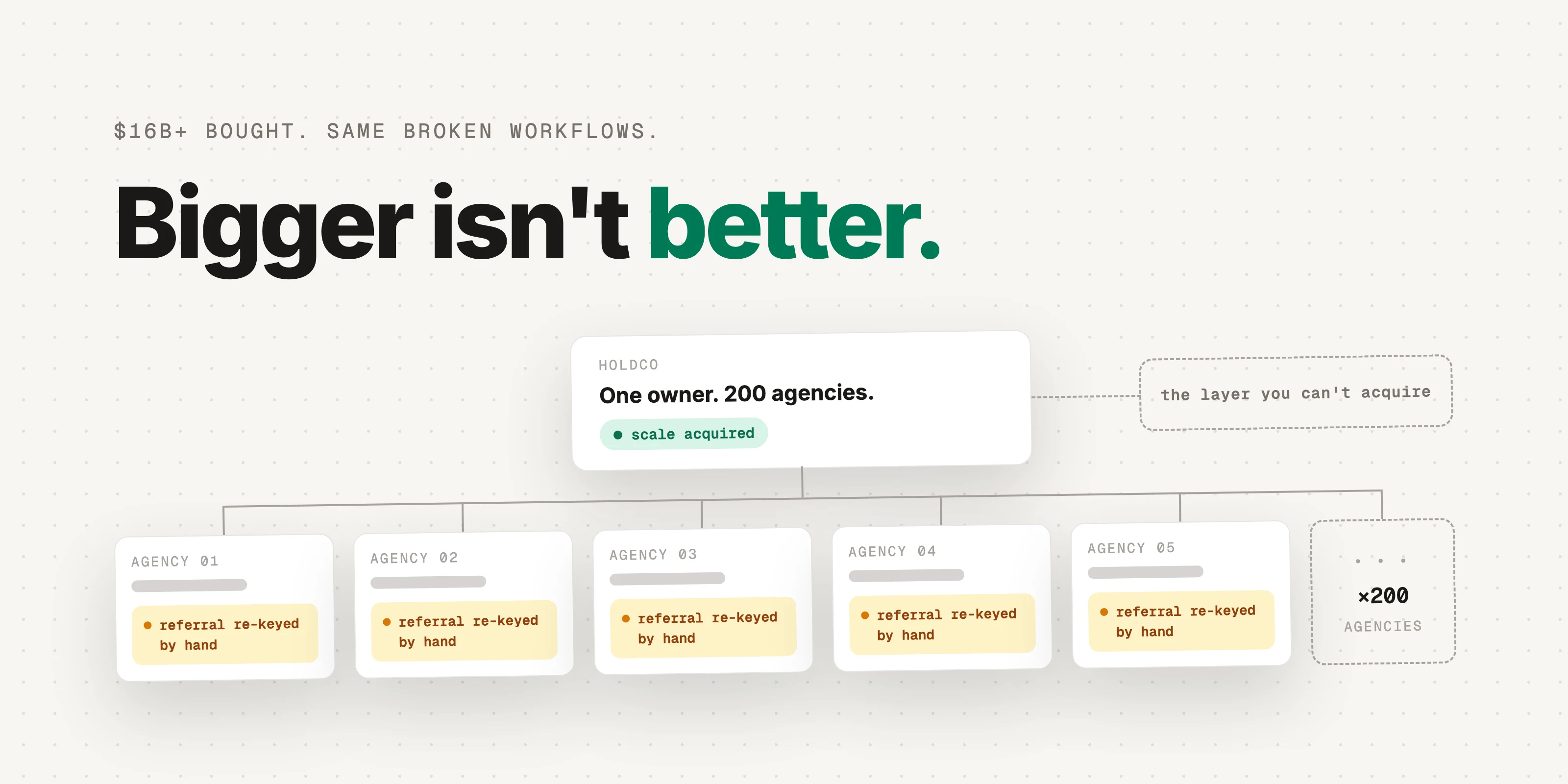
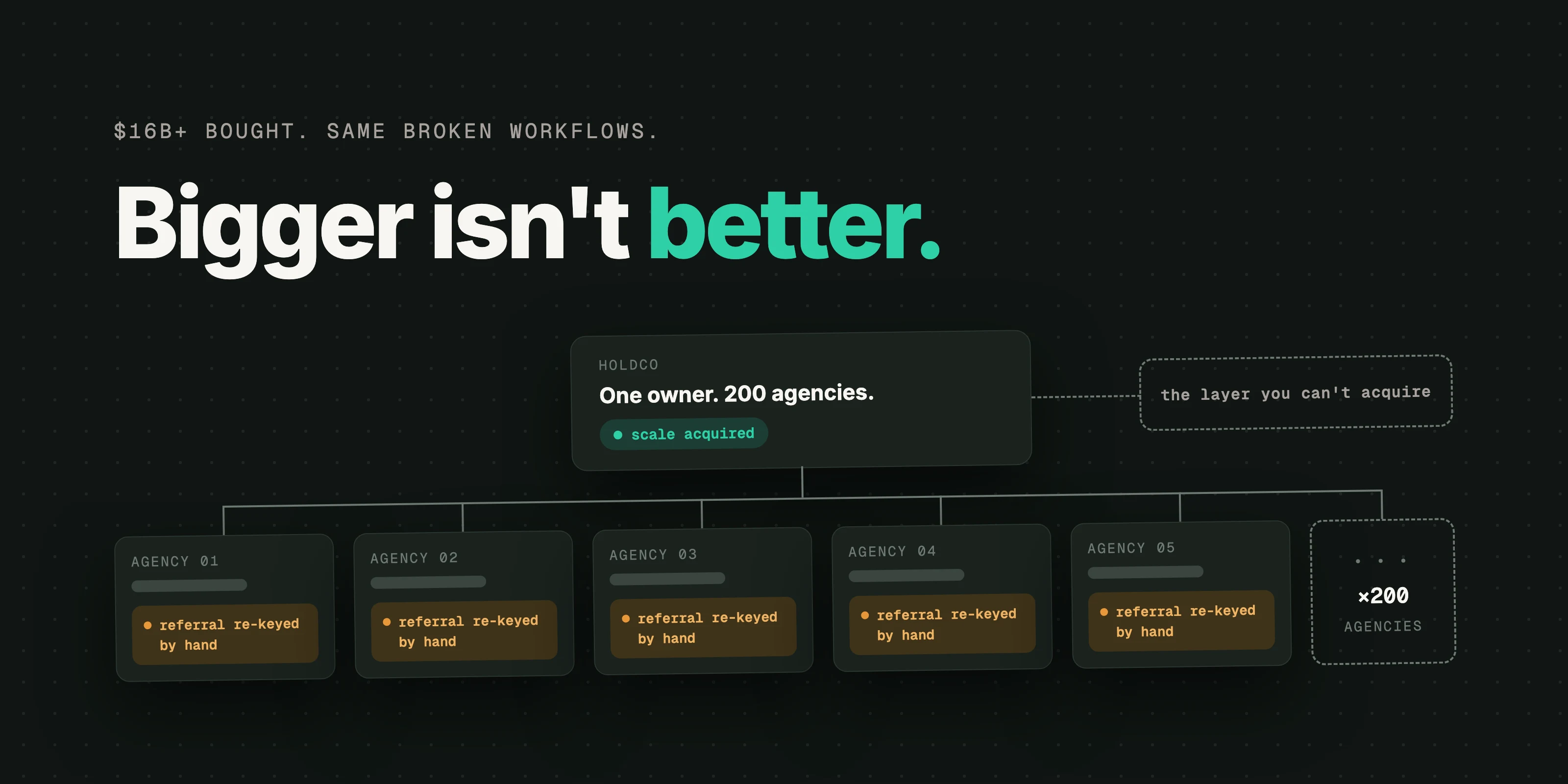
Private Equity Is Buying Up Home Health and Hospice. What It Gets Wrong.
You can roll up 200 agencies and still run every one of them on the same broken workflows.
IndustryJuly 26, 2026
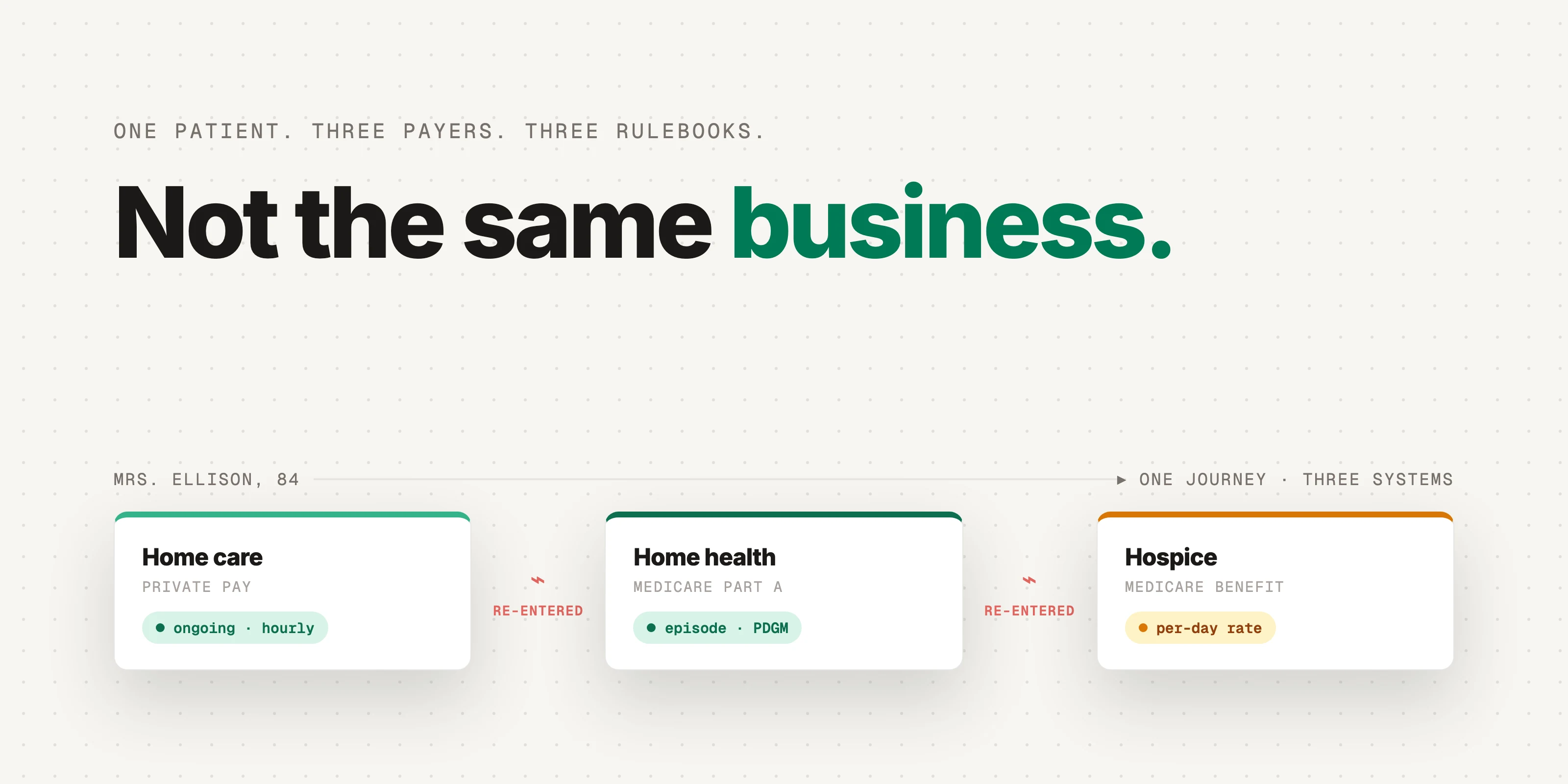
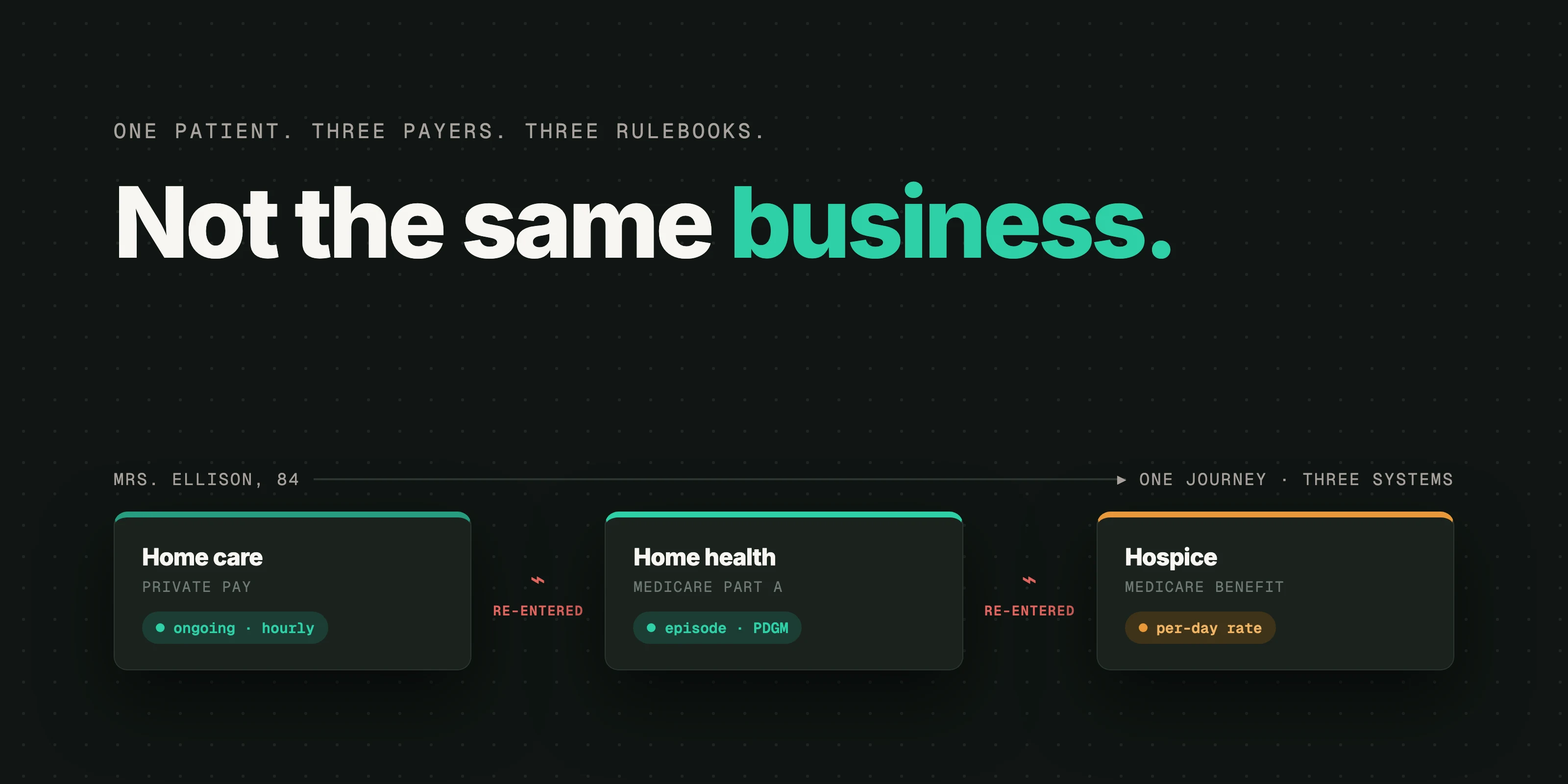
Home Care vs. Home Health vs. Hospice: What's the Difference?
One patient's journey. Three separate businesses. Every seam is where care and revenue leak out.