
Summary
The Medicare margin looks healthy and keeps shrinking. What decides the business is the cost of a home health admission, paid before the first billable visit.
If you only read the top line, home health looks like a good business. Medicare's own advisory commission, MedPAC, puts the average Medicare margin for freestanding home health agencies at around 20%. In healthcare, that's a fat margin. So people glance at it and assume the agencies are doing fine. Spend a day inside one and that assumption comes apart.
Is a 20% Medicare margin actually good?
Less than it looks. The 20% hides two things. First, it's the Medicare margin, and Medicare is the most generous payer in the room. Blend in Medicaid and managed-care rates, which pay less and fight harder, and the all-payer picture is a lot thinner. Second, it's shrinking: MedPAC's figure went from 22.1% in 2022 to 20.2% in 2023, and it's projected to keep sliding toward 19%. The direction matters more than the level.
What does a home health admission actually cost?
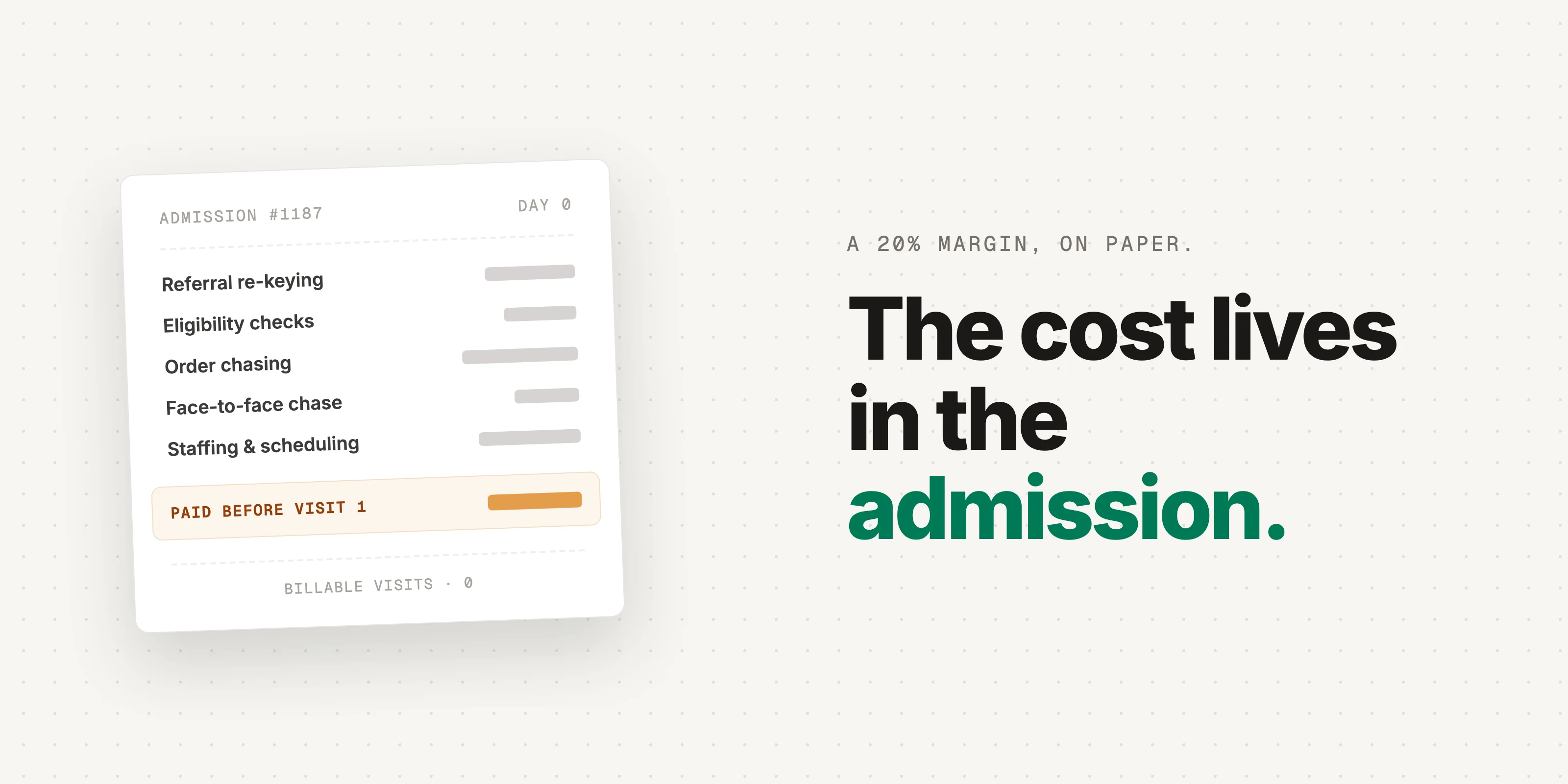
More than any margin report will ever tell you, because the cost lands before the billing even starts. The number that really decides whether an agency lives or dies is the cost of an admission, and every new patient sets off a burst of work that nobody pays you for directly:
- Taking the referral and confirming the physician's orders
- Verifying eligibility and chasing prior authorization
- Getting the face-to-face documentation exactly right, or the claim gets denied months later
- Building a schedule around a clinician who's licensed, available, and close enough to drive there
All of that happens up front, on the clock, before a single billable visit. On a clean, higher-acuity Medicare patient who stays for a full episode, that upfront cost gets absorbed and the episode makes money. But plenty of admissions aren't that. The referral turns out to be ineligible. The authorization never comes. The patient goes back to the hospital after two visits. The documentation has a gap and the entire claim is denied. In every one of those, you paid the full cost of the admission and collected little or nothing.
Same episode, opposite outcome
This is why the same episode, paid at the same rate, can be profitable at one agency and a loss at another. The clinical care is basically identical. The difference is entirely operational: how much labor got burned getting the patient in the door, how many claims got denied for fixable reasons, how many admissions turned out to be dead ends. Two agencies, same reimbursement, opposite outcomes, decided by the parts of the business that have nothing to do with nursing. It's the same pattern behind why agencies turn away referrals they'd happily take: the constraint is operational long before it's clinical.
How do you lower the cost of an admission?
Not by cutting care. If the margin is thin and shrinking, the only lever left is driving the cost of an admission toward zero: verifying eligibility automatically, catching the documentation gaps before they become denials, building the schedule in seconds instead of hours. That's the wedge we're focused on at Cardon. Every dollar of operational waste you take out drops straight onto a margin that badly needs it, which is exactly what we walk through when agencies book a demo.
The usual story about home health is that it's getting squeezed by reimbursement, and that part is true. But reimbursement is set in Washington, and no agency controls it. What an agency does control is what every admission costs to run. That isn't a policy problem. It's a software problem, and it's been ignored so long that it's now the single biggest lever these businesses have left.
See what an admission really costs you
Most agencies have never put a number on it. Bring your last month of referrals to a 20-minute conversation and we'll help you find it, then show you how far down it can go: book a demo.
Keep reading

IntakeAugust 10, 2026
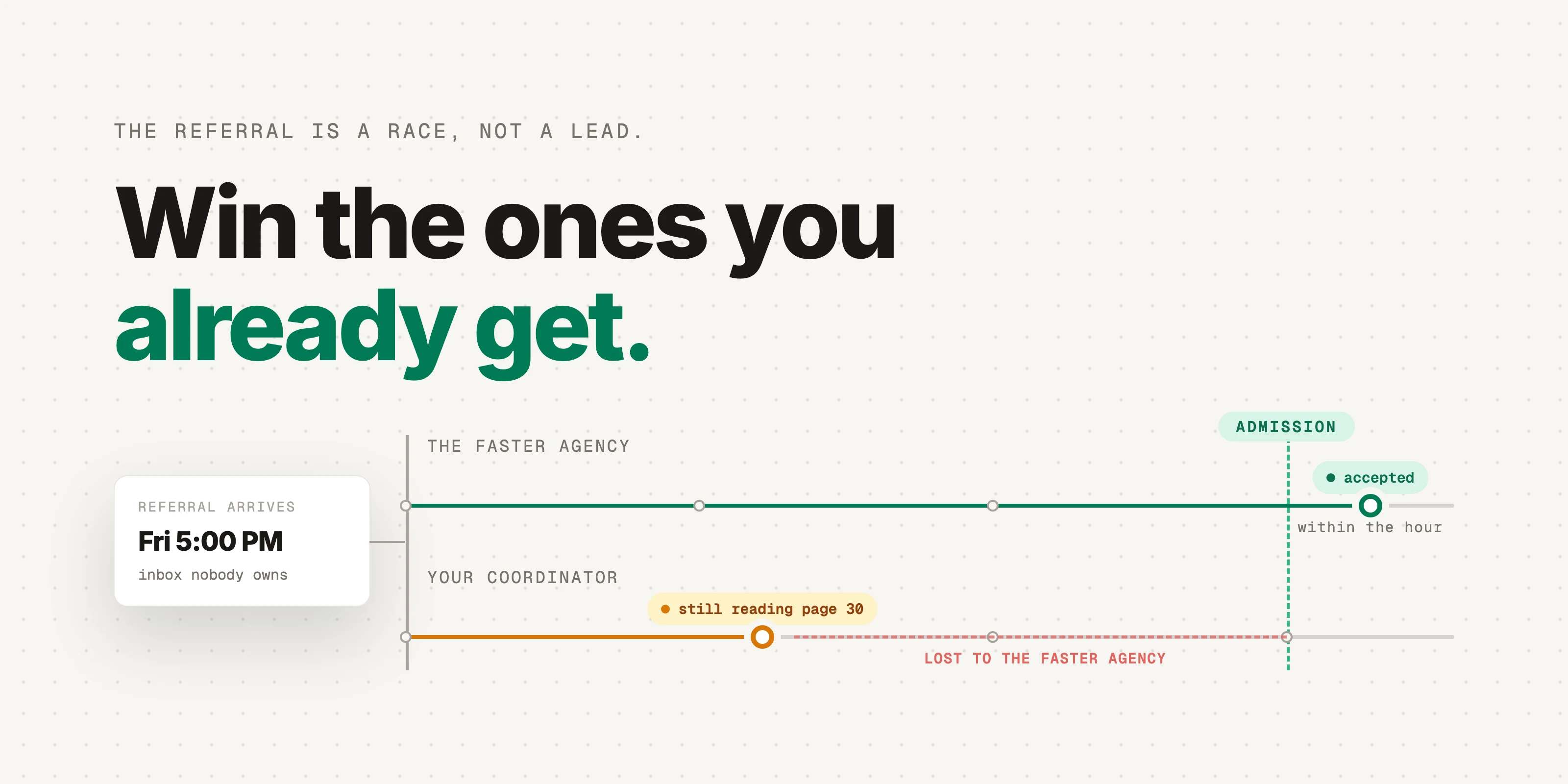
How to Stop Losing Referrals: A Practical Guide to Home Health Intake
The referral you answer in an hour is an admission. The one that sits until tomorrow is a competitor's admission.
SchedulingAugust 14, 2026
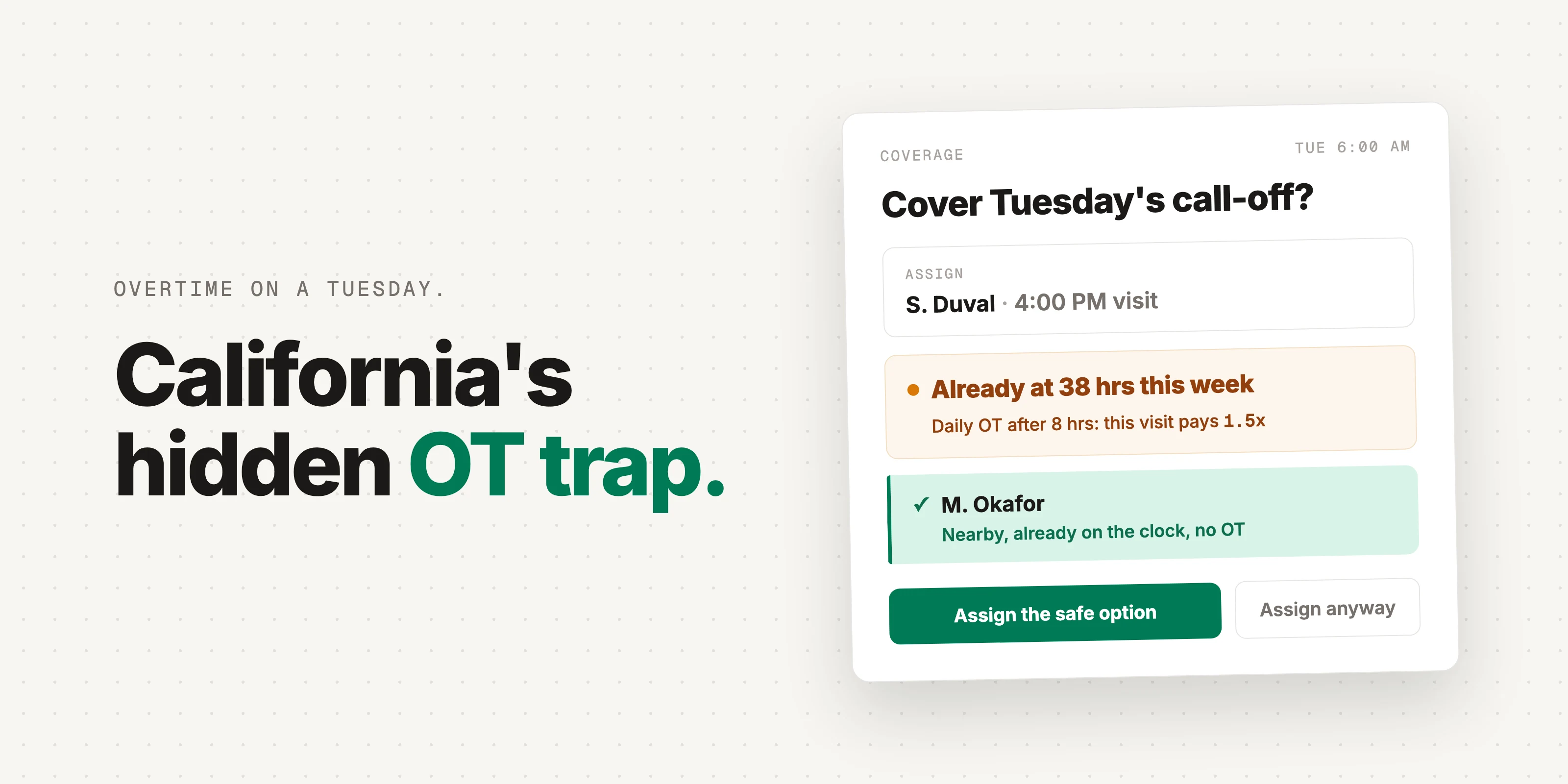
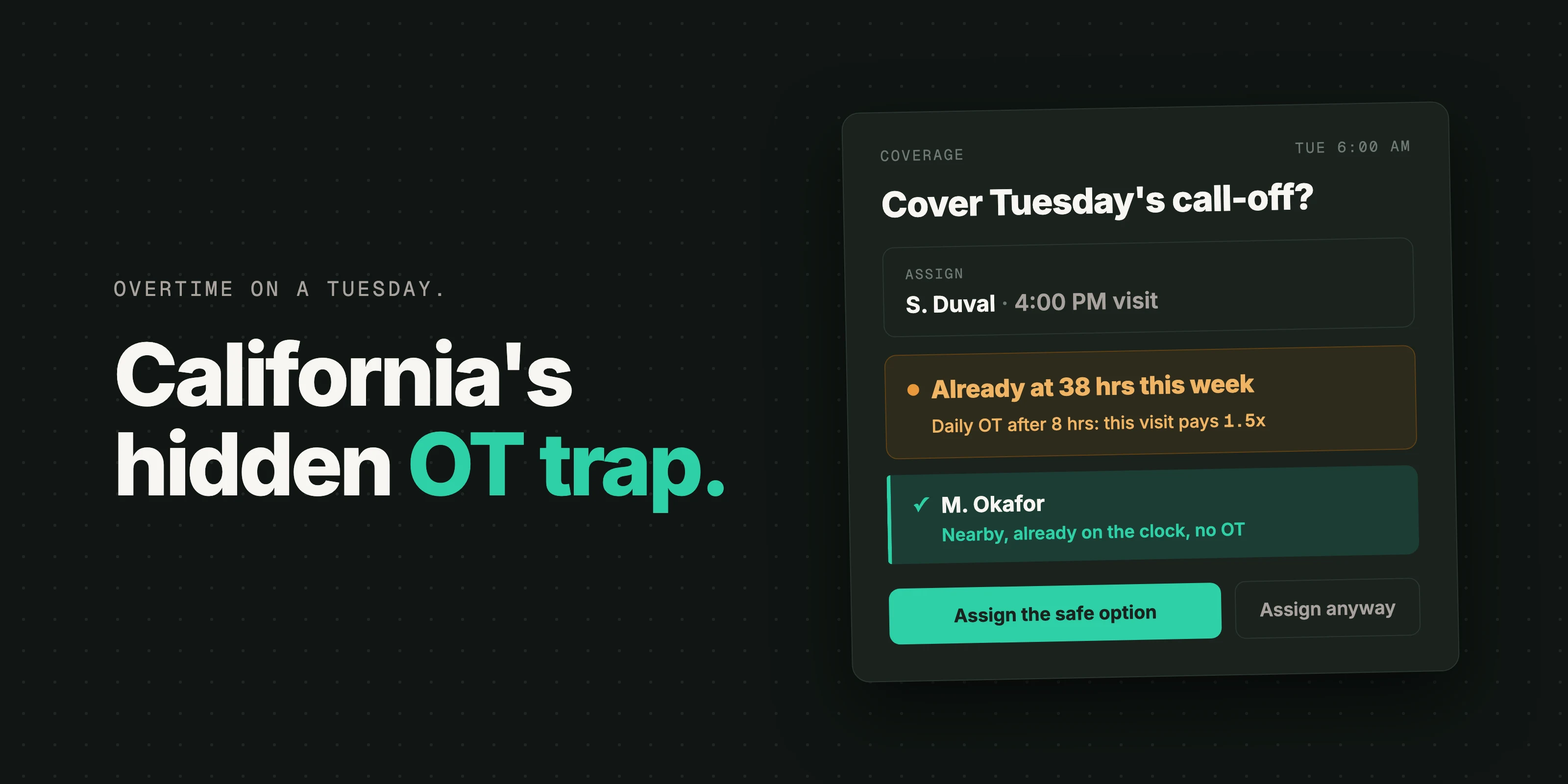
The California Overtime Trap: How Scheduling Blind Spots Quietly Eat Your Margin
In California, a caregiver can hit overtime on a Tuesday. Most agencies don't see it until payroll, when it's already money gone.
IndustryAugust 12, 2026
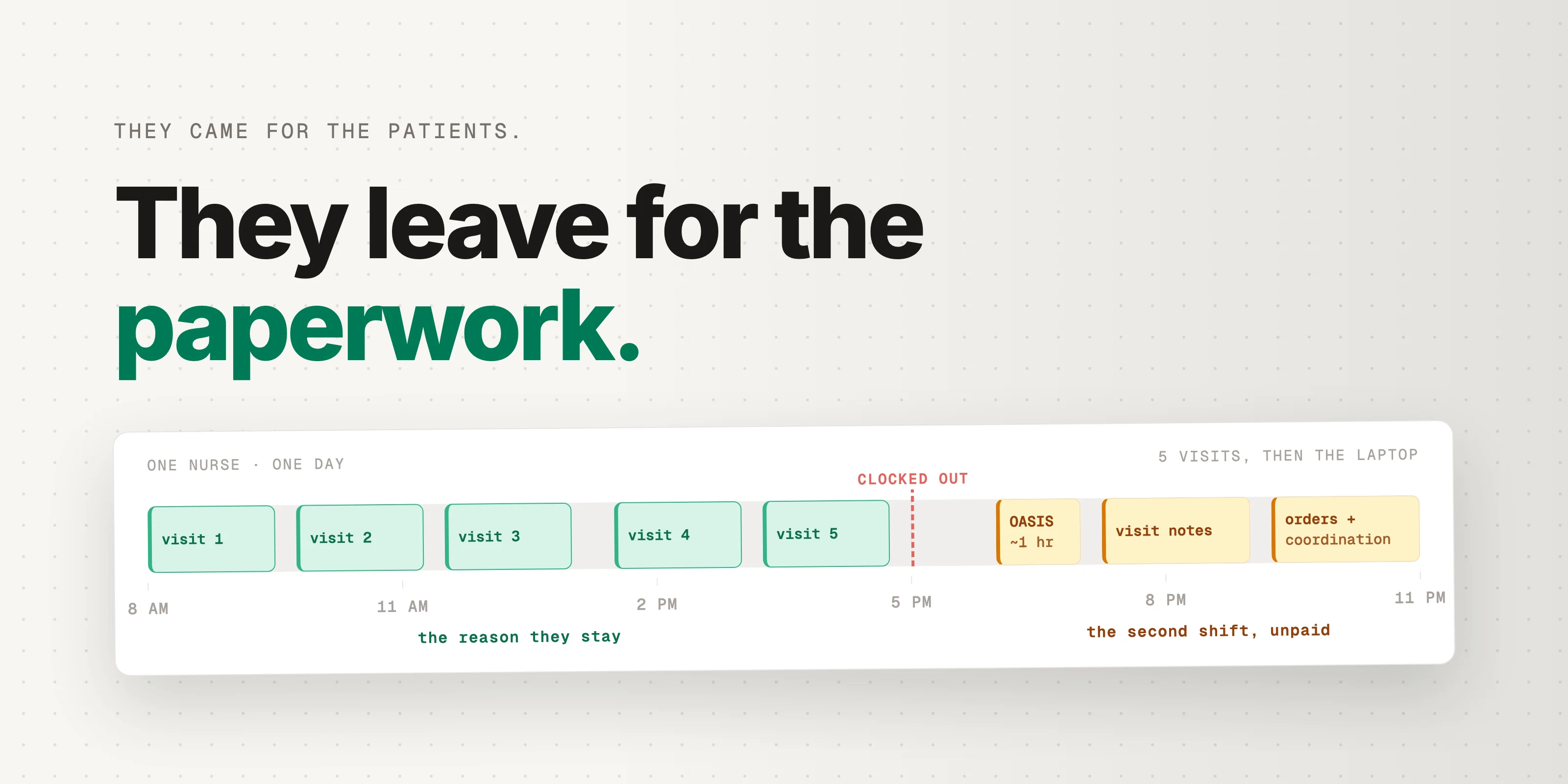
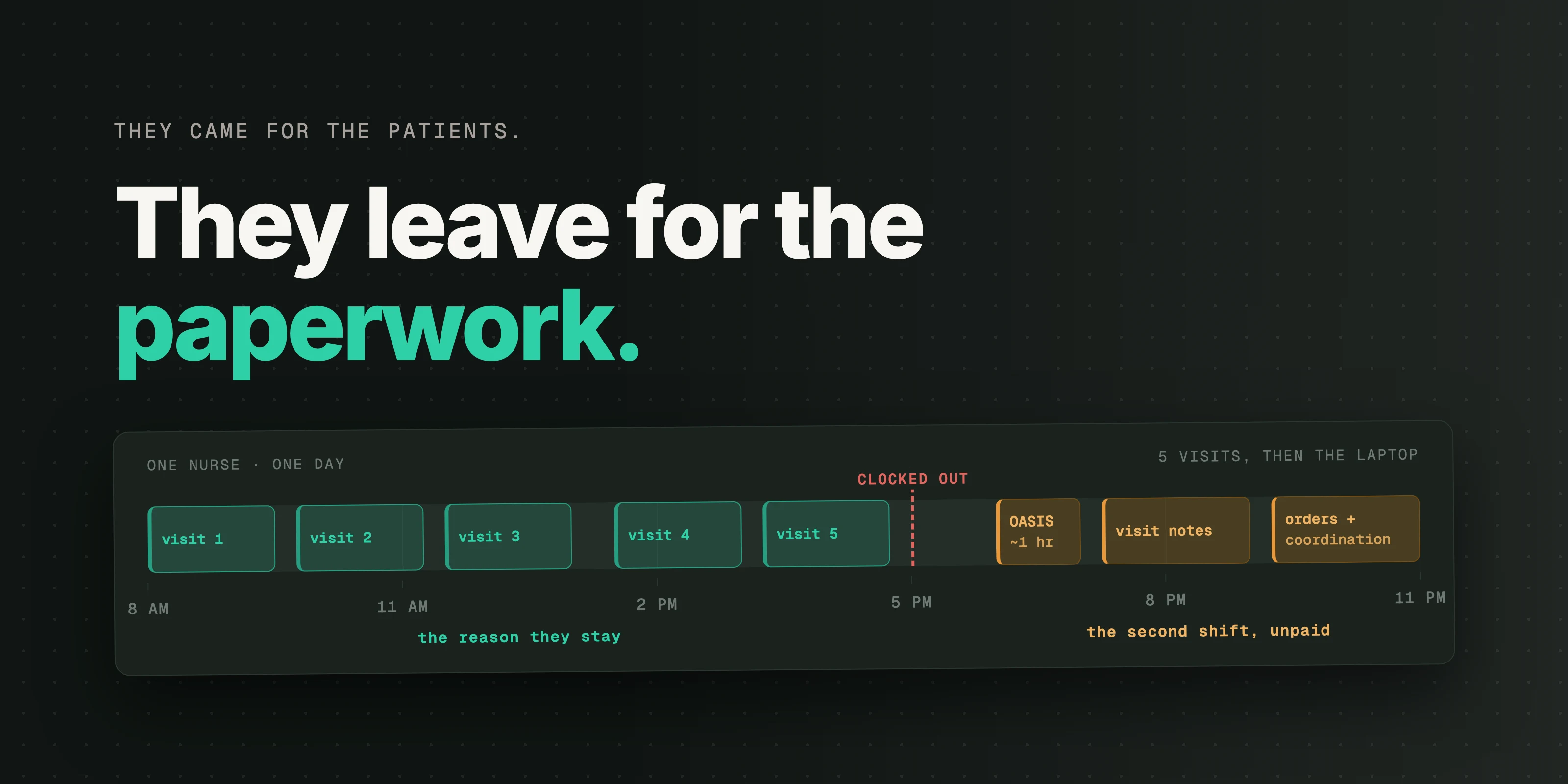
Why Home Health Nurses Quit (It's the Paperwork, Not the Patients)
Nurses don't leave home health because of the patients. They leave because of everything the software makes them do around the patients.