Summary
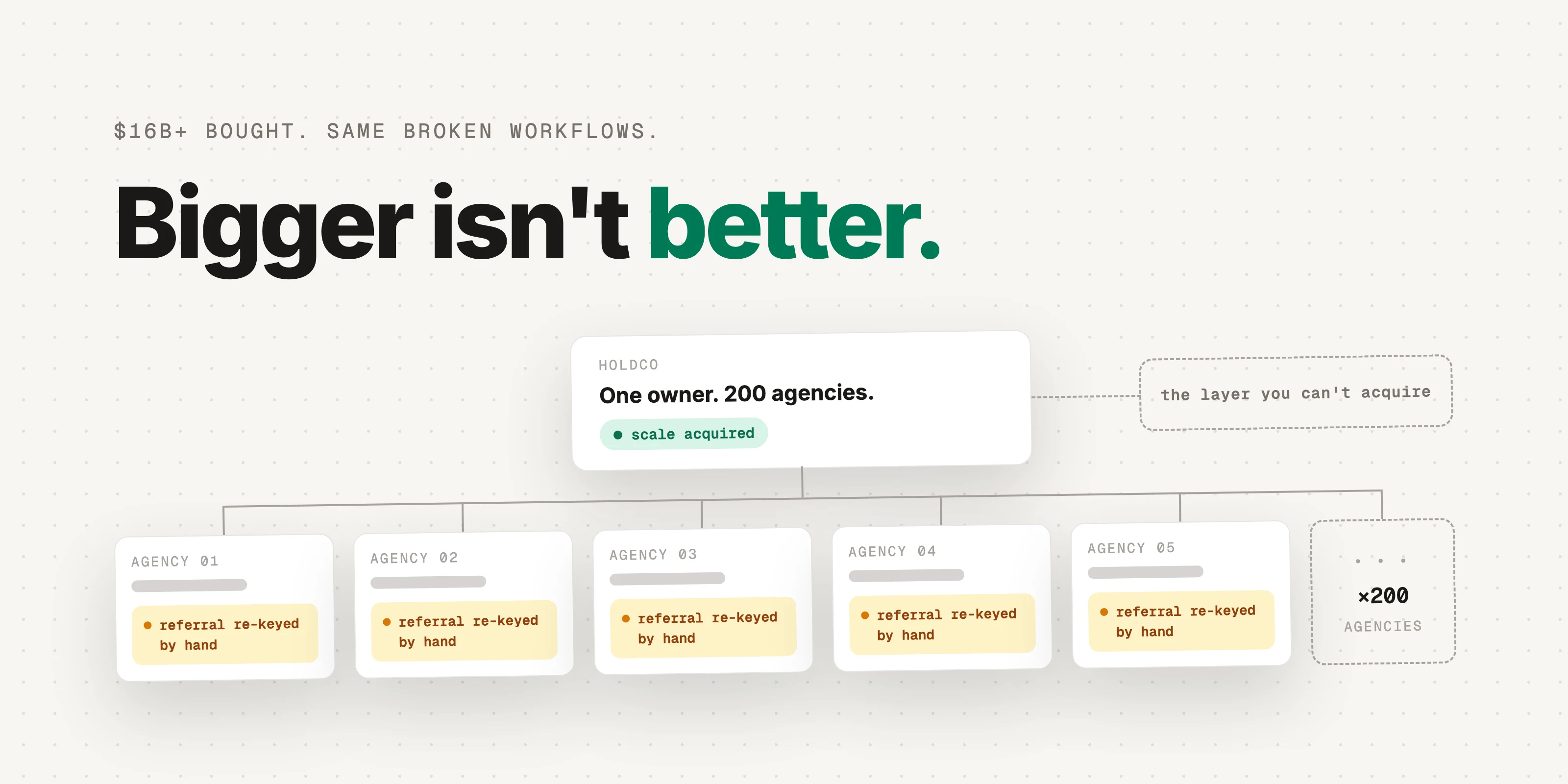
Insurers and private equity have rolled up home health and hospice at record scale. Scale buys market power. It doesn't fix broken operations, and the data suggests it can make care worse.
The last few years have been a feeding frenzy in home-based care. The biggest players in American healthcare decided that where you get care is moving into the home, and they went shopping.
The big fish arrived
The deals are staggering. Humana bought Kindred at Home in a deal valued around $8.1 billion and turned it into CenterWell, now the largest home health provider in the country. UnitedHealth's Optum bought LHC Group for $5.4 billion in early 2023, then bought Amedisys for another $3.3 billion, a deal so large the Department of Justice forced it to divest 164 home health and hospice locations across 19 states before it could close in August 2025.
Hospice went through its own version of this. A field that was almost entirely nonprofit a generation ago, around 5% for-profit in 1992, is now roughly 73% for-profit, with private equity a big part of the buying. The thesis behind all of it is simple: scale. Buy enough agencies, wire them into a payer, and you get efficiency the small independents can't match.
Scale isn't the same as operations
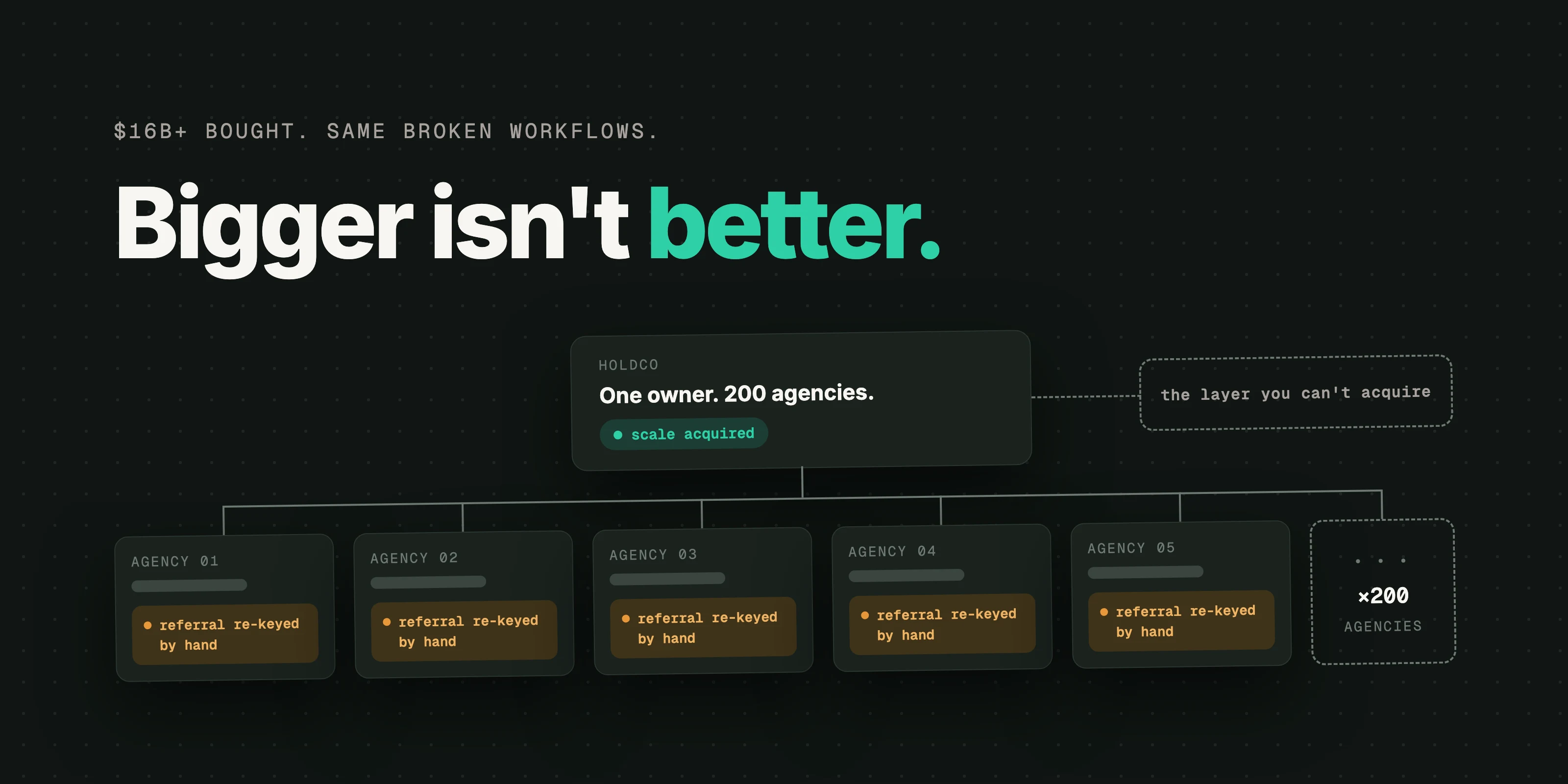
I understand the bet. I also think it quietly misses the point. Because when you actually look inside a rolled-up agency, the workflows are usually the same broken ones the independent shop had. The referral still gets re-keyed. The schedule still gets built by hand. You can own 200 agencies and still be running 200 copies of the same mess. Consolidation buys you market power. It does not, on its own, buy you a better way of operating.
And there's evidence the scale-first approach doesn't automatically help the patient. A 2024 study in JAMA found that families rated hospices owned by private equity and publicly traded companies lower than nonprofits across every measure of care experience, including communication, getting timely help, and managing symptoms. A separate 2025 study in Health Affairs found private-equity-owned hospices reported the highest profits and the lowest spending on direct patient care of any ownership model. When the operating model is "get more out of the same workflows," the patient tends to be the one who feels it.
The layer you can't acquire
This is the part I find genuinely interesting as a builder. The thing that actually makes an agency run better, an operating system that handles intake, scheduling, documentation, and billing so the staff can do the work, isn't something you can buy by acquiring more agencies. You have to build it.
That's what we're doing at Cardon, and it's why I think the long-term winners here won't be whoever owns the most agencies. It'll be whoever gives agencies, independent or owned, a fundamentally better way to operate. Consolidation is a bet that bigger is better. I'd bet on better being better, which is the whole thing we show operators who book a demo.
Run better, whatever your size
Whether you're an independent agency or part of a larger group, the operational leaks are the same. Bring a week of your real operations and we'll show you what closing them looks like: book a demo.
Keep reading
IndustryAugust 12, 2026
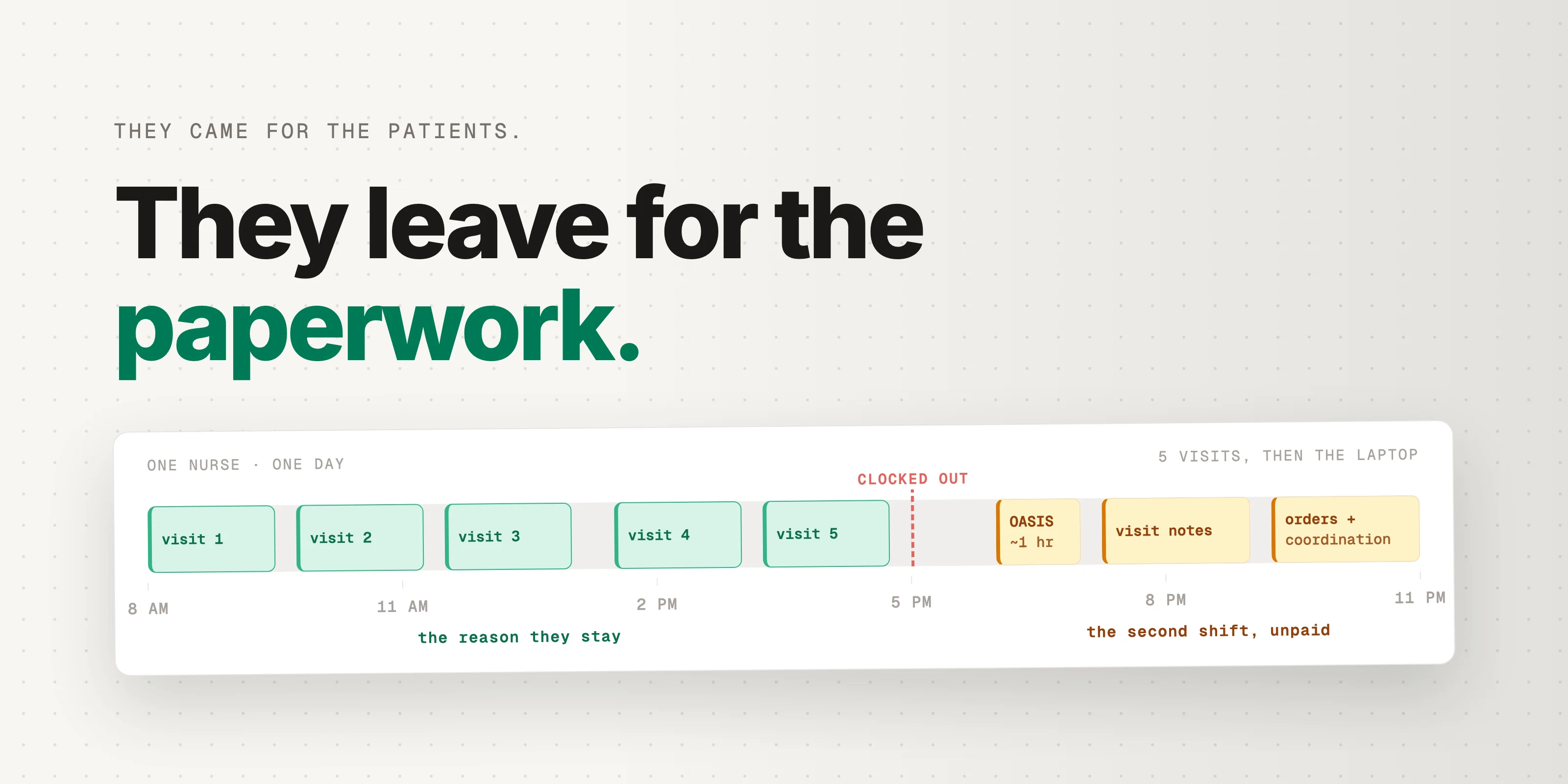
Why Home Health Nurses Quit (It's the Paperwork, Not the Patients)
Nurses don't leave home health because of the patients. They leave because of everything the software makes them do around the patients.
IndustryJuly 29, 2026
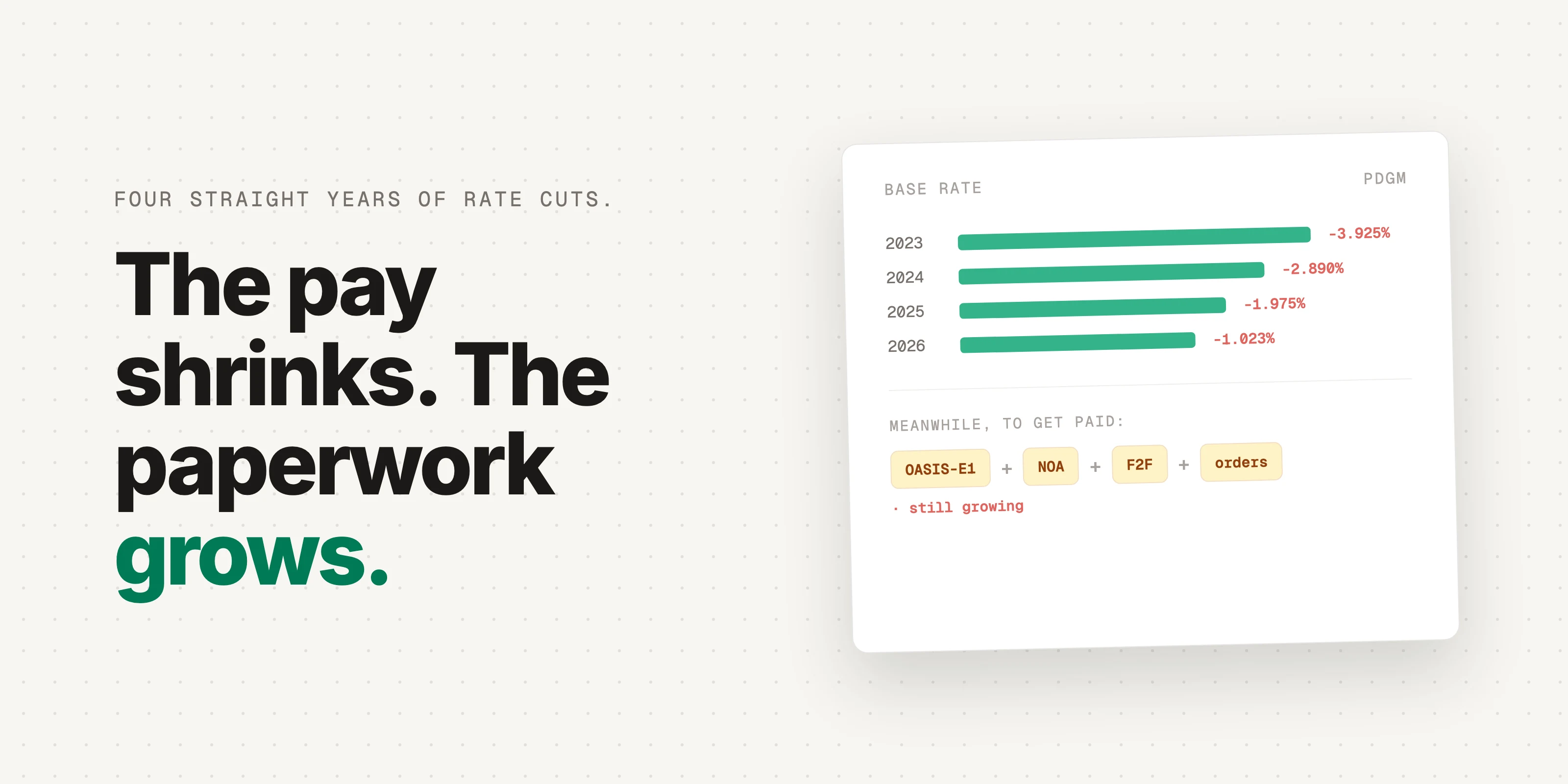
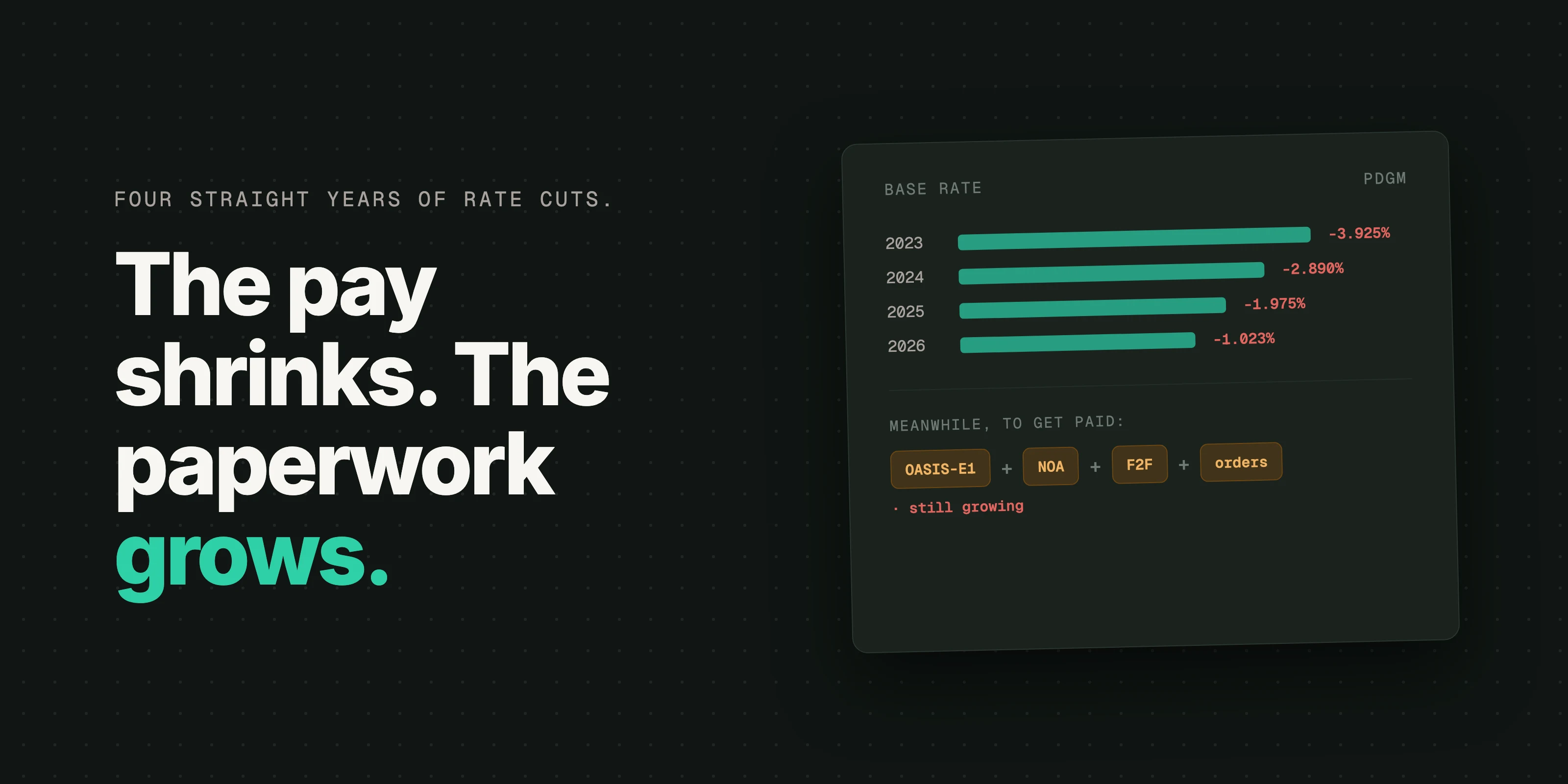
Medicare Home Health Cuts Keep Coming. The Paperwork Keeps Growing.
Falling rates, rising paperwork. That's the vise every home health agency is stuck in.
IndustryJuly 26, 2026
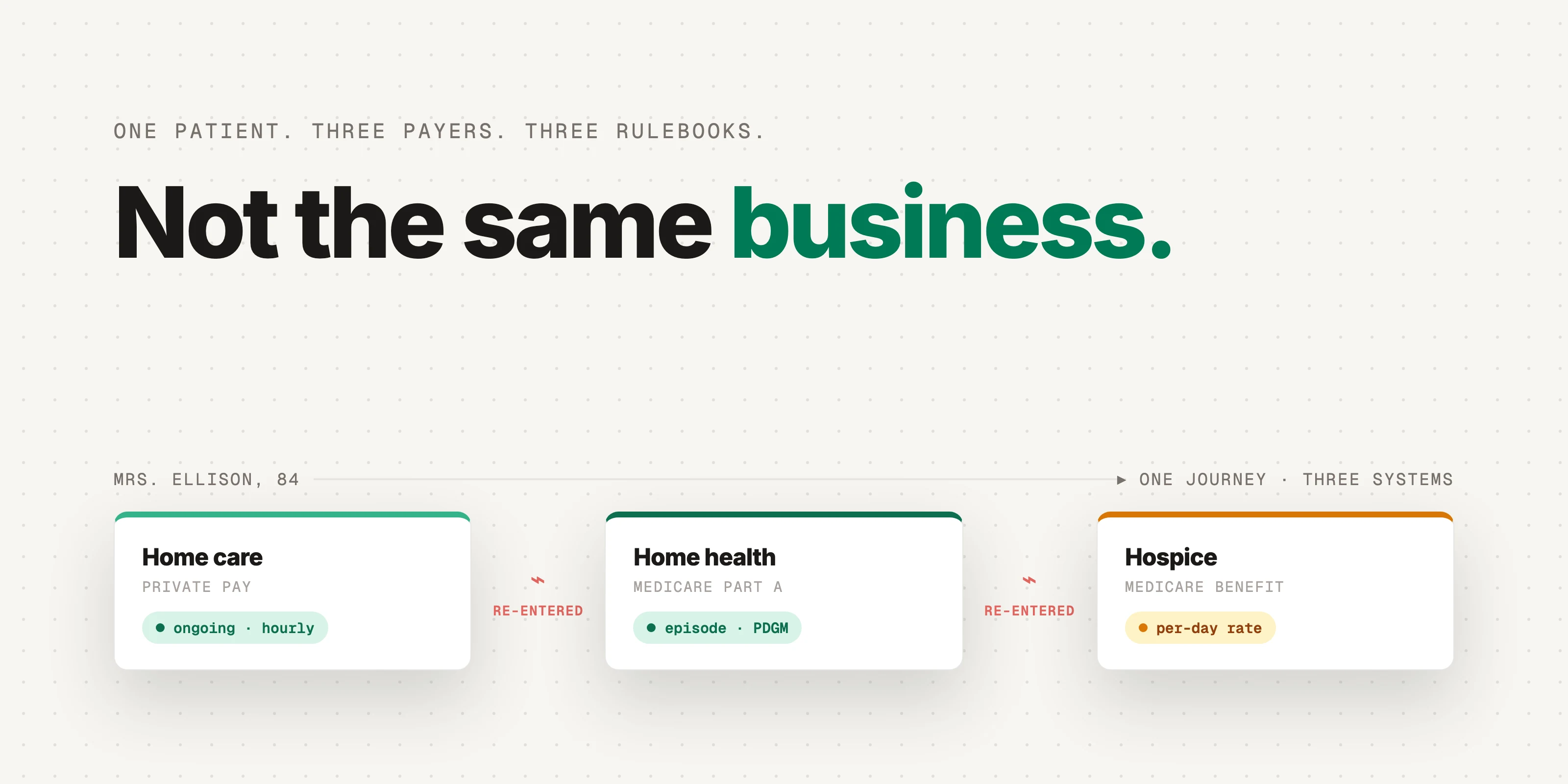
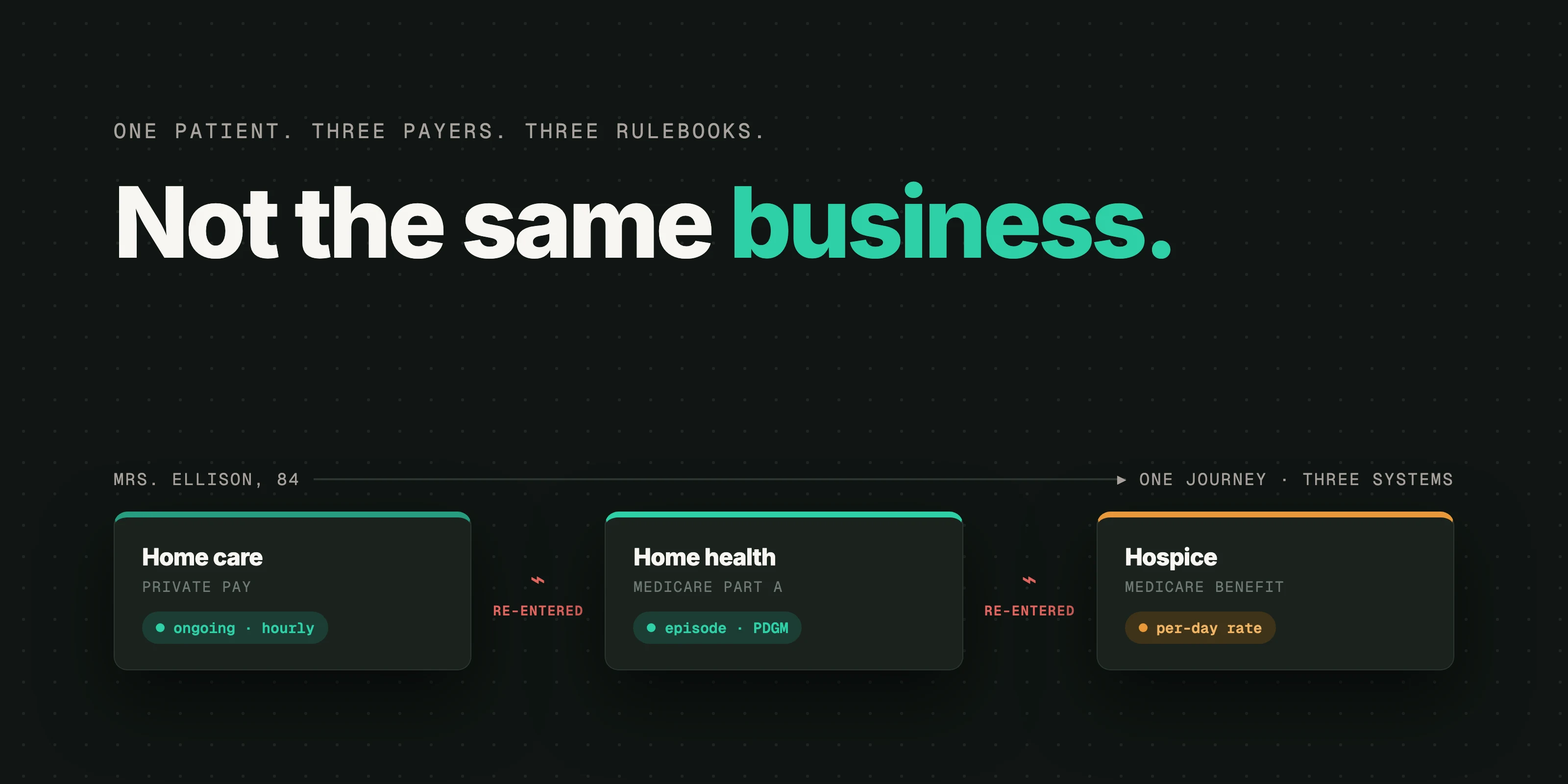
Home Care vs. Home Health vs. Hospice: What's the Difference?
One patient's journey. Three separate businesses. Every seam is where care and revenue leak out.