Summary
The standard retention advice is about pay, burnout, and self-care. But ask home health nurses what actually drives them out and the answer is usually the documentation, not the patients. That changes what a fix looks like.
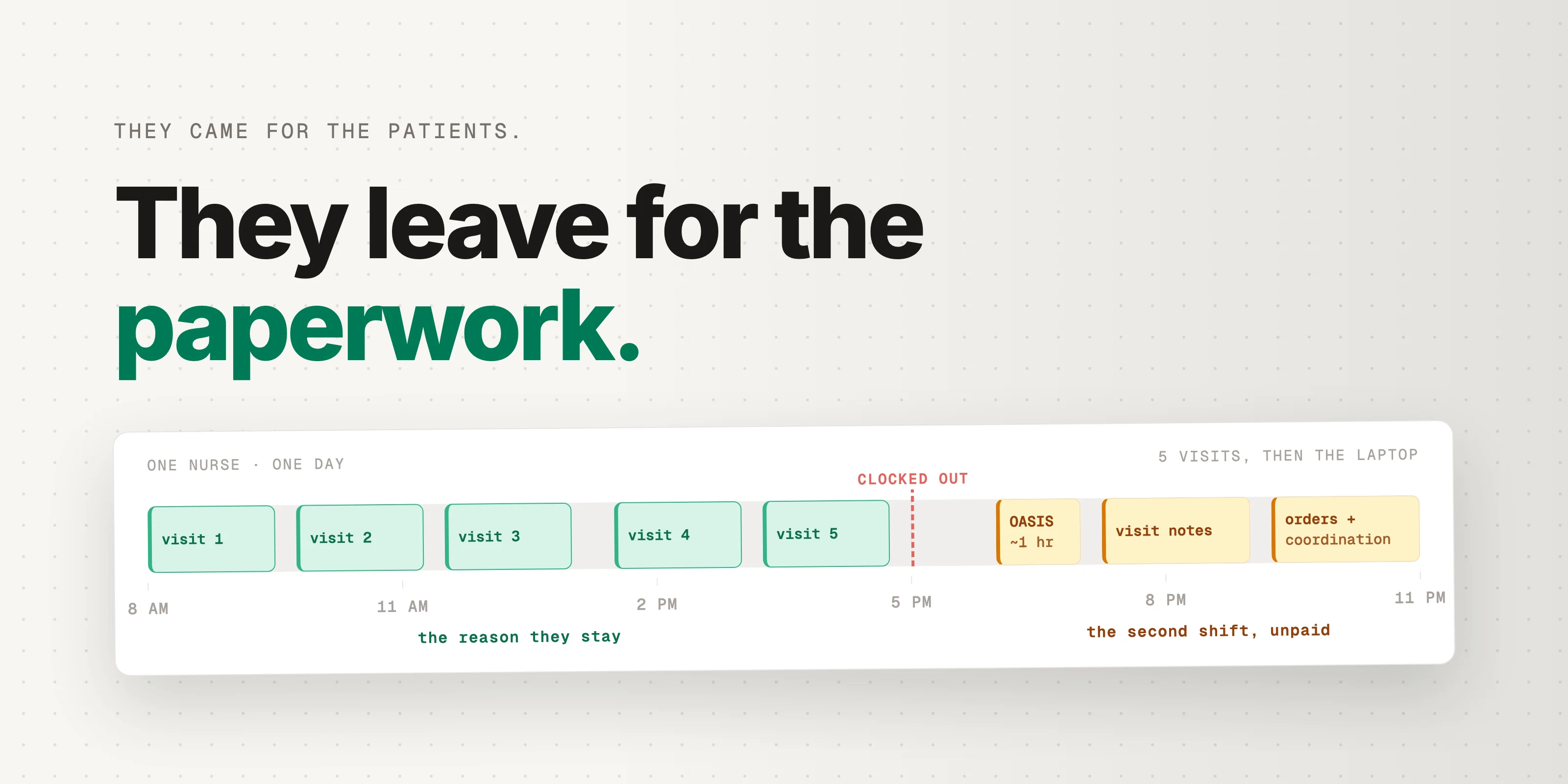
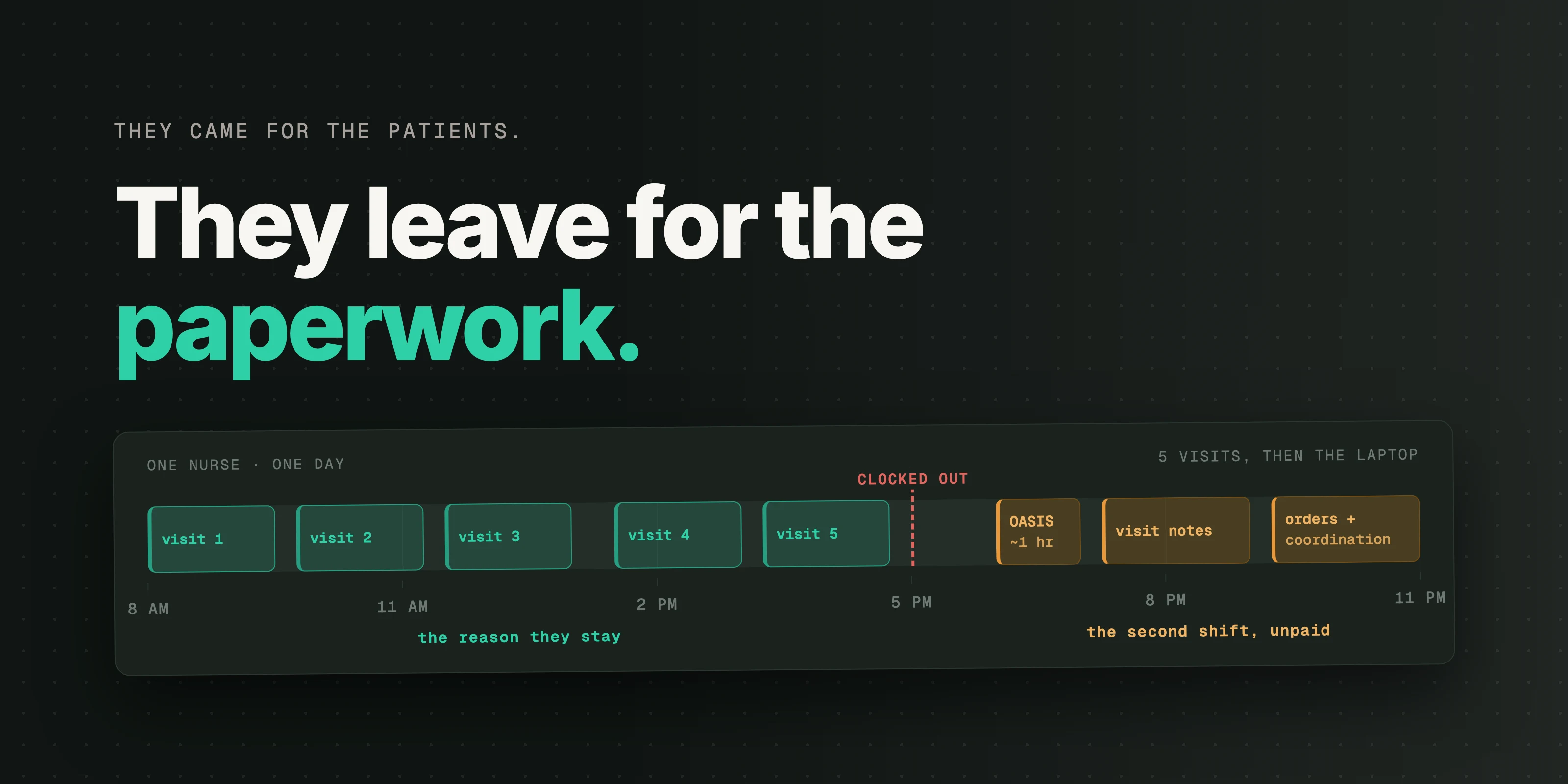
Search "why do home health nurses quit" and you'll get the usual list: burnout, pay, workload, self-care. All real, none quite right. Because when you actually listen to nurses who leave, the thing they describe isn't the care. It's everything the job makes them do around the care. They took this work to see patients in their homes. They spend their evenings fighting a laptop instead. The patients are the reason they stay as long as they do. The paperwork is the reason they go.
The documentation is the job now
A home health nurse's visit doesn't end when they leave the home. There's the OASIS assessment, which CMS's own paperwork-burden estimates put at close to an hour of clinician time, and which nurses will tell you runs longer on a complex patient. There's the visit note, the orders, the coordination. A lot of it gets done at night, unpaid, on a system that fights back. So the real workday is the visits plus a second shift of documentation, and the second shift is the one nobody signed up for.
Why it hits home health hardest
Every clinician documents. But home health stacks the burden in a specific, brutal way:
- The assessment instrument (OASIS) is long, and errors on it don't just cost time, they cost the claim.
- The software is usually a decade behind what nurses use in a hospital, so the same task takes more clicks.
- The nurse is alone in the field, without the floor's informal help, reconciling it all by themselves.
- The reimbursement squeeze means agencies lean on productivity, so "just do a few more visits" lands on the same person already drowning in notes.
Add it up and the message a good nurse hears is: the better you are, the more of this you get. That's the churn engine, and no signing bonus fixes it.
Why "recruit harder" misses
The standard response is a recruiting response: raise the rate, add a bonus, post more jobs. But you're refilling a bucket with a hole in it. If the reason people leave is the second shift of documentation, then recruiting faster just runs more people through the same grinder. The only durable fix is to make the job the nurse actually wanted, the visits, take up more of the day, and the paperwork take up less.
Give the nurse their evening back
That's the version of this problem software can actually touch. When the system does the documentation busywork, drafts the note, catches the OASIS inconsistency, files the paperwork on time, the nurse gets their evening back and the agency stops losing its best people to a laptop. That's a big part of why we started Cardon where we did, and it's what we walk through when agencies book a demo.
The patients were never the problem. Fix what surrounds the patient, and you fix a lot of what's driving nurses out.
See what the documentation is costing you
Most agencies measure their turnover rate but never the after-hours documentation load driving it. We can help you put a number on both: book a demo.
Keep reading
IndustryAugust 3, 2026
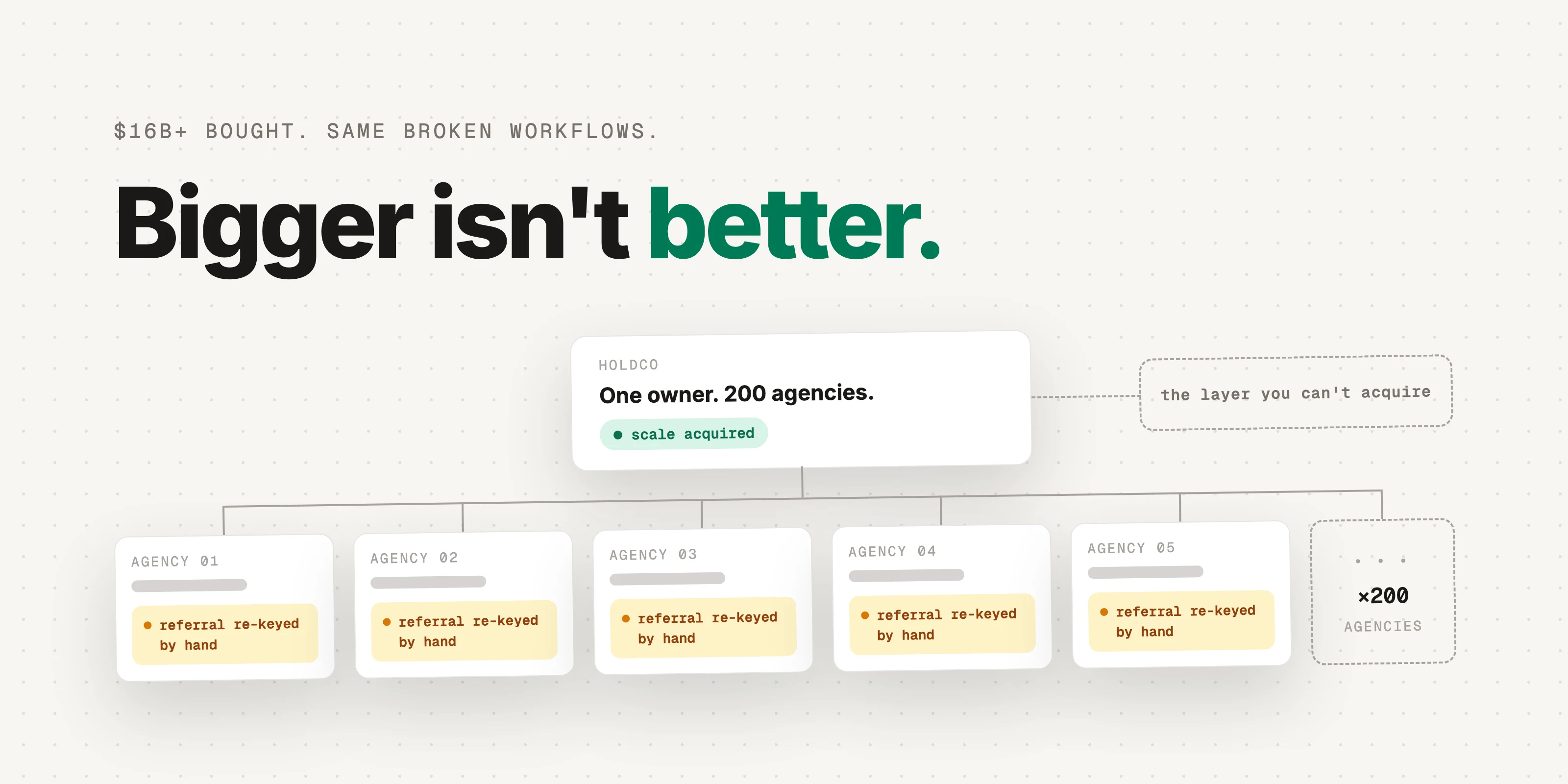
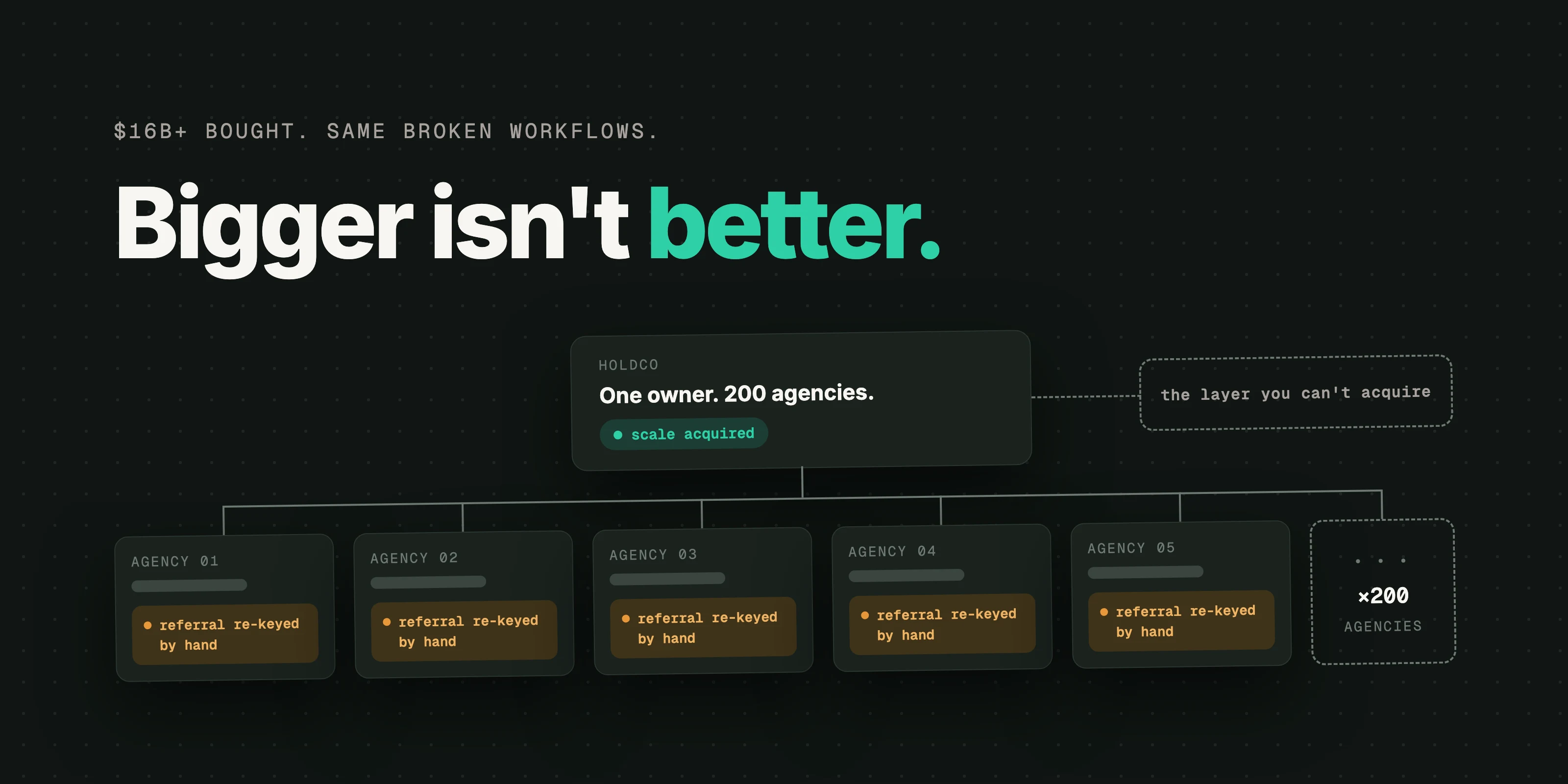
Private Equity Is Buying Up Home Health and Hospice. What It Gets Wrong.
You can roll up 200 agencies and still run every one of them on the same broken workflows.
IndustryJuly 29, 2026
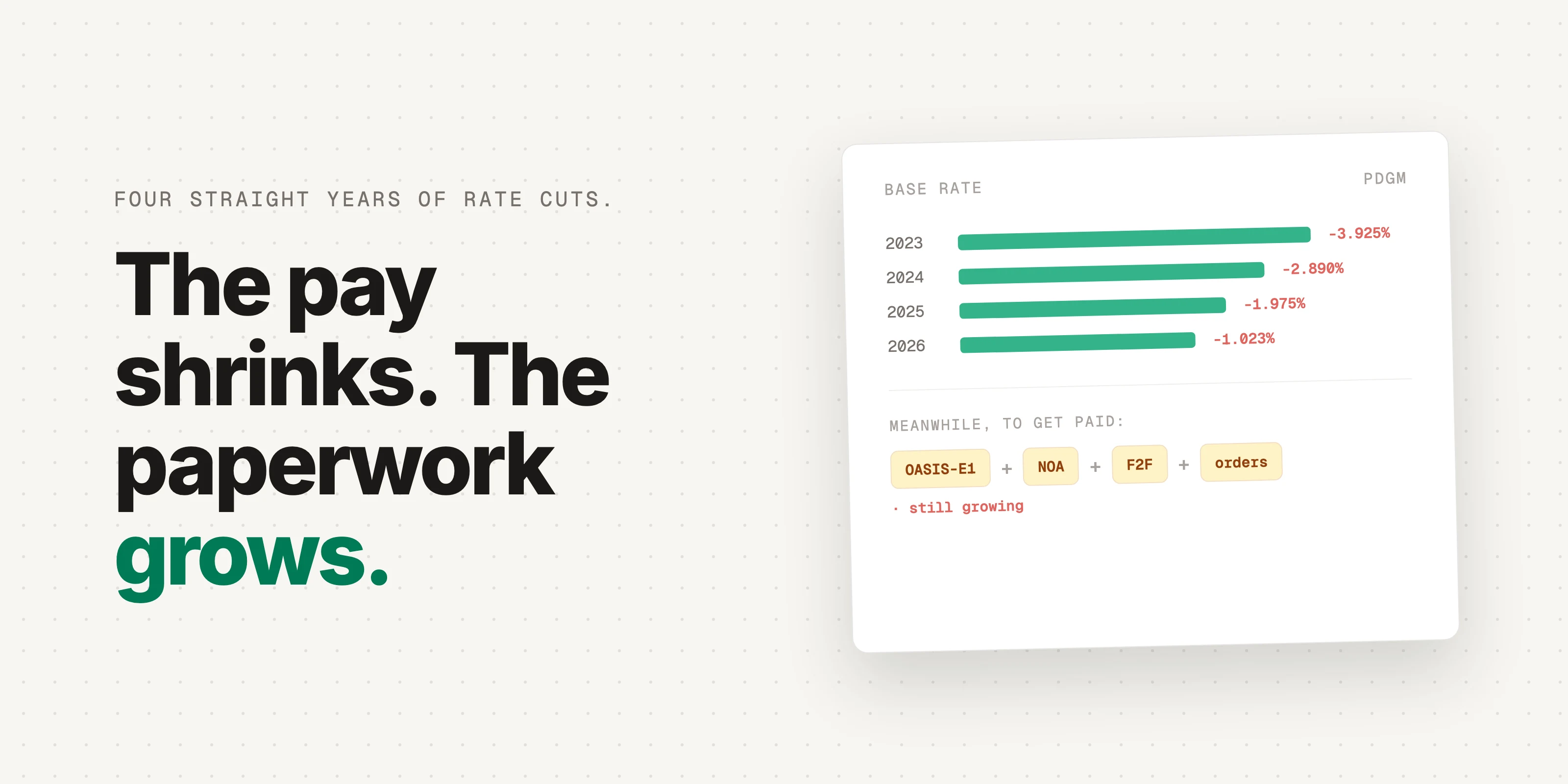
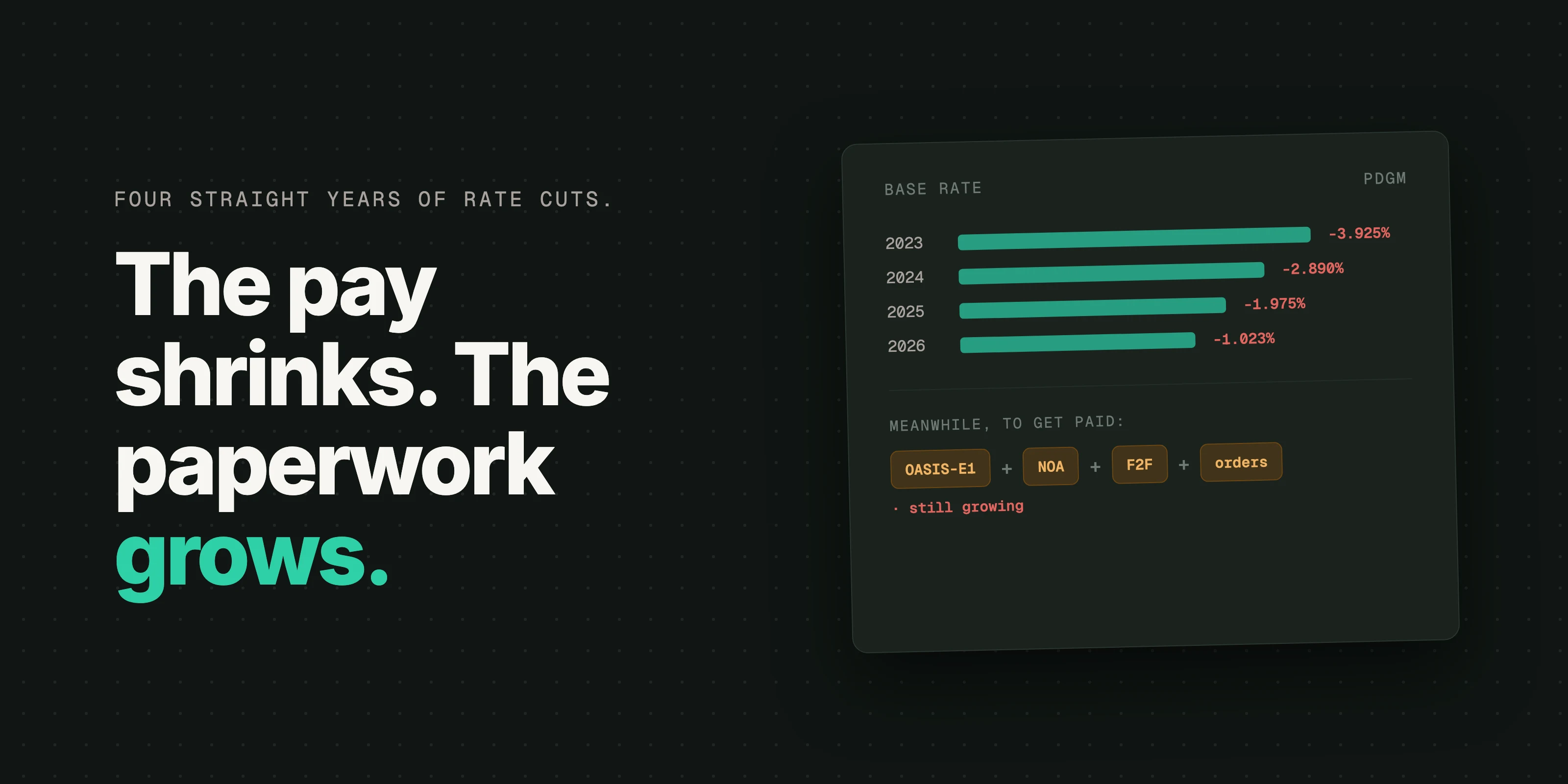
Medicare Home Health Cuts Keep Coming. The Paperwork Keeps Growing.
Falling rates, rising paperwork. That's the vise every home health agency is stuck in.
IndustryJuly 26, 2026
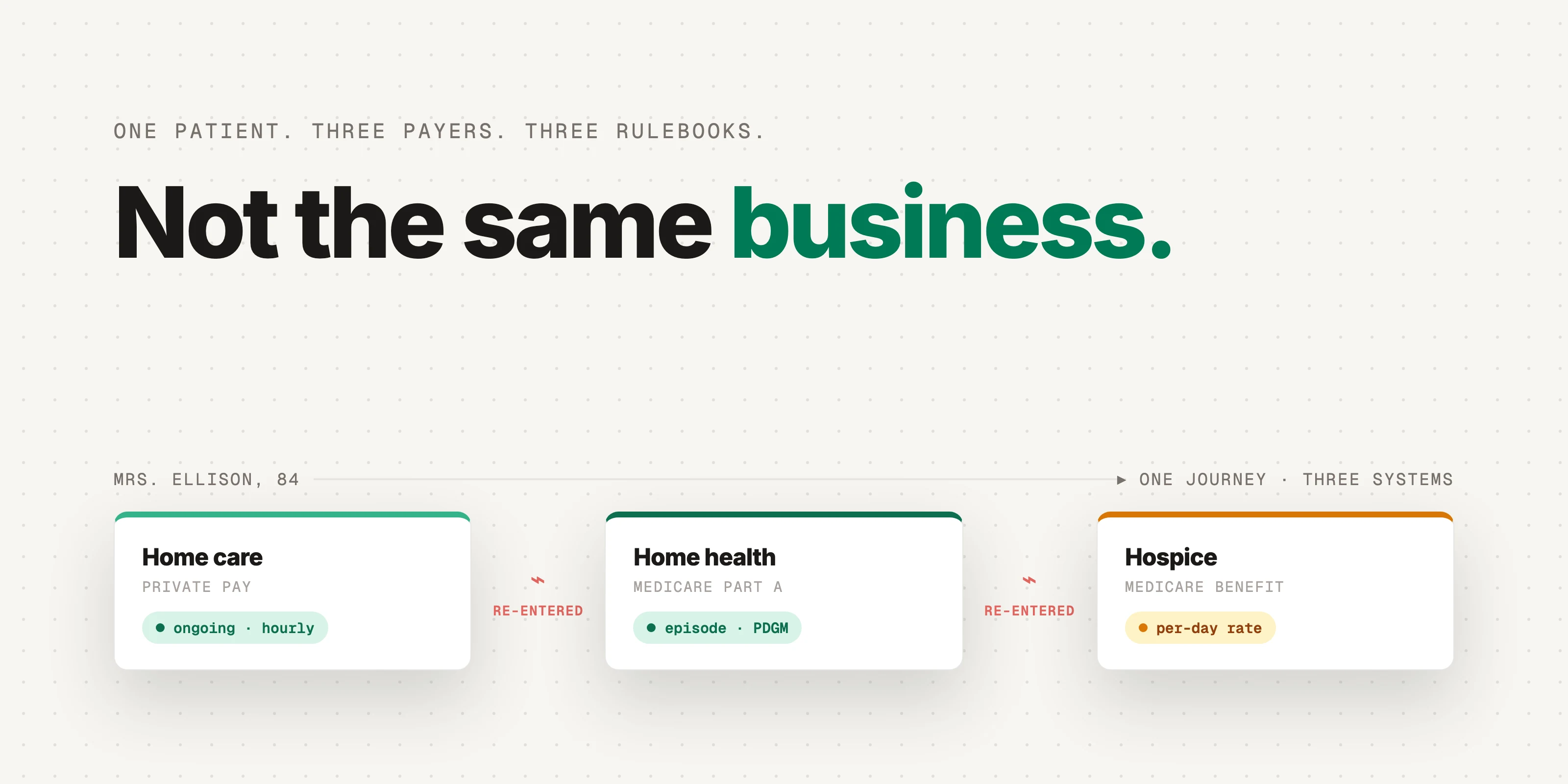
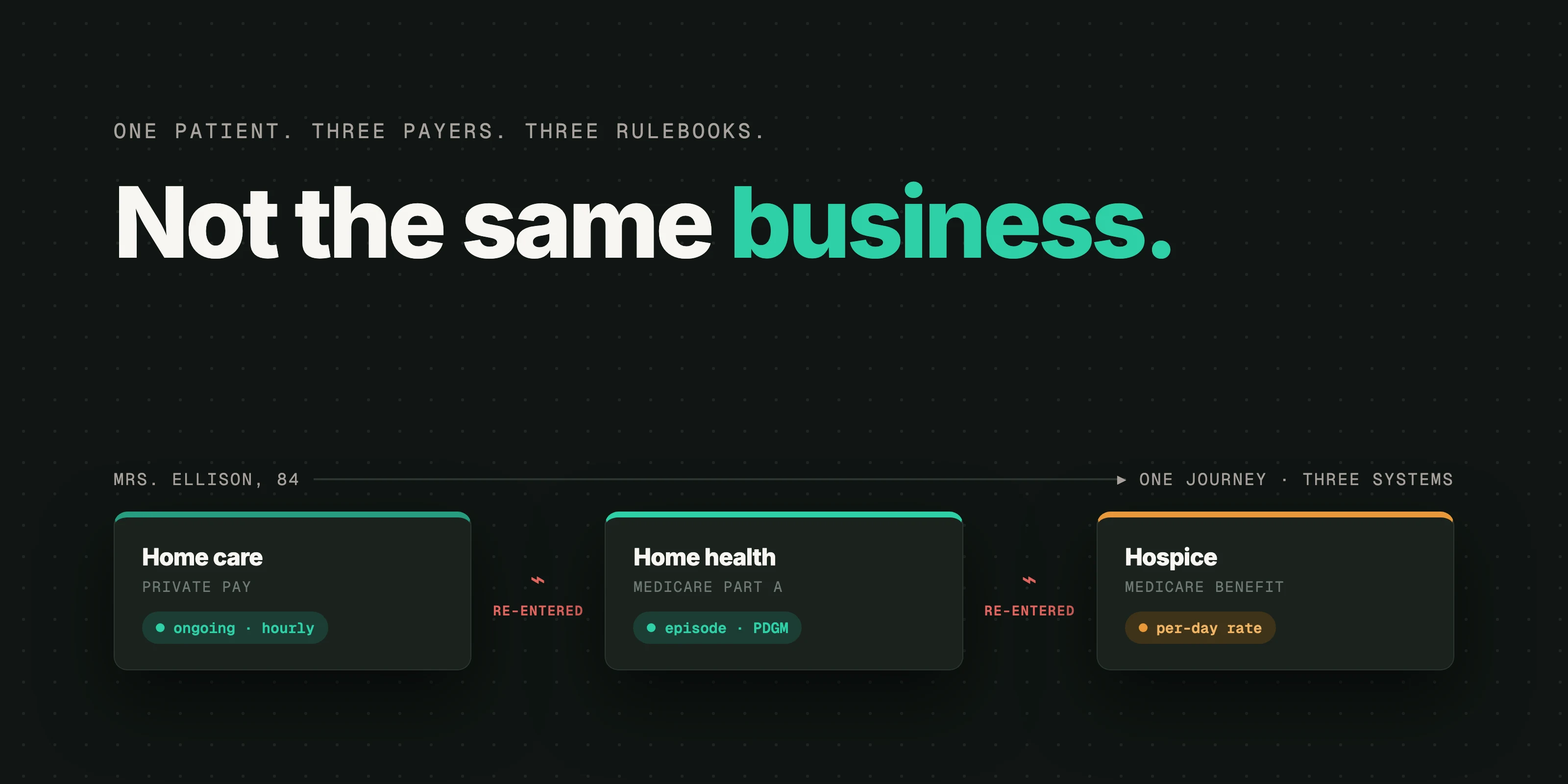
Home Care vs. Home Health vs. Hospice: What's the Difference?
One patient's journey. Three separate businesses. Every seam is where care and revenue leak out.