Summary
They share a patient but not a payer, a rulebook, or a definition of success. Here's what each one actually is, who pays for it, and why the software that ignores the difference fails all three.
People use "home care," "home health," and "hospice" as if they're three words for the same thing: someone older getting help at home. They're not. They're three different businesses, with different payers, different rules, and different economics. And confusing them is one of the quiet reasons the software built for this world is so bad. If you think these are one market, you'll build one tool that serves none of them well.
What is home health care?
Home health is skilled clinical care delivered at home. Nurses, physical and occupational therapists, wound care, medication management. It's ordered by a physician, it's usually short and intermittent (a few weeks after a hospital stay), and it's paid mostly by Medicare and Medicaid. To qualify, a patient generally has to be homebound and have a certified skilled need. It's the most regulated of the three, and the documentation that rides along with it is punishing.
What is hospice care?
Hospice is for people at the end of life. To enroll, a patient has to have a prognosis of six months or less if the illness runs its normal course, and they generally agree to stop curative treatment and focus on comfort. It's paid under the Medicare Hospice Benefit, on a per-day rate, and it wraps in nursing, aides, chaplains, social workers, and bereavement support for the family. The clinical goal is the opposite of home health. So are the incentives, and so are the compliance traps.
What is home care, and does Medicare pay for it?
Home care, the non-medical kind, is what most people actually picture when they imagine aging at home. Help with bathing, dressing, meals, getting to appointments, company. No skilled clinician required, and, to the surprise of most families, no Medicare: traditional Medicare does not pay for it. It's mostly private pay, straight out of the family's pocket, or covered through Medicaid home and community-based waivers. The economics are brutal in a different way: thin hourly margins on a workforce paid close to minimum wage.
One patient, three companies
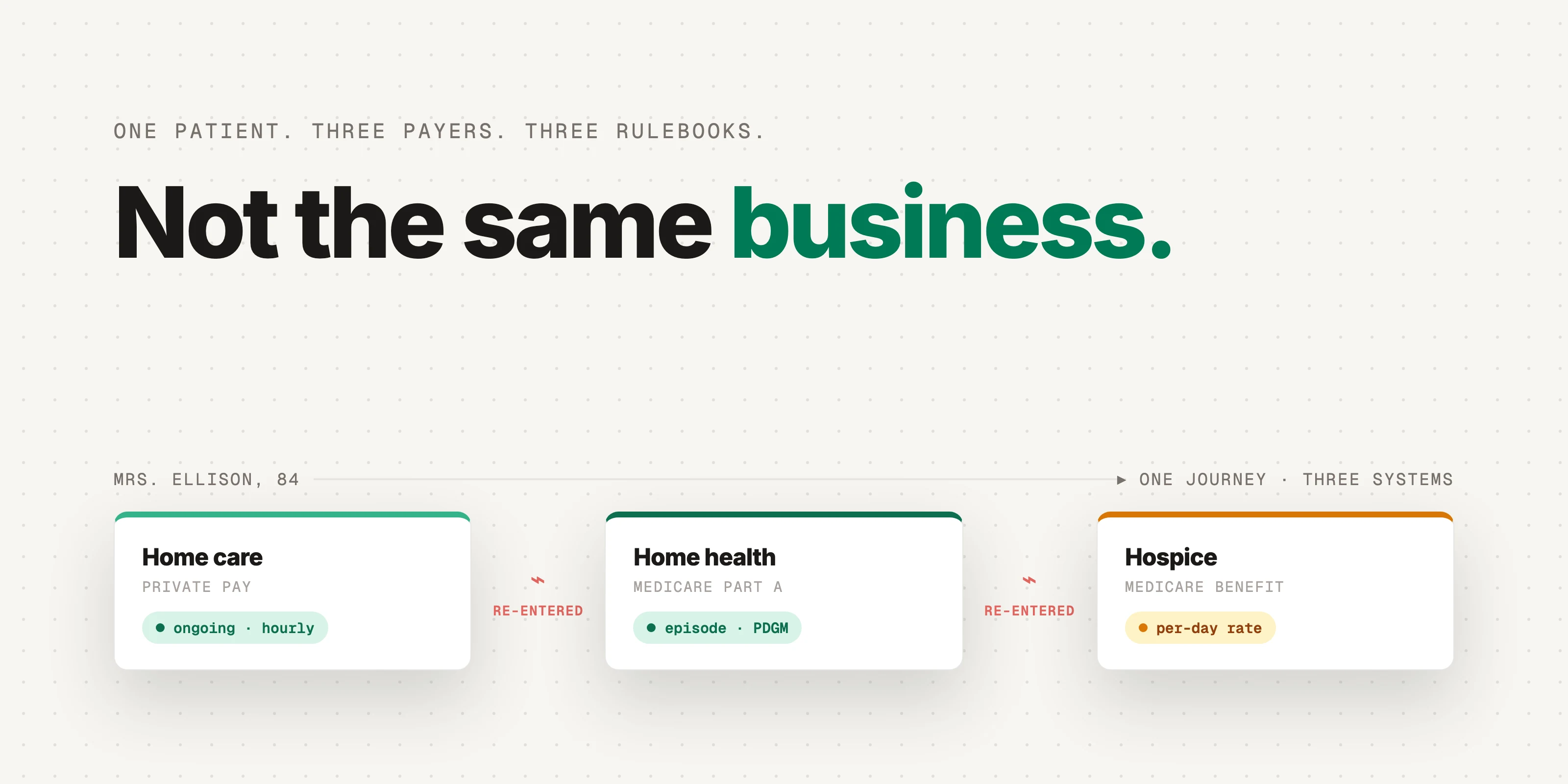
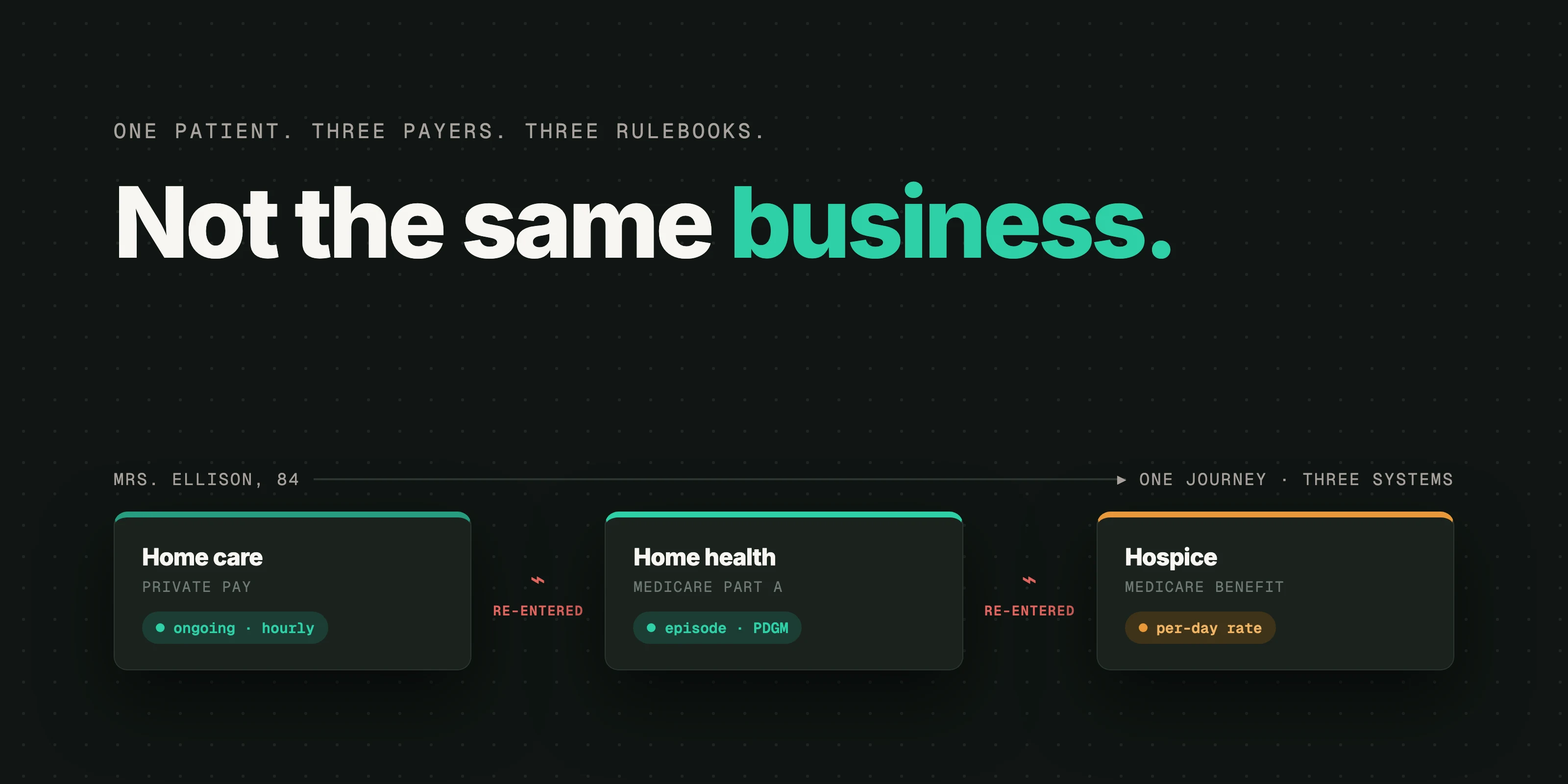
Here's what actually happens on the ground. Plenty of agencies run more than one of these lines under one roof, because the patients flow between them. Someone starts on personal care, has a fall, needs home health, and later transitions to hospice. It's the same human being moving across three businesses stitched together with three billing systems that were never designed to talk to each other.
So the staff become the glue:
- The same patient gets re-entered three times, once per line of business
- Three sets of rules get reconciled by hand, usually in spreadsheets
- Every transition between lines is a chance for care, and revenue, to fall through the crack
- Nobody sees the patient's whole journey, because no system holds it
The patient lives one continuous journey. The software sees three unrelated companies.
Why one system underneath matters
This is a big reason we're building Cardon the way we are: not as a tool bolted onto one of these three worlds, but as one system underneath all of them. It understands that a home health episode, a hospice election, and a personal-care shift are genuinely different things, and it still lets a patient move between them without anyone re-typing a word, which is what we show multi-line agencies who book a demo. Intake and scheduling are where the seams show first, so that's where we started. You can't fix care-at-home with software that only understands a third of it.
The words get used loosely, but the distinctions are exactly where the money and the risk sit. Anyone serious about this industry has to hold all three in their head at once. That's the price of entry. It's also, conveniently, the point where most of the existing software gives up.
See all three in one place
If you run more than one line of business, you already feel the seams. Let us show you what it looks like when one patient record follows the person, not the billing system: book a demo.
Keep reading
IndustryAugust 12, 2026
Why Home Health Nurses Quit (It's the Paperwork, Not the Patients)
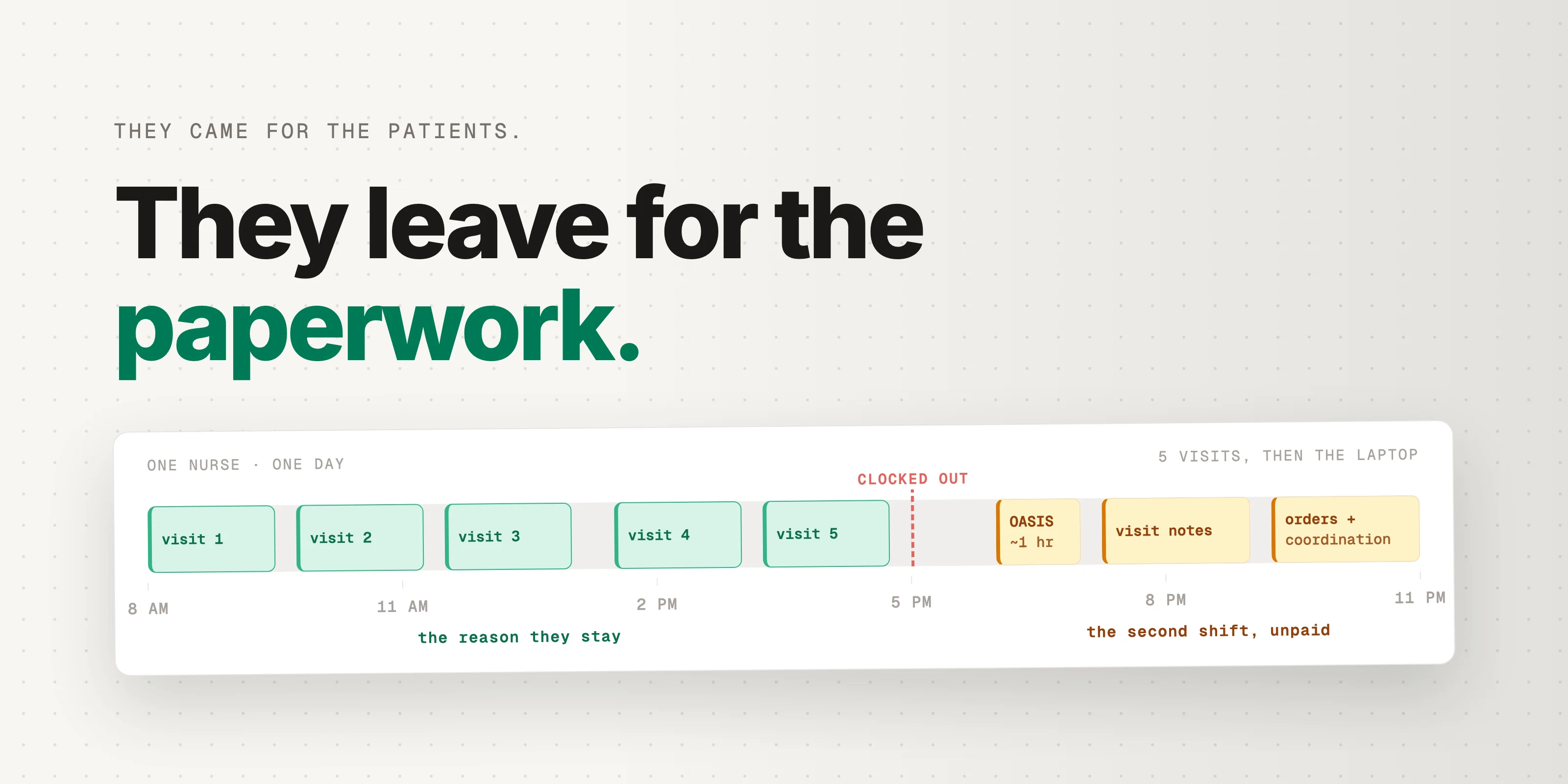
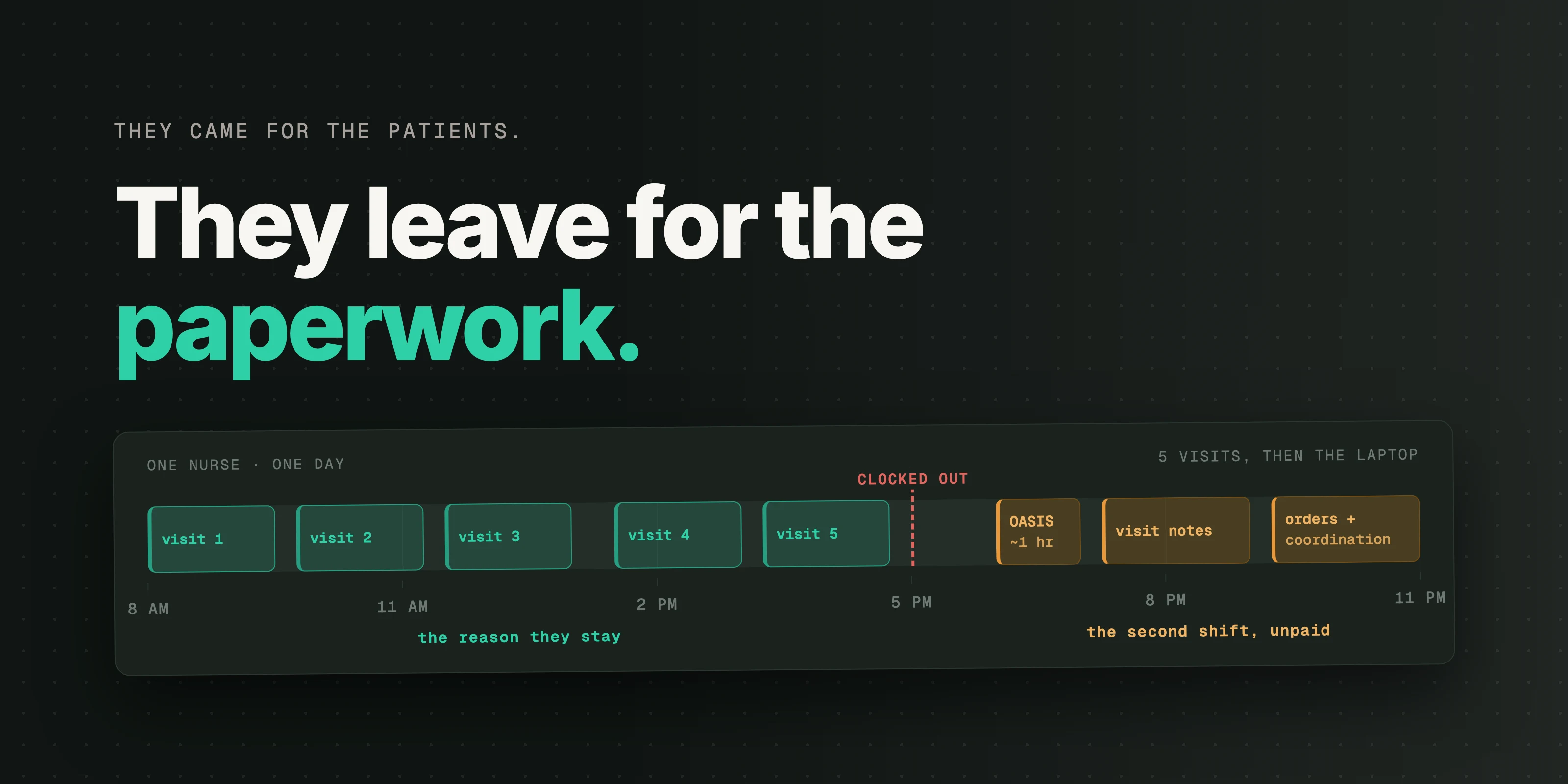
Nurses don't leave home health because of the patients. They leave because of everything the software makes them do around the patients.
IndustryAugust 3, 2026
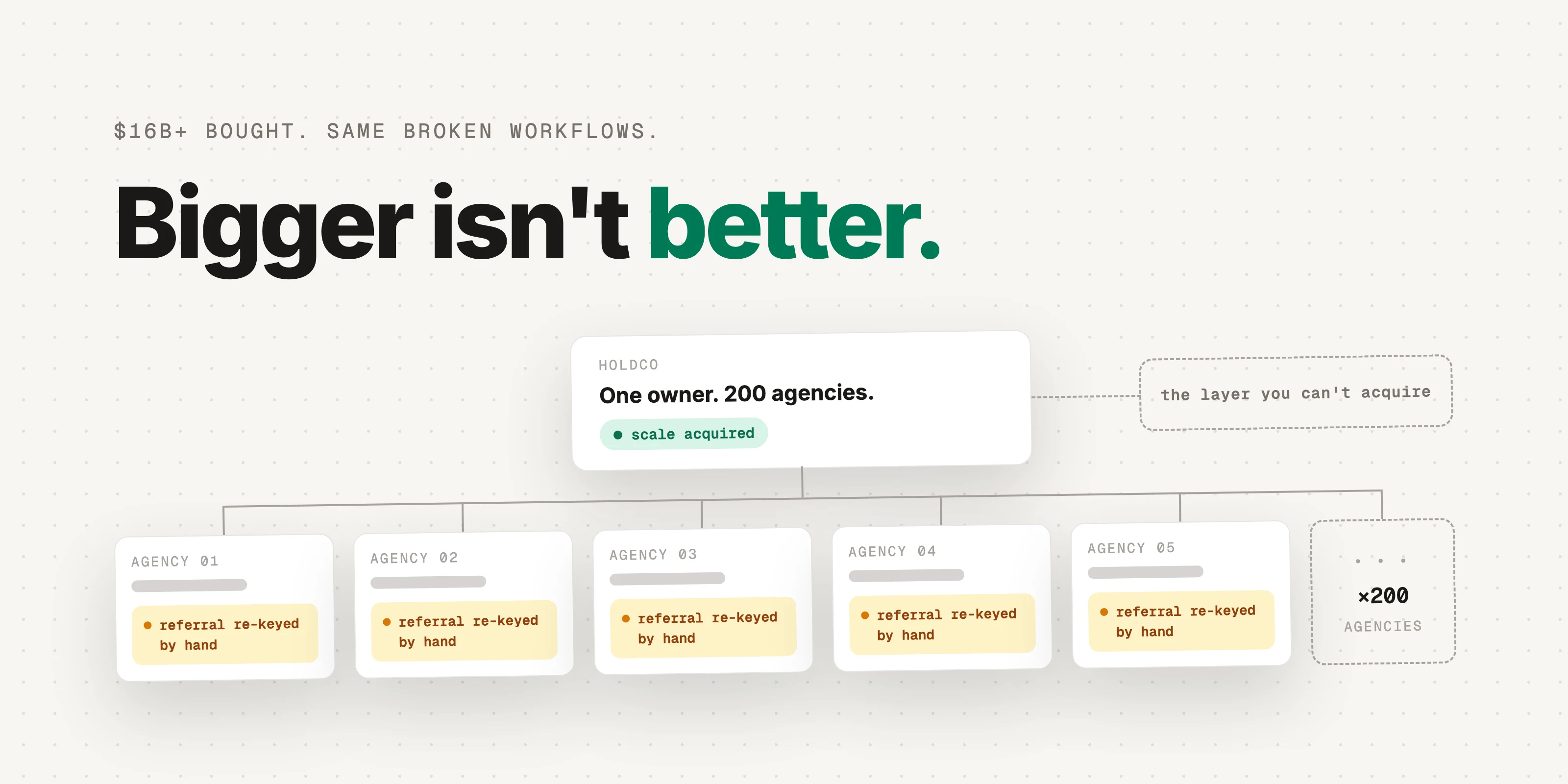
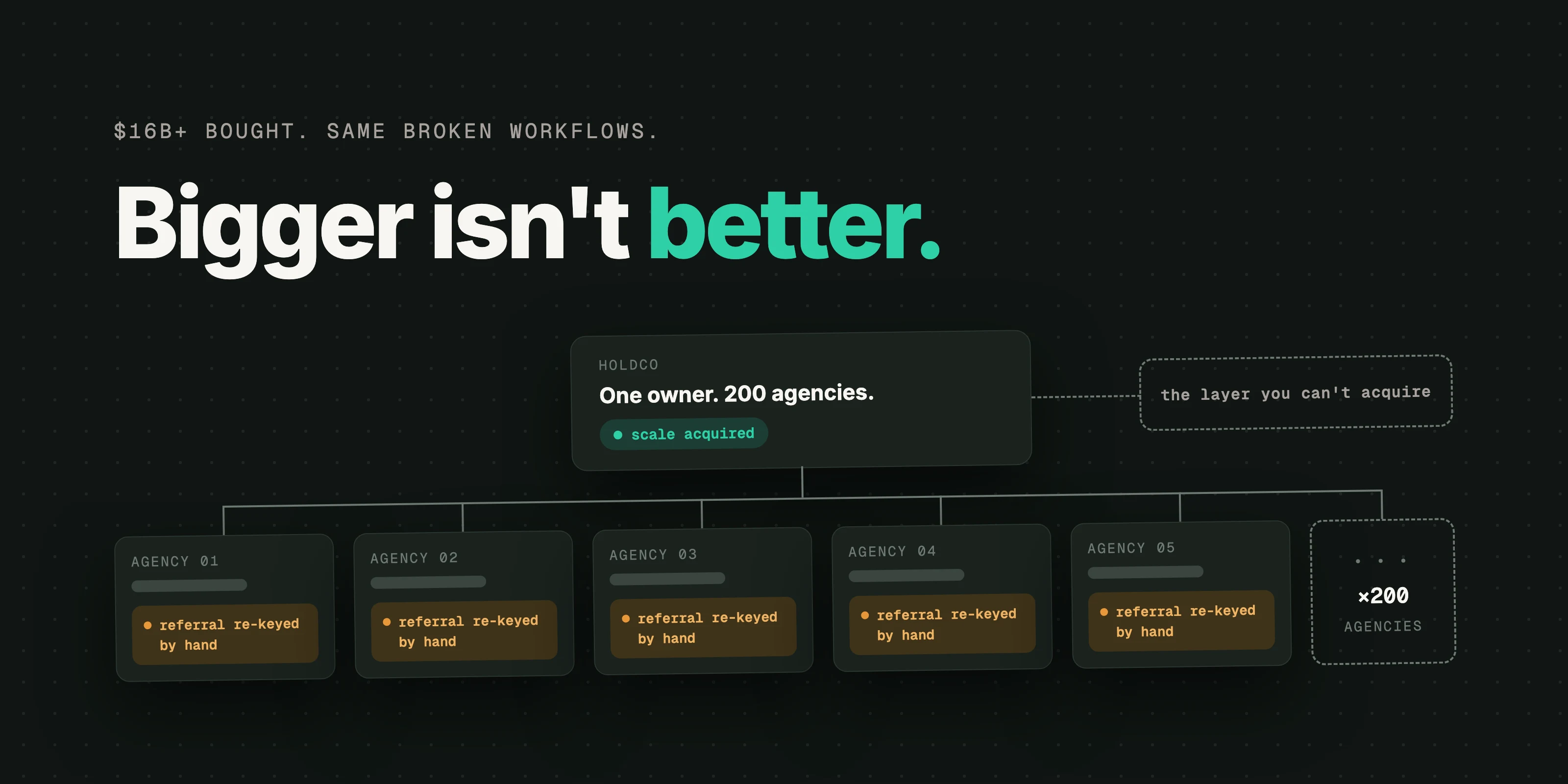
Private Equity Is Buying Up Home Health and Hospice. What It Gets Wrong.
You can roll up 200 agencies and still run every one of them on the same broken workflows.
IndustryJuly 29, 2026
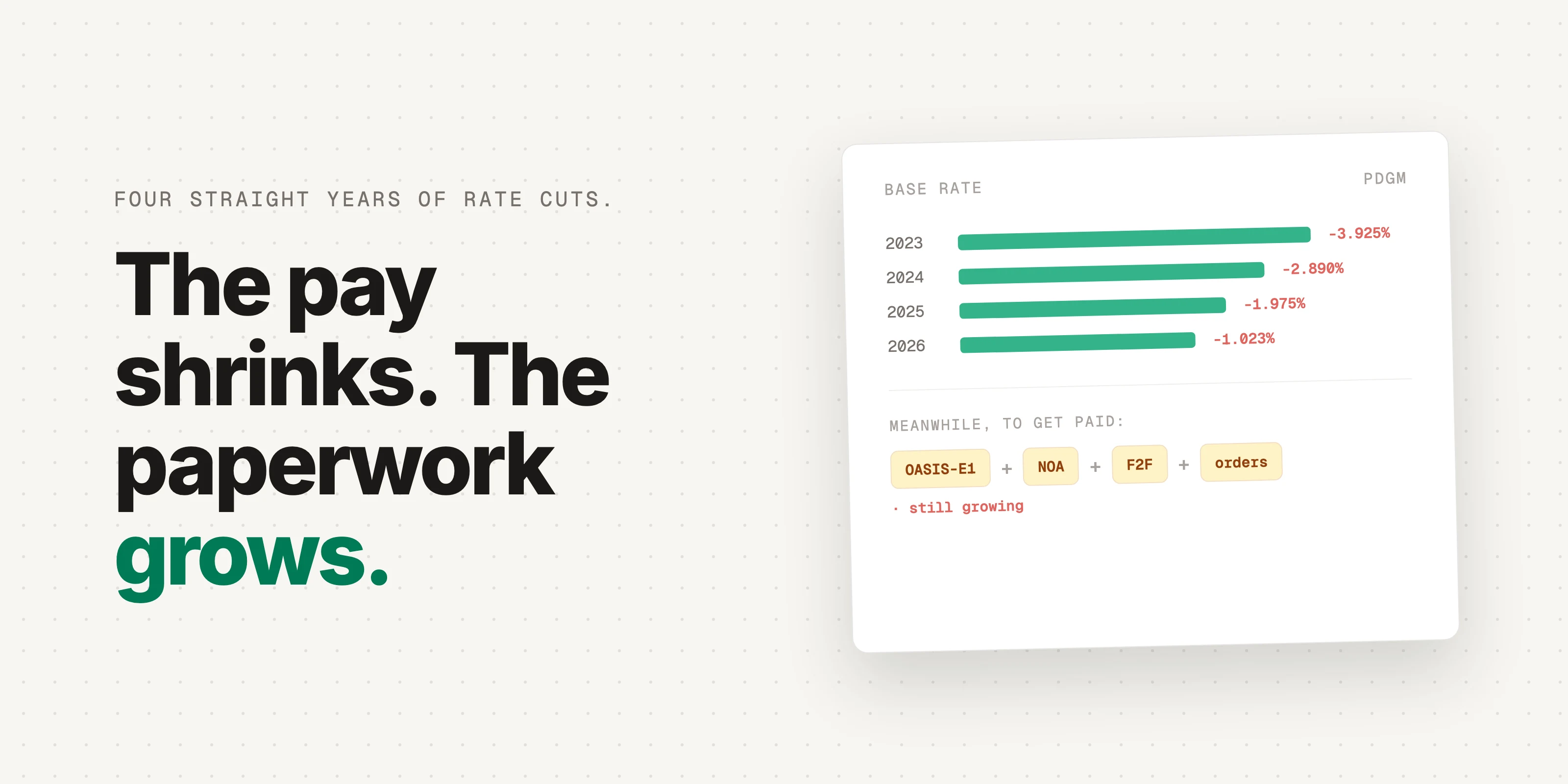
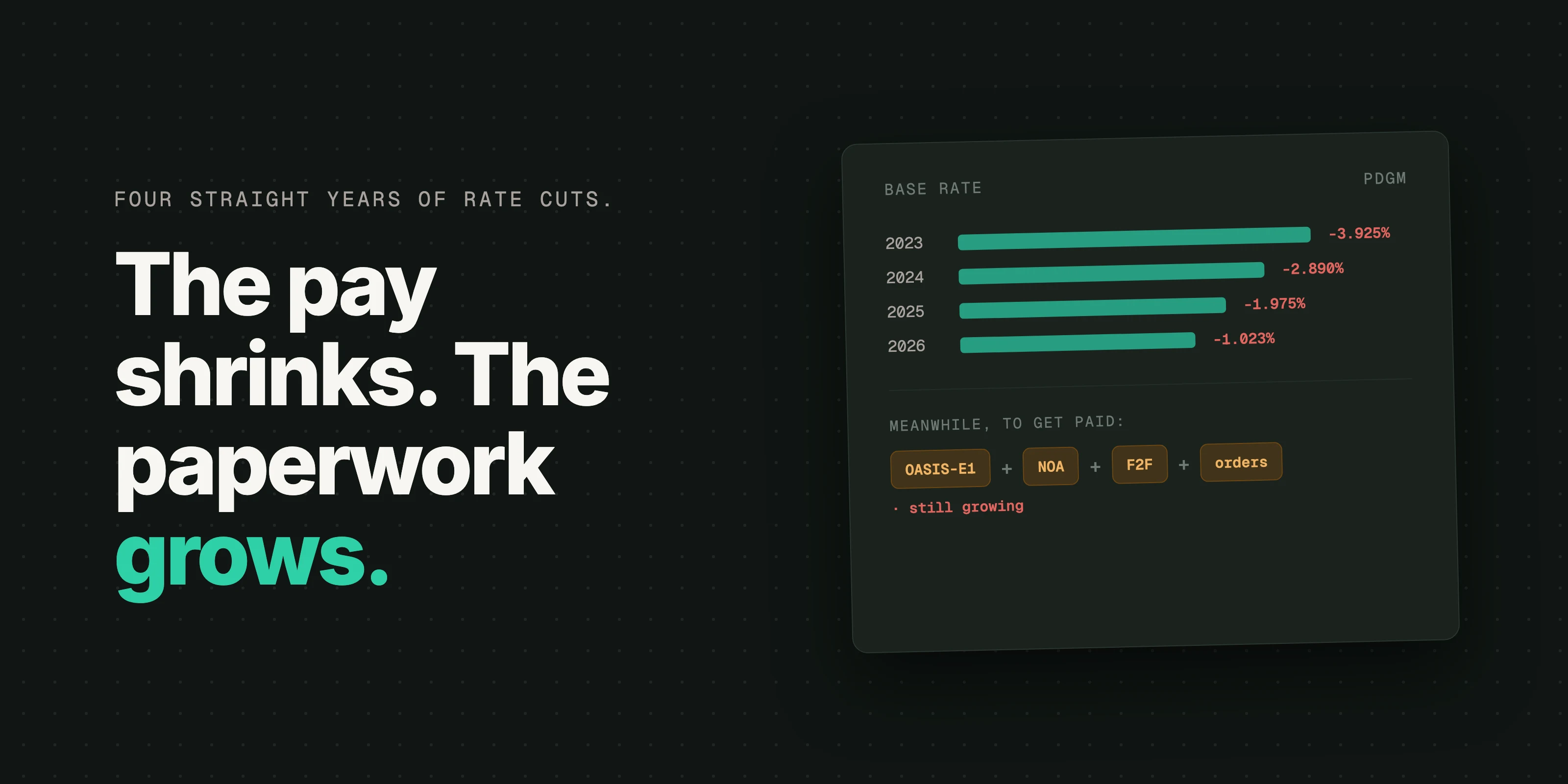
Medicare Home Health Cuts Keep Coming. The Paperwork Keeps Growing.
Falling rates, rising paperwork. That's the vise every home health agency is stuck in.