Summary
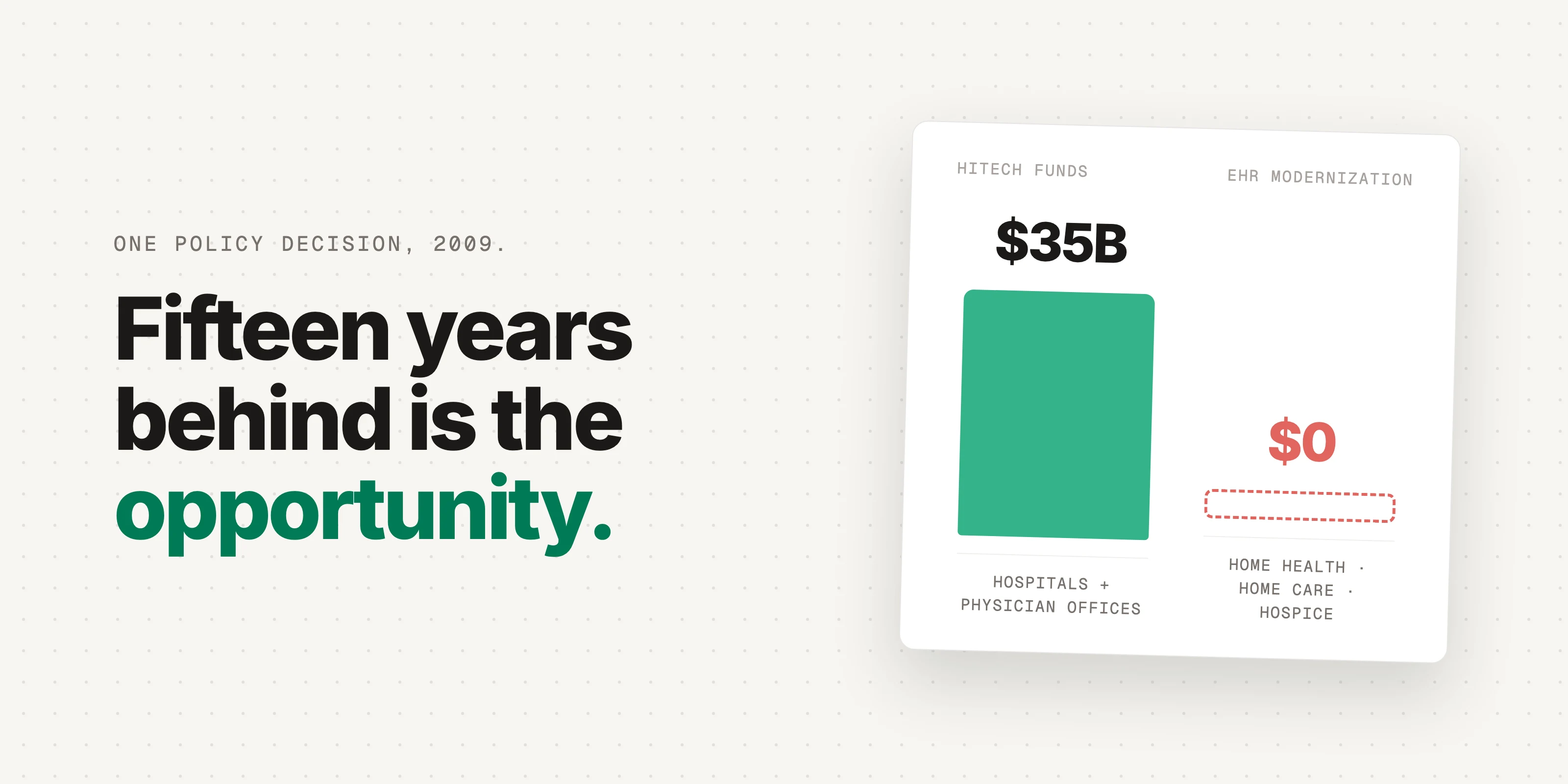
A single policy decision in 2009 poured $35 billion into modernizing hospitals and physician offices, and left home-based care out entirely. Fifteen years later, that gap explains the fax machines. It's also the opportunity.
Spend a day inside a home health agency and one thing hits you fast. The care is often excellent. The software running it is from another decade.
I don't mean that as a knock on the people who build it. I mean it literally. Walk into most agencies and you'll still find a fax machine treated as critical infrastructure. You'll find schedulers working off a whiteboard. You'll find nurses typing the same patient's information into four different systems because none of them talk to each other. It's worth asking why. Hospitals got modern software. Doctors' offices got modern software. The places that care for people in their own homes did not.
Why is home health software so bad?
The answer is more specific than "healthcare is slow," and it isn't an accident. It comes down to one decision from 2009. When the government decided to drag American medicine into the digital age, it passed the HITECH Act and put real money behind it: roughly $35 billion in incentives to move providers off paper and onto electronic records. It worked. Within a few years almost every hospital in the country was running a certified EHR.
But look at who qualified: hospitals and physicians. That was it. Home health, hospice, and home care were never eligible for a dollar of it. The single biggest push to modernize healthcare software in history skipped the entire world of care-at-home. So hospitals had billions of reasons to modernize, agencies had none, and the vendors followed the money, the way vendors always do. A decade and a half later, we're all living with the result.
A tax nobody wrote down
When your systems don't talk to each other, a human becomes the integration layer. Every day, someone at the agency is doing work that only exists because the software won't:
- Re-keying the referral into the EHR
- Re-typing the medication list from a fax
- Standing by the fax machine waiting on orders
- Copying the same patient into billing and payroll by hand
Every one of those handoffs is a place to lose an hour, or lose a patient, or lose a claim. The industry calls this "the way it is." I call it a tax, and the best agencies are paying it every single day.
Fifteen years behind is the opportunity
Here's the part that isn't bad news. Because these agencies never got the "good" version of the old software, they don't have a decade of workflows built around clicking through 200 screens. There's nothing to unwind. You get to build what this industry should have had all along, except now you build it with AI doing the busywork from day one, instead of bolting AI onto a system designed in 2010.
That's the bet we're making at Cardon. We started with the messiest part, intake and scheduling, because that's where the manual re-keying and the lost referrals do the most damage, and it's the first thing we show agencies who book a demo. The goal isn't a prettier EHR. It's an operating system for care-at-home agencies, one where the software fills out its own forms so the staff can get back to the actual work.
Home health didn't end up with bad software because the people are behind. It ended up there because the money that modernized everyone else skipped them. That's a fixable problem. And the fact that everybody already knows the software is bad is usually the first sign that something is about to change.
See it on your own workflow
If you've ever watched a nurse type the same patient into three systems, you already know the problem. Let us show you what it looks like when that just doesn't happen: book a demo.
Keep reading
IndustryAugust 12, 2026
Why Home Health Nurses Quit (It's the Paperwork, Not the Patients)
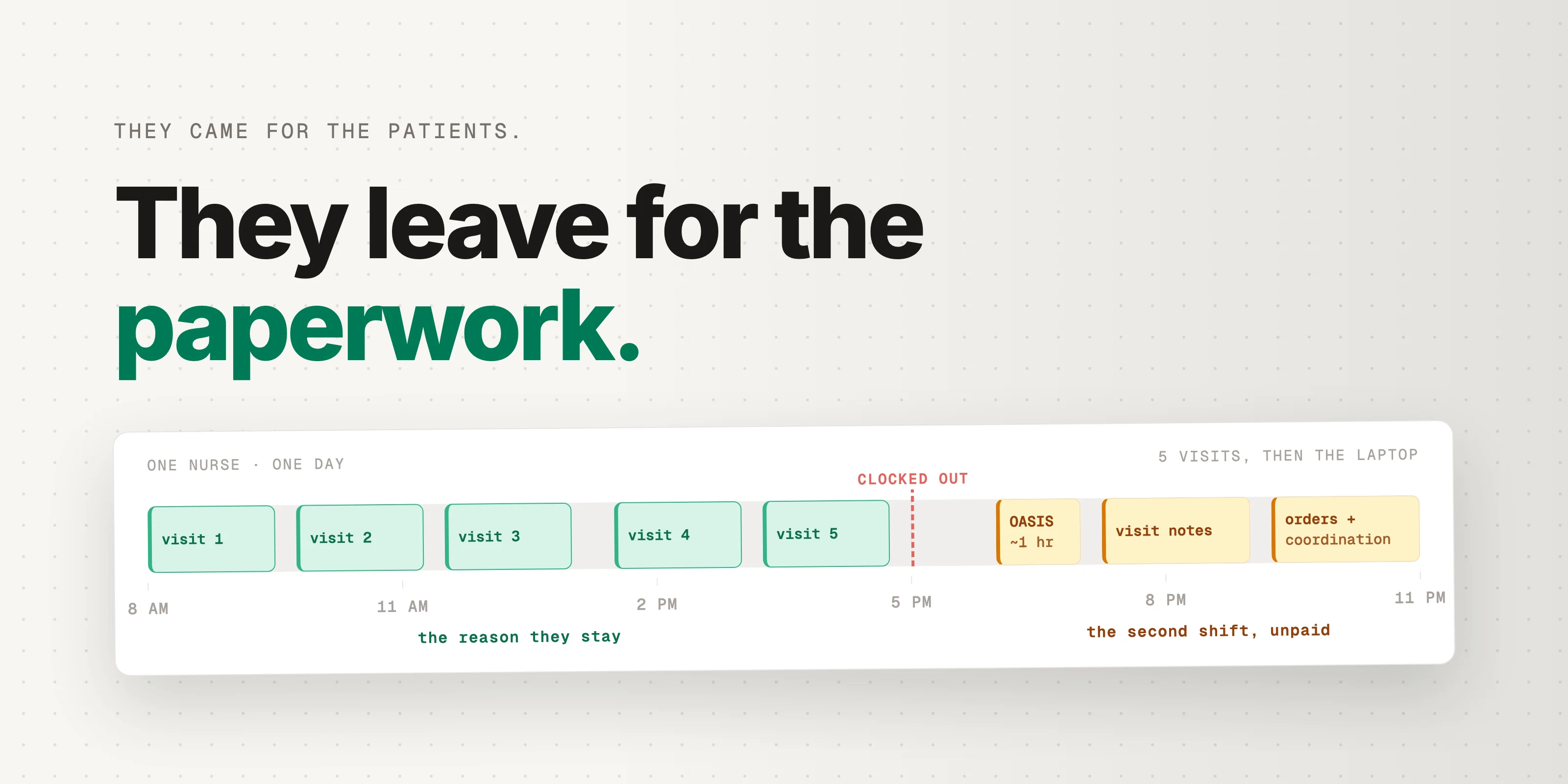
Nurses don't leave home health because of the patients. They leave because of everything the software makes them do around the patients.
IndustryAugust 3, 2026
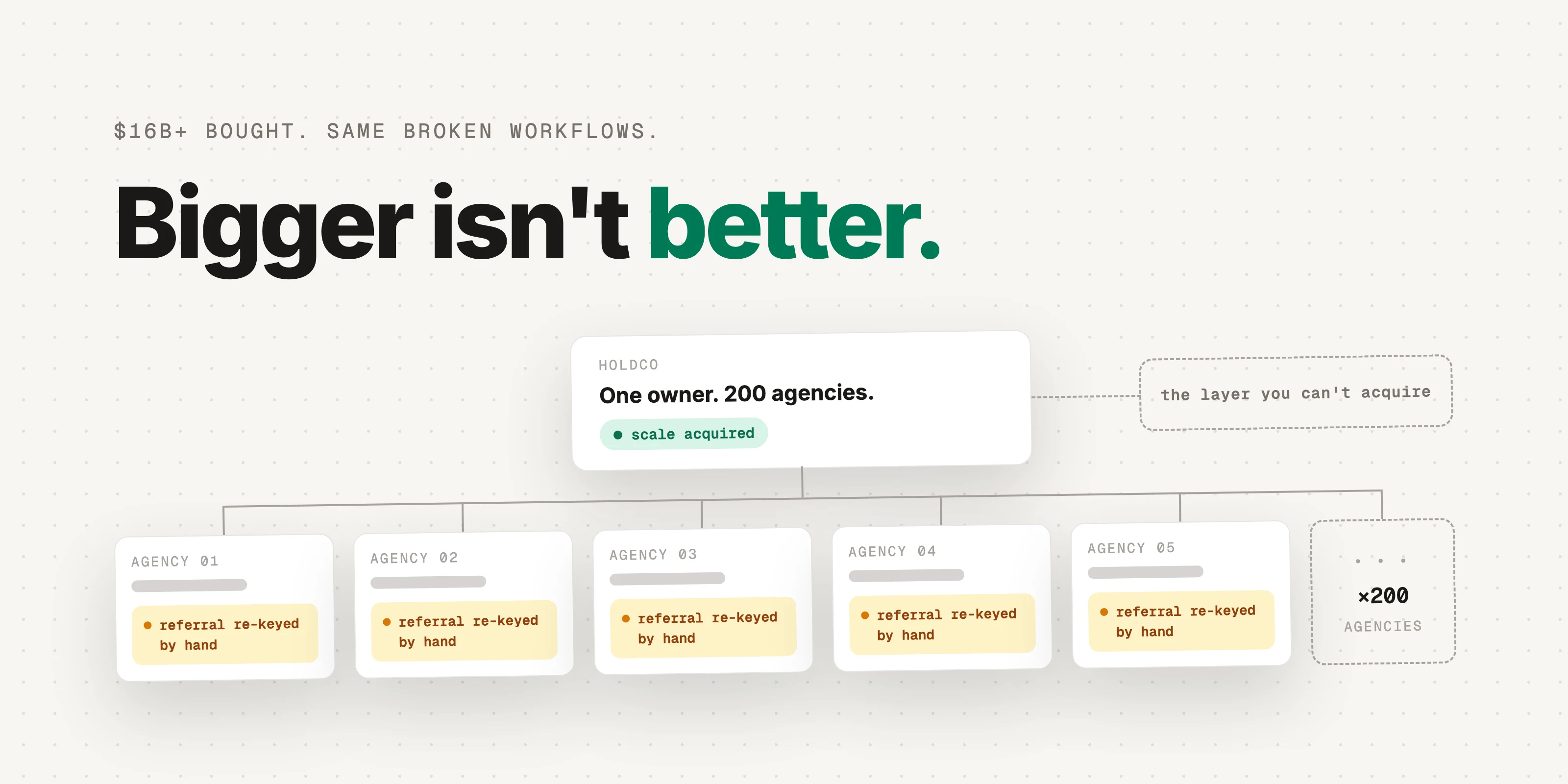
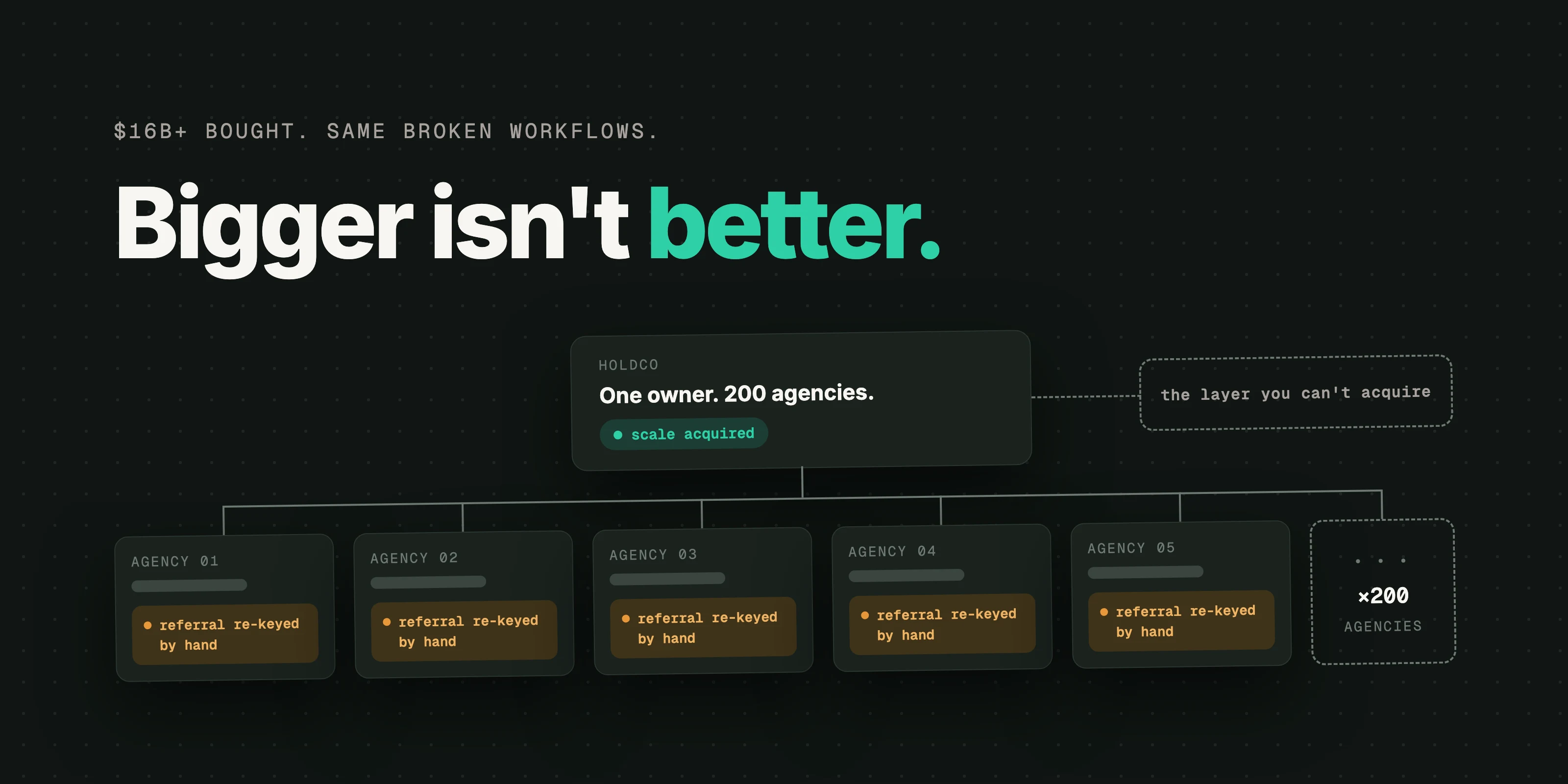
Private Equity Is Buying Up Home Health and Hospice. What It Gets Wrong.
You can roll up 200 agencies and still run every one of them on the same broken workflows.
IndustryJuly 29, 2026
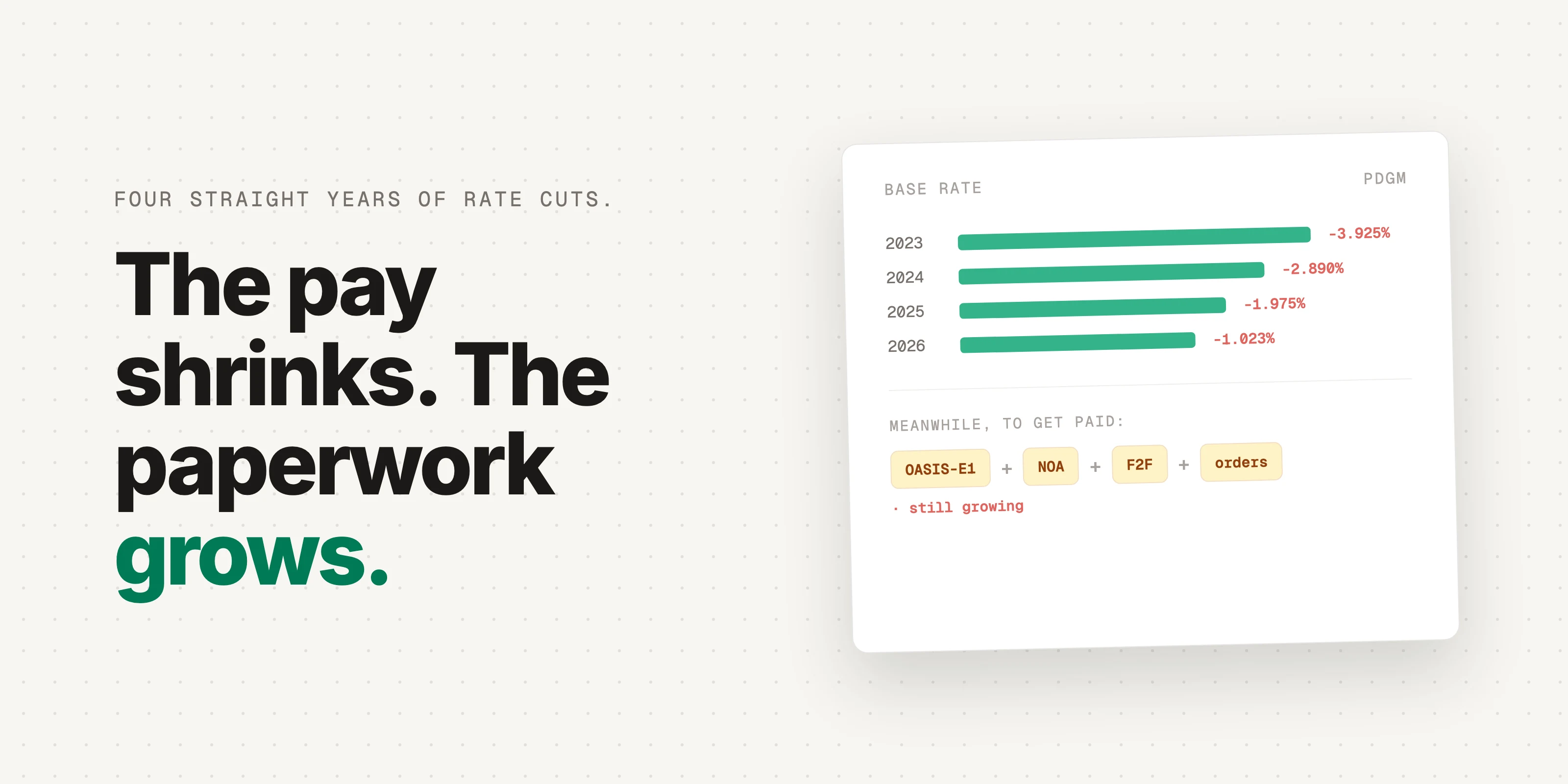
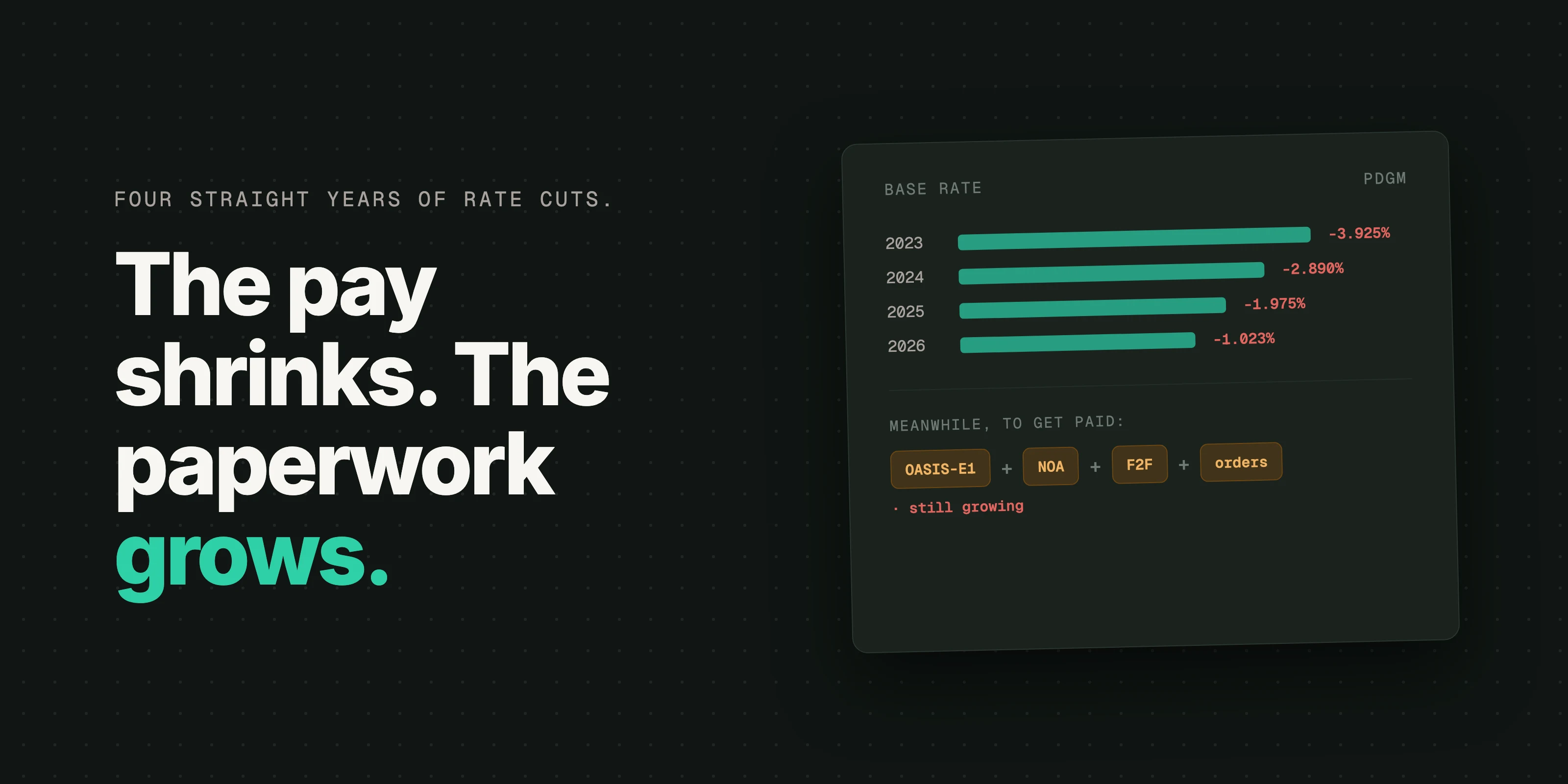
Medicare Home Health Cuts Keep Coming. The Paperwork Keeps Growing.
Falling rates, rising paperwork. That's the vise every home health agency is stuck in.