Summary
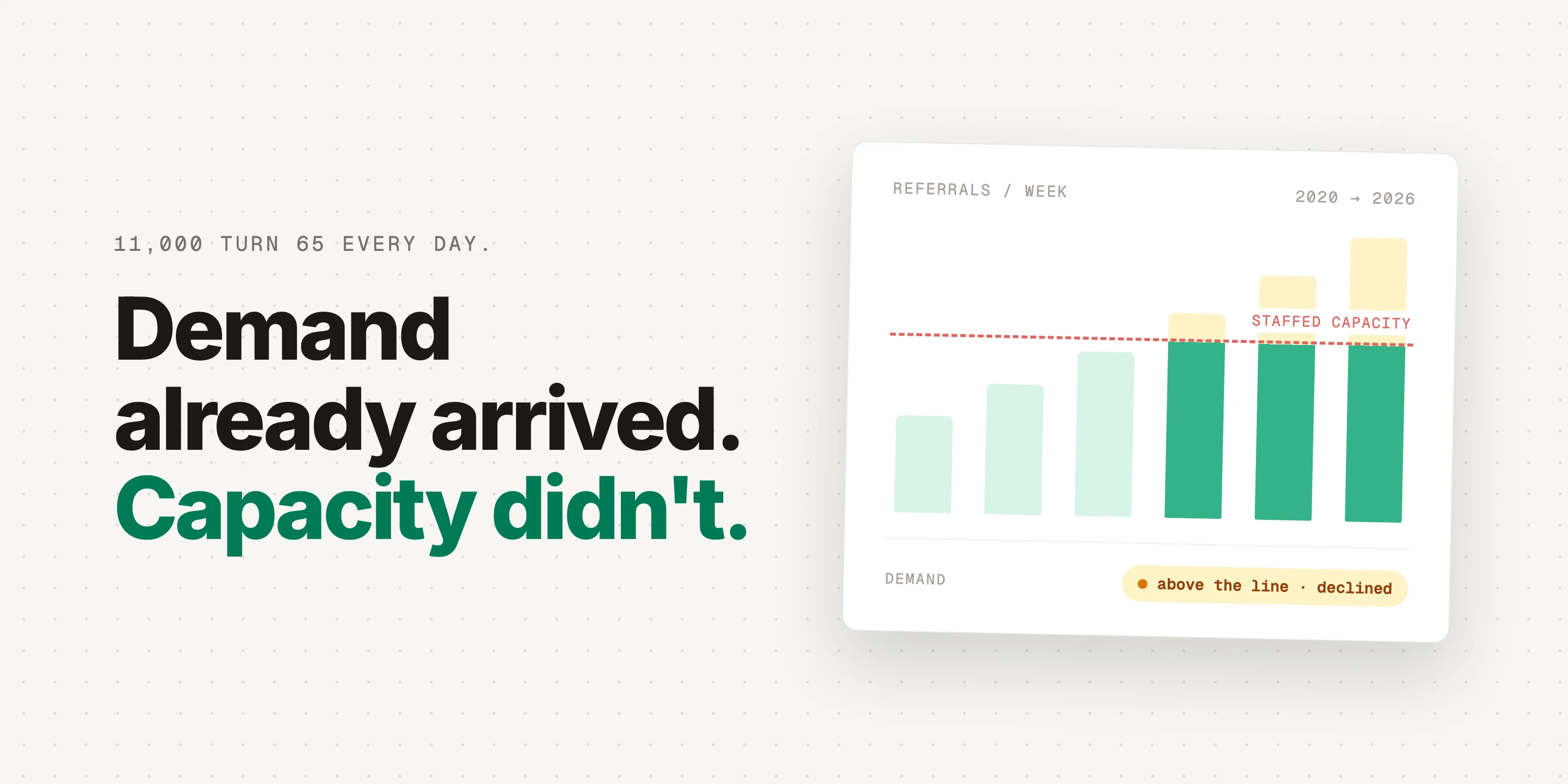
More than 11,000 Americans turn 65 every day, and most of them want to age at home. Yet agencies decline referrals every week. The real constraint in care at home is capacity, not demand, and most of that capacity is lost before anyone reaches the patient.
In the middle of the biggest surge in demand for care at home in American history, agencies are turning patients away. Not a handful of them. A lot. And not because they don't want the work. The constraint on this industry is no longer demand. It's capacity, and most of that capacity is being burned before anyone reaches a patient's door.
How fast is demand for home care growing?
More than 11,000 Americans are turning 65 every single day right now, the most in history. Retirement researchers call this stretch Peak 65. It isn't a forecast about some future decade. It's this week, and next week, and every week for years. The 65-and-older population is on its way from roughly 56 million to more than 80 million by 2040, and the group growing fastest is the one over 85, the people who need the most hands-on help of all.
Almost none of them want a facility. About three-quarters of adults over 50 say they want to stay in their own homes and communities as they age. So demand isn't just growing. It's moving, out of hospitals and nursing homes and into living rooms across the country.
Why can't agencies find enough caregivers?
The supply of people who do this work is not keeping pace with the demand. Home care posts some of the highest job-opening counts of any occupation in the country, and caregiver turnover runs north of 65% a year in the industry's own benchmarking studies. Many agencies effectively re-hire their entire field workforce every year. That's pouring water into a bucket with a hole in the bottom.
The result is visible everywhere: agencies decline referrals they'd love to take, not because demand is soft, but because they cannot staff and onboard the case fast enough.
Can you hire your way out of the caregiver shortage?
The math doesn't work. There aren't enough people entering this workforce to close a gap that size, no matter where wages go. Anyone who says the fix is "just recruit more caregivers" is describing the bucket, not the hole.
Which leaves one lever: make the people you already have far more effective. Watch where an agency's hours actually go and a huge share never touches a patient:
- Taking referrals and re-typing them into the EHR
- Chasing eligibility checks and authorizations
- Building and rebuilding schedules by hand
- Documentation that exists mostly to satisfy a payer
Every one of those hours is capacity. It's the difference between the referral you admit and the referral you turn away. The fastest way to see it is to measure your own referral-to-first-visit time, which is exactly what we walk through when agencies book a demo.
The gap before the front door
That's the gap we built Cardon to close, and it's why we started with intake and scheduling rather than another dashboard. If demand is exploding and you can't add bodies fast enough, software has to actually do the busywork, not store it in nicer-looking screens. That's the whole idea behind the agentic EHR we're building for home health, home care, and hospice: one system that runs the work behind every episode, starting with the two places capacity leaks first.
The wave isn't coming. It made landfall. The question for the next decade isn't whether there will be enough patients. It's whether your agency can build the capacity to care for them, and that's an operations problem long before it's a clinical one.
See where your capacity is leaking
Look at how long an admission takes you today, from referral to first scheduled visit. Then bring that number to a 20-minute conversation and we'll show you what it looks like when the software does the work: book a demo.
Keep reading
IndustryAugust 12, 2026
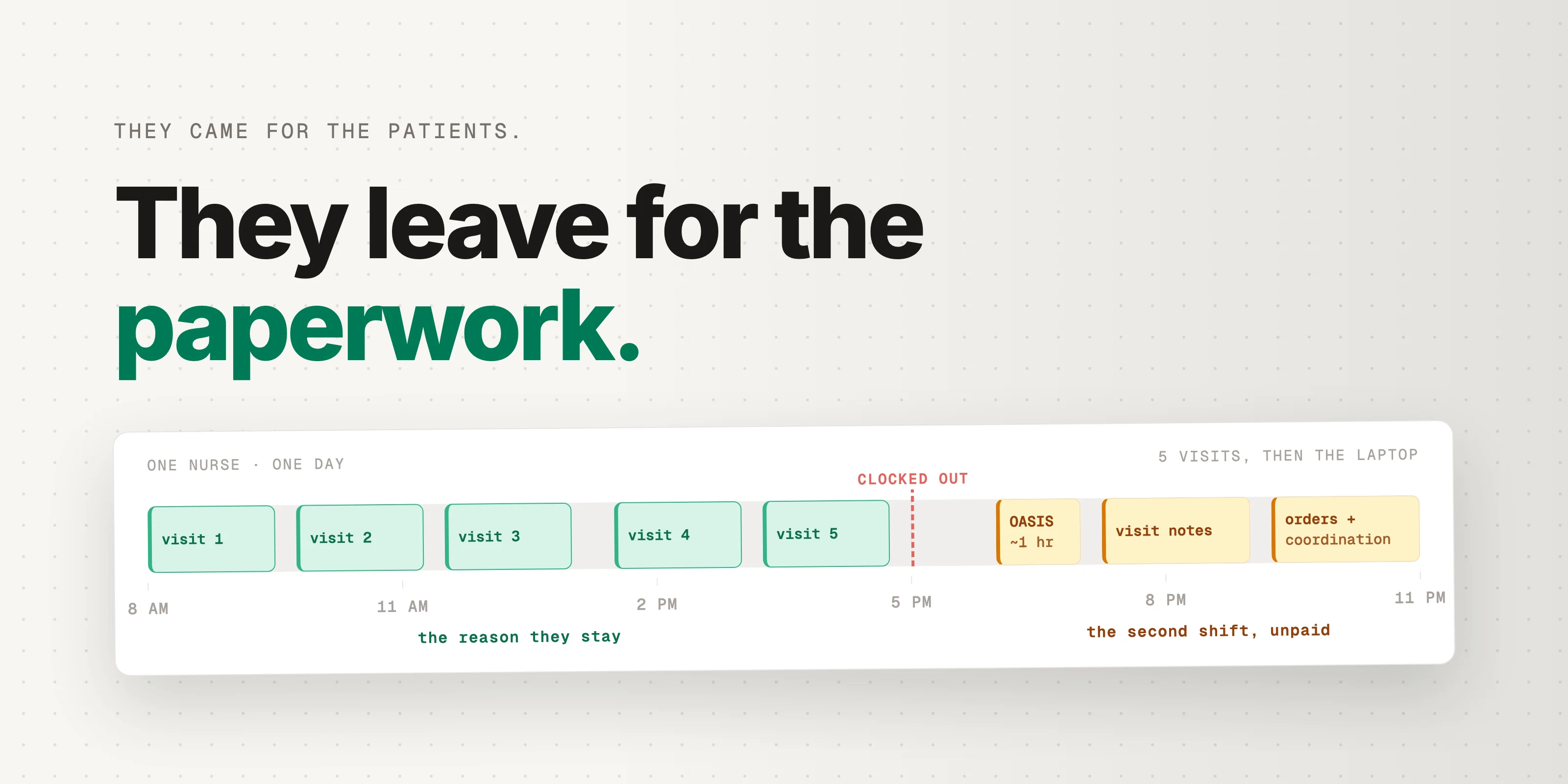
Why Home Health Nurses Quit (It's the Paperwork, Not the Patients)
Nurses don't leave home health because of the patients. They leave because of everything the software makes them do around the patients.
IndustryAugust 3, 2026
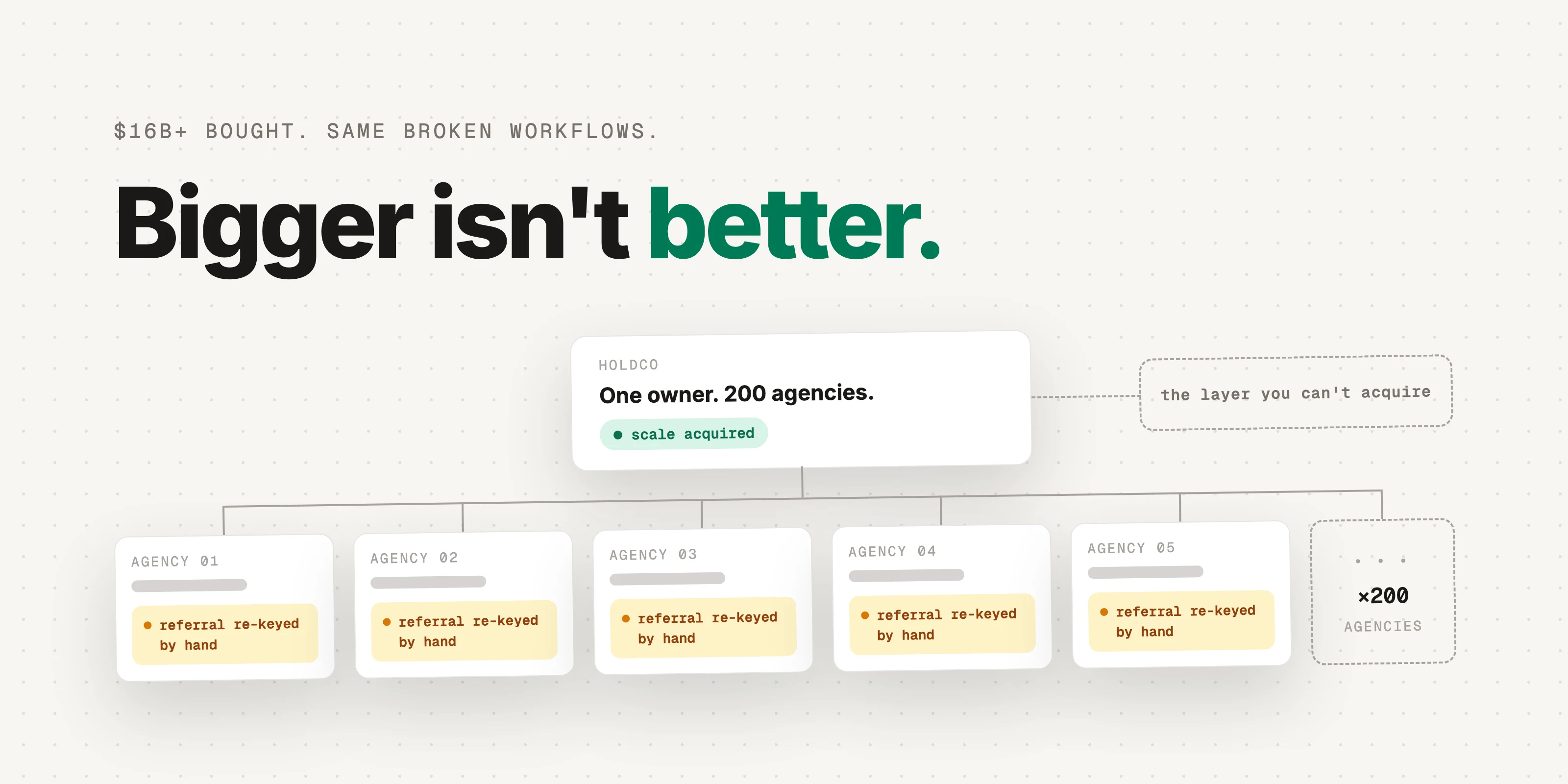
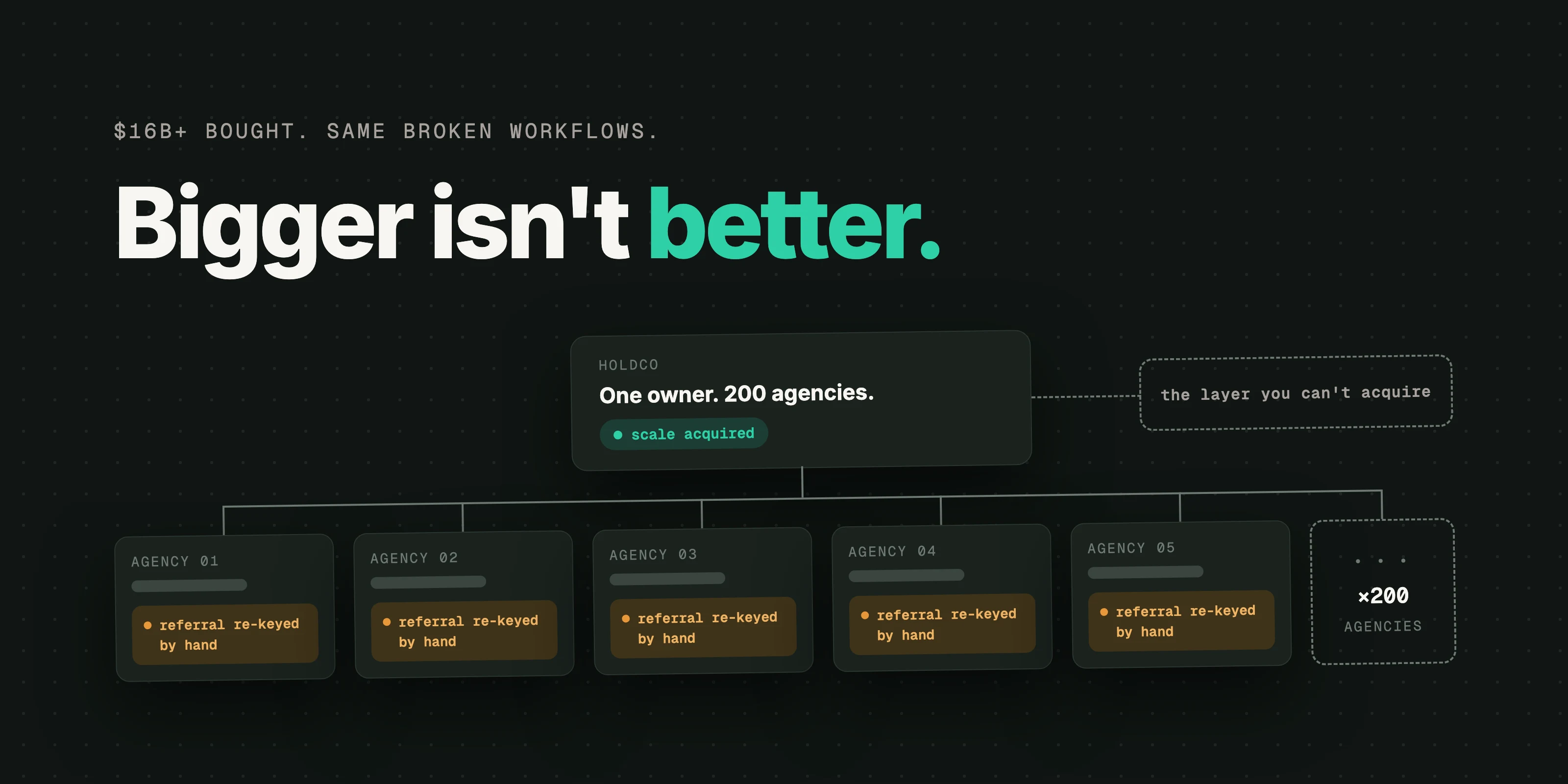
Private Equity Is Buying Up Home Health and Hospice. What It Gets Wrong.
You can roll up 200 agencies and still run every one of them on the same broken workflows.
IndustryJuly 29, 2026
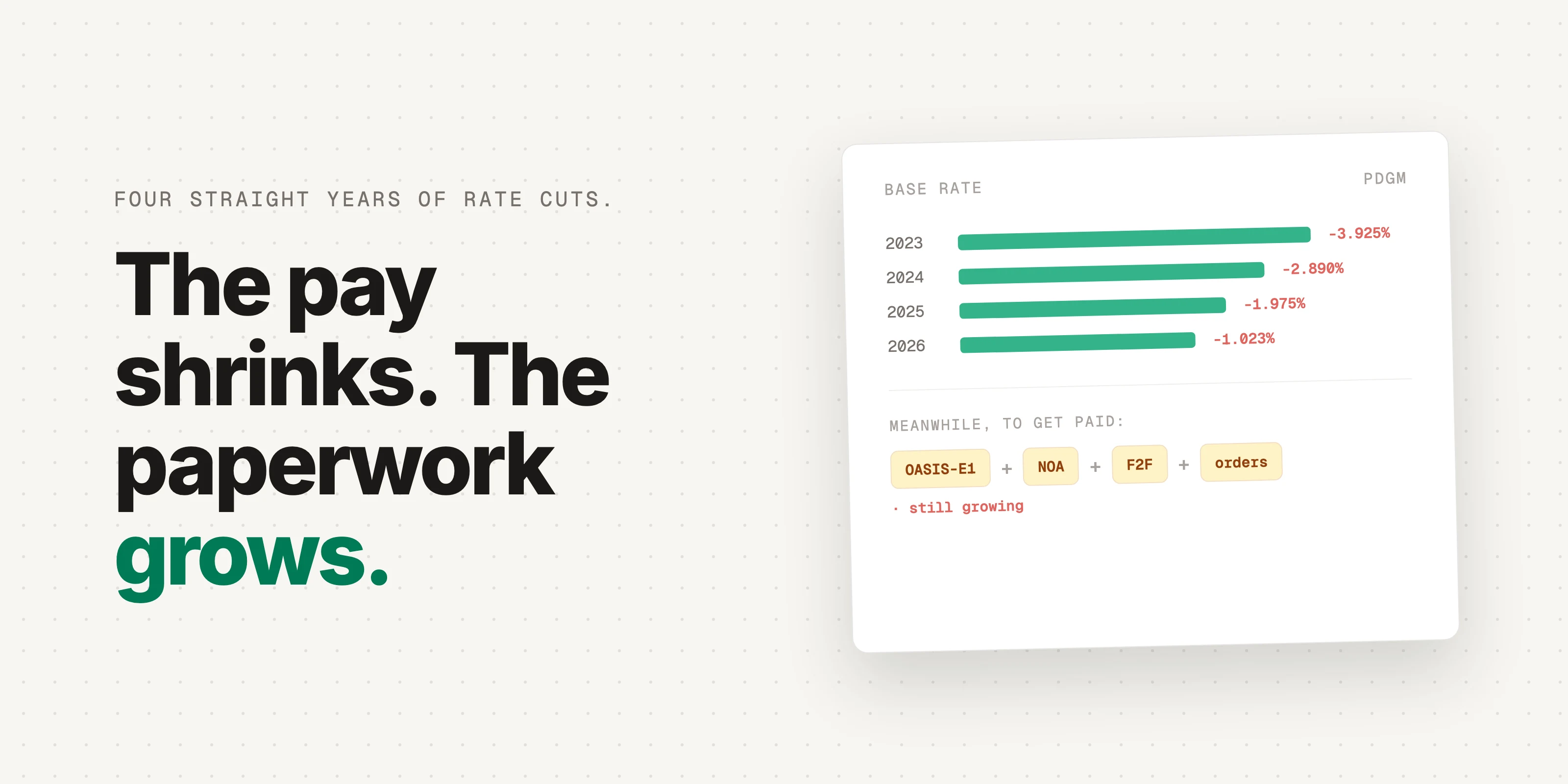
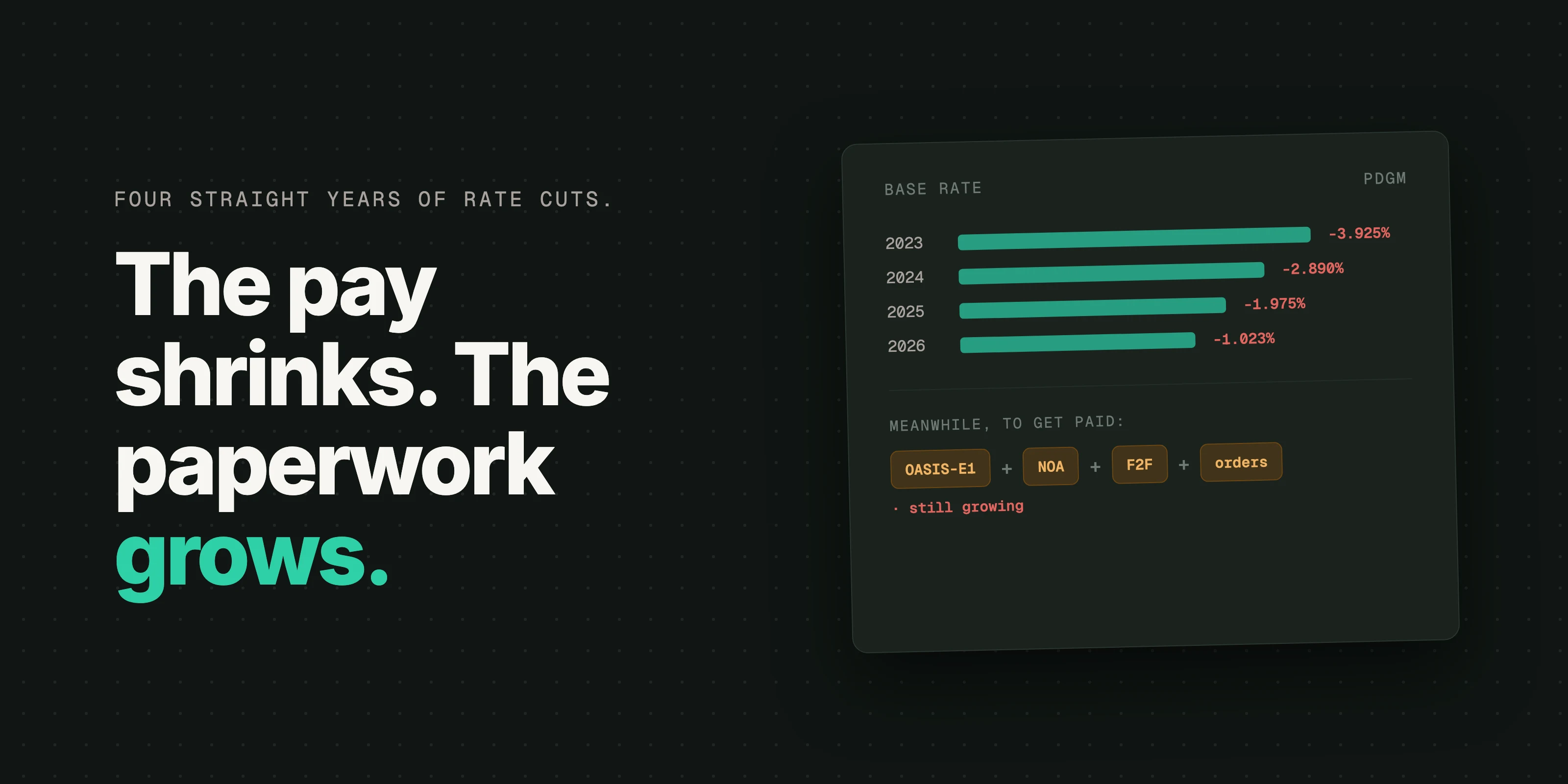
Medicare Home Health Cuts Keep Coming. The Paperwork Keeps Growing.
Falling rates, rising paperwork. That's the vise every home health agency is stuck in.