Summary
California doesn't do overtime like the rest of the country, and most of the overtime an agency pays there is triggered by a scheduling decision made in a hurry. The rules are fixed. The scheduling is where the leverage is.
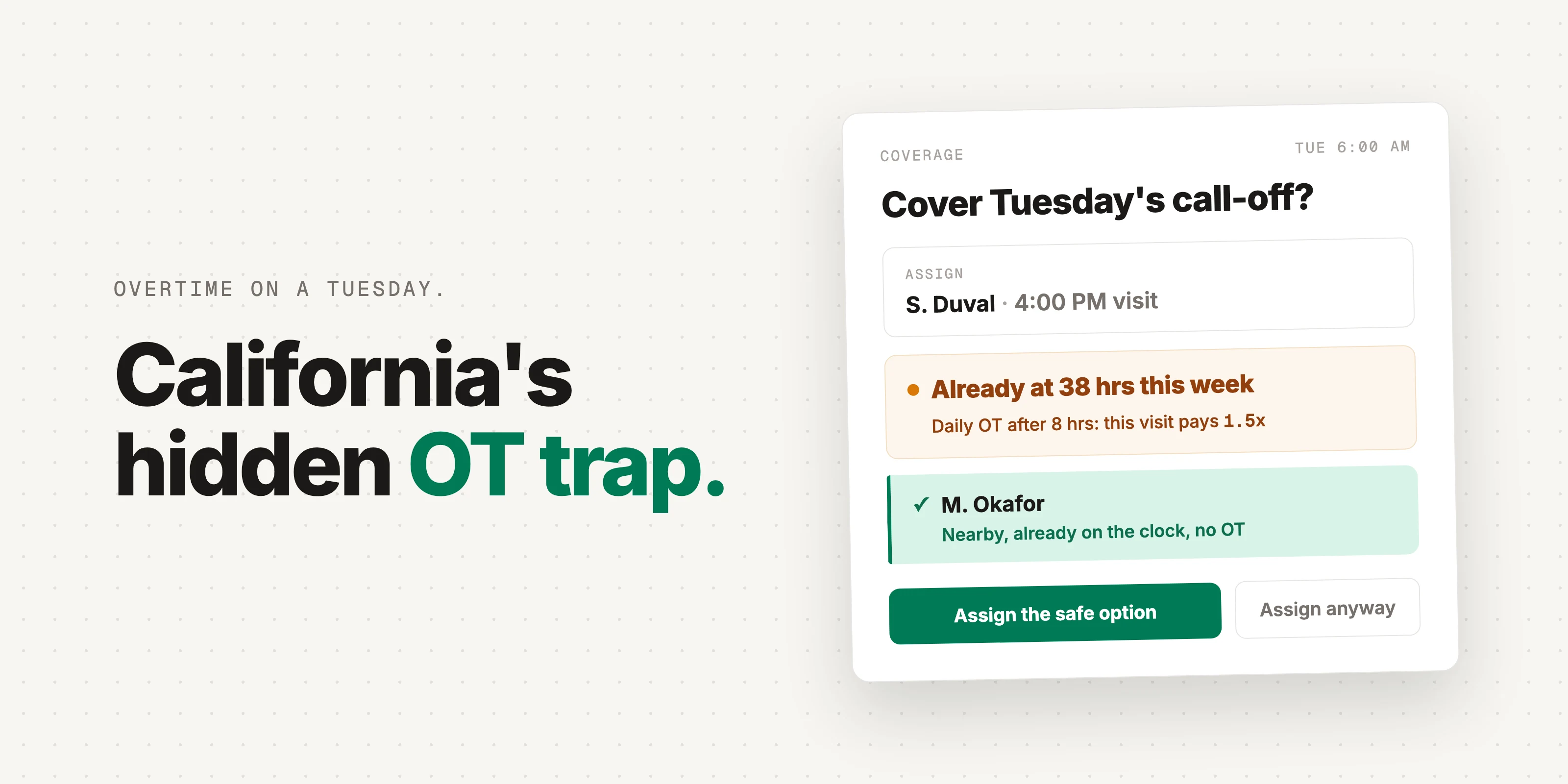
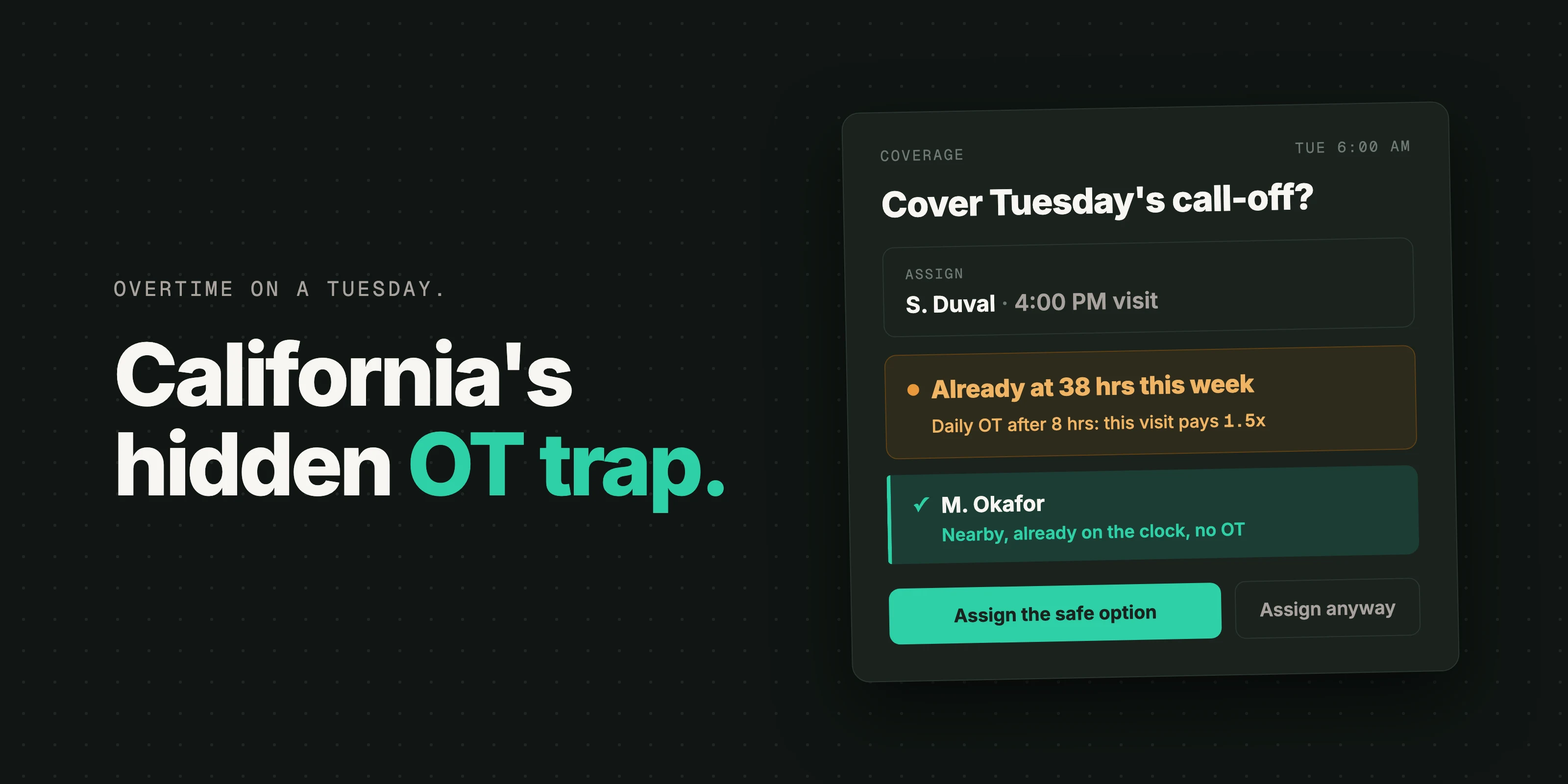
If you run a home care, home health, or hospice agency in California, you already know the state makes staffing harder than anywhere else. What most owners don't see is how much of that difficulty shows up as overtime nobody planned for, triggered by scheduling decisions made in a hurry. It doesn't look like a problem. It looks like a coordinator doing their job. A caregiver calls off, someone covers the shift, the client is happy. Only at payroll do you learn that "someone" was already at 38 hours, and you just paid time-and-a-half on a visit you billed at a flat rate.
Why California is different
California doesn't calculate overtime the way most of the country does, and a few of its rules catch agencies constantly:
- Daily overtime. Most employees earn 1.5x after 8 hours in a single day, and 2x after 12, not just after 40 in a week. A caregiver can cross into overtime on a Tuesday even if the week is light.
- The seventh-day rule. Work someone all seven days of a workweek and the first 8 hours on day seven are already overtime.
- The Domestic Worker Bill of Rights. Personal attendants earn overtime after 9 hours in a day or 45 in a week.
- Meal and rest break premiums. Miss a break and you may owe an extra hour of pay, and in the field, breaks get missed constantly.
This is the general shape of the rules, not legal advice, and you should confirm the specifics for your worker classifications. The point is that every one of these is triggered by a scheduling decision, often one made at 6am by someone just trying to cover a call-off.
The trap is that it's invisible
The reason this eats margin quietly is that nobody sees it at the moment it happens. The coordinator filling the shift doesn't know the caregiver's running daily total across every client and every location. The rule fires hours or days later, and the cost only surfaces at payroll, long after the decision that caused it. You can't manage what you only find out about after the fact.
Where the leverage actually is
The rules are set in Sacramento and you don't control them. What you control is the scheduling decision that trips them. That means the win isn't a labor lawyer, it's visibility at the moment of the decision:
- The person covering a call-off can see the caregiver's real daily and weekly hours, across every client, before they assign.
- The system flags when the next assignment would cross a daily, seventh-day, or domestic-worker threshold.
- A cheaper legal option, a different caregiver already on the clock nearby, surfaces before the expensive one gets booked.
That's the difference between paying California's overtime rules and getting ambushed by them. It's also exactly the kind of thing our scheduling watches for, which we're happy to show you on your own numbers when you book a demo.
See your hidden overtime
Most California agencies have never put a number on the overtime their scheduling triggers by accident. Bring a month of real schedules and we'll help you find it: book a demo.
Keep reading
SchedulingAugust 7, 2026
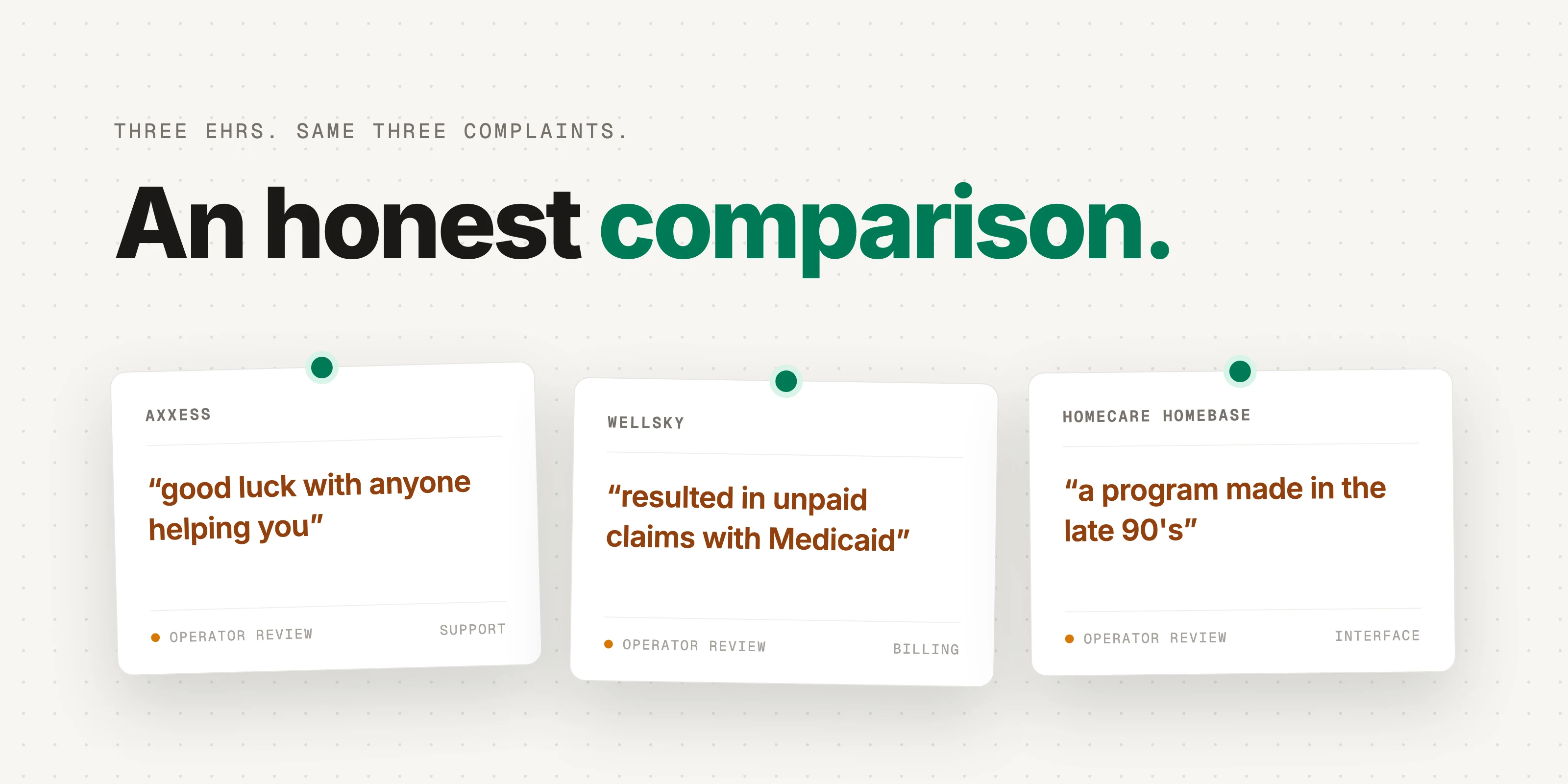
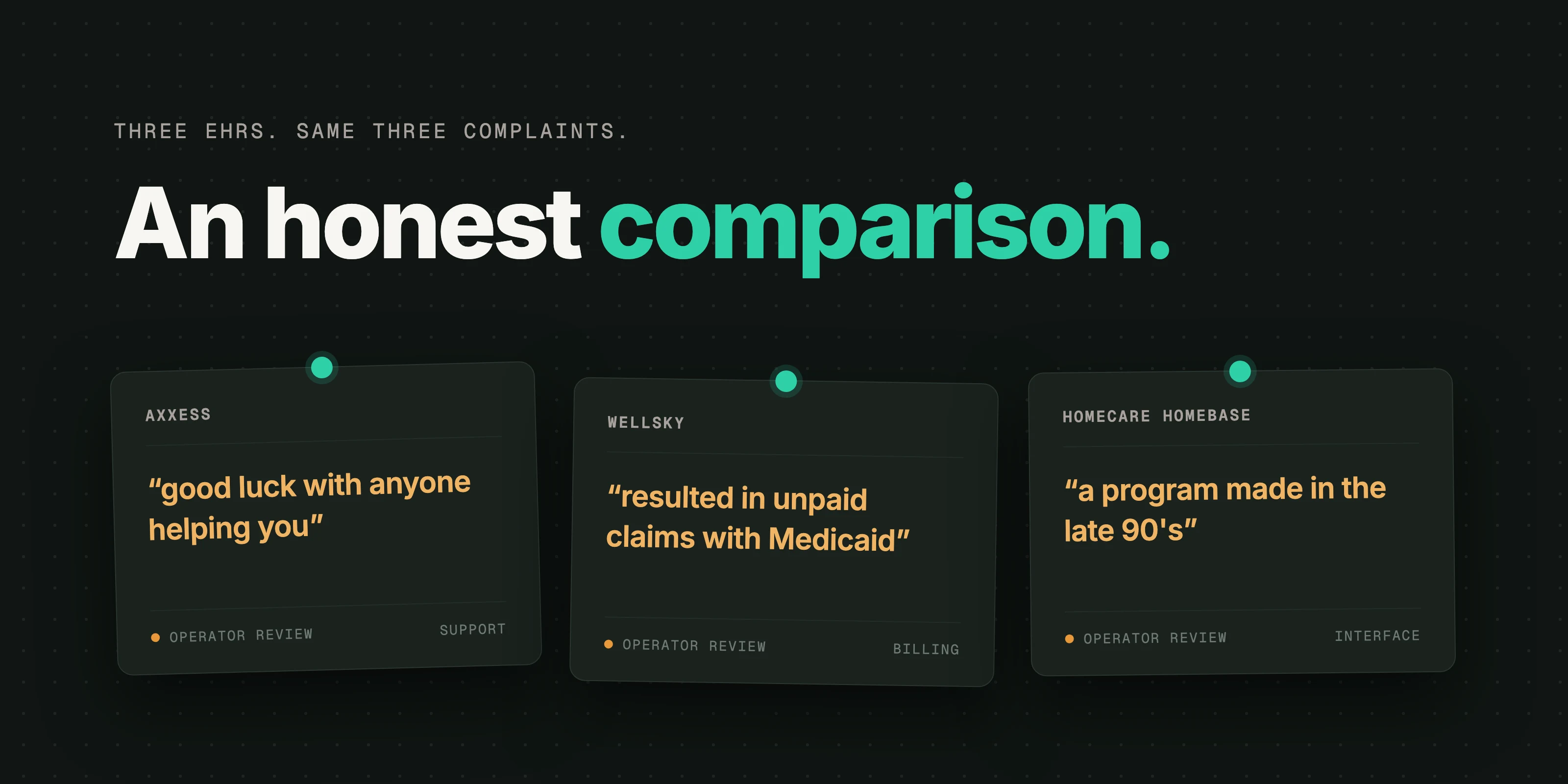
Axxess vs WellSky vs Homecare Homebase: An Honest Comparison for Agency Owners
Axxess, WellSky, and Homecare Homebase run most of home health between them. Here's an honest read on where each wins, where operators say they hurt, and what their AI actually does.


SchedulingAugust 5, 2026
Home Health Scheduling Is Broken. Here's What Good Looks Like.
Good scheduling in home health isn't about drive time. It's about catching the money and compliance risk hiding in the visit counts.
SchedulingJuly 19, 2026
Best home health scheduling software in 2026
The honest answer to 'what's the best scheduling software' is: it depends which problem is killing you. Here's how to tell, and how the 2026 options stack up.