Summary
In home health, the referral you don't answer fast enough goes to the agency that does. Intake is a race, and most agencies are running it by hand. Here's how to stop losing the ones you should win.
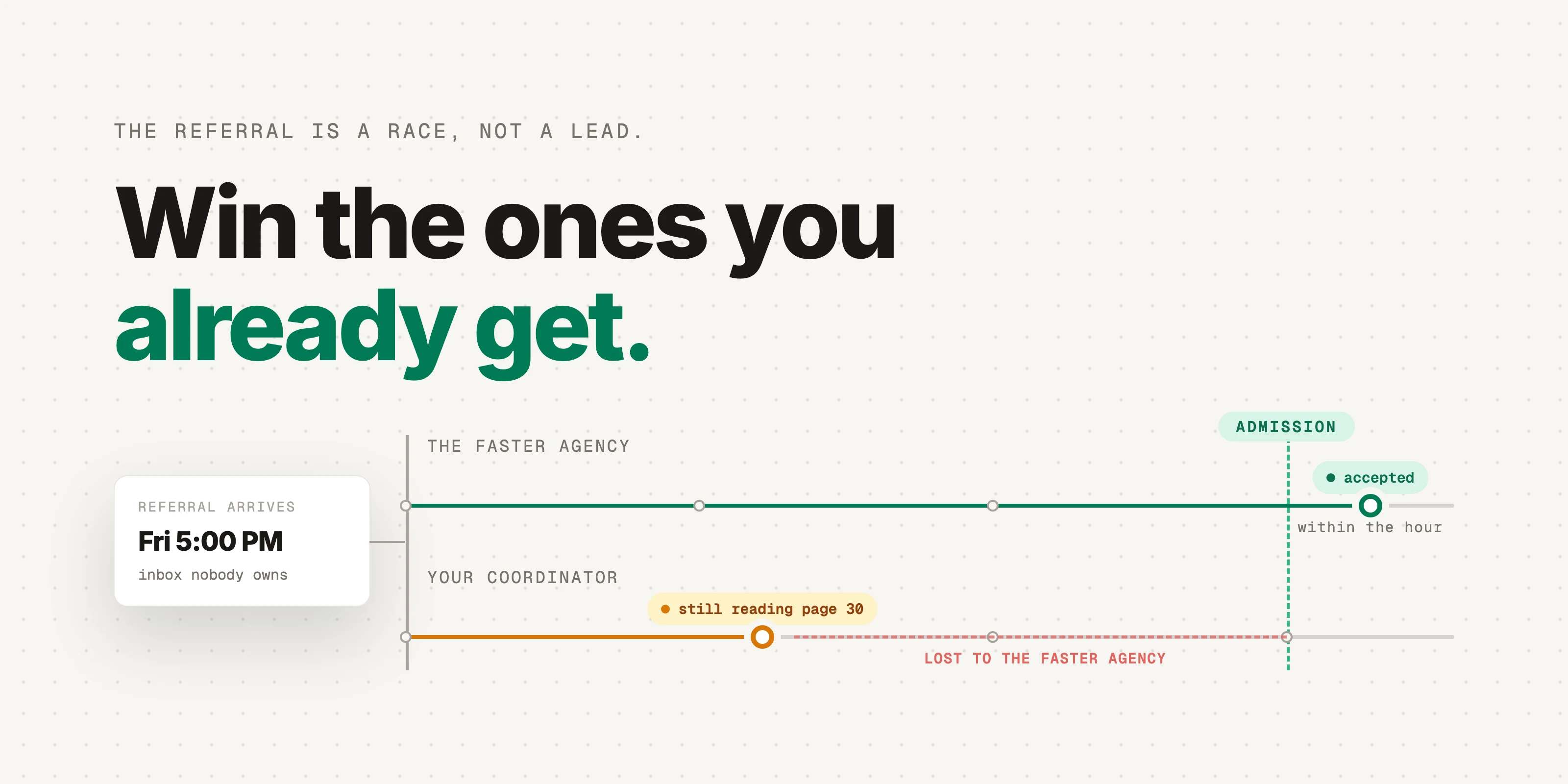
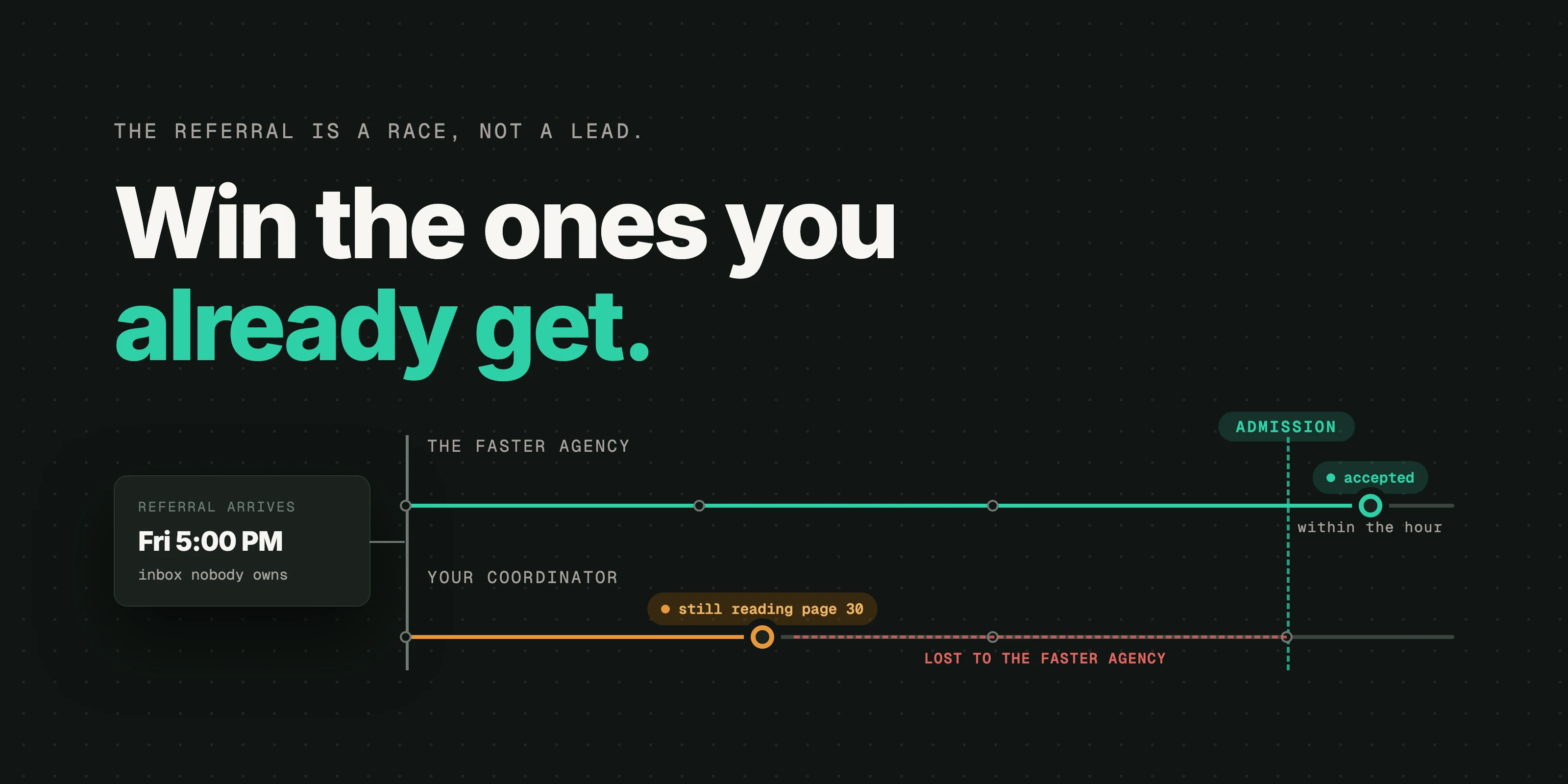
Here's a thing every agency owner knows and most software ignores: in home health, a referral is not a lead you nurture. It's a race you either win or lose, usually within a day. The hospital discharge planner sends the same patient to more than one agency, and the one that responds first, cleanly, with a yes, gets the admission. Everyone else did the work for nothing. Intake is where growth actually happens, and most agencies are running it by hand.
Why referrals leak
Walk through what happens when a referral arrives and the leaks are obvious:
- It comes in by fax, portal, or PDF, into an inbox nobody owns after 5pm or on a weekend.
- Someone has to read a packet that can run dozens of pages to find the details that decide eligibility.
- Coverage, homebound status, the face-to-face note, and the service area all have to be checked before anyone can say yes.
- By the time all that happens, the faster agency already accepted the patient.
Every one of those steps is a place to lose a referral you had every reason to win. And the ones you lose are invisible. There's no report of the admissions that went to someone else because your coordinator was still reading a fax.
The two failures nobody measures
There are really two ways intake costs you, and agencies track neither:
- The referrals you should have accepted and lost because you were too slow.
- The referrals you accepted and shouldn't have, because the ineligibility was buried on page 30 and nobody caught it until the claim was denied months later.
Speed and accuracy pull against each other when a human is doing it under time pressure. Go faster and you accept bad ones. Slow down to check and you lose good ones. That tension is the real intake problem, and you can't hire your way out of it, because the constraint is time per packet, not headcount.
What good intake looks like
A referral process worth having collapses both failures at once:
- Every referral, from every channel, lands in one queue the moment it arrives, day or night.
- Eligibility, homebound status, service area, and documentation get screened on arrival, not after a coordinator gets to it.
- The coordinator sees a decision-ready summary instead of a 40-page packet, so the yes or no takes minutes.
- Accepted referrals flow into the EHR without re-keying, and declines get tracked so you can finally see where patients drop off.
The point isn't to take the human out of the accept/decline decision. It's to hand the human a decision they can make in minutes with the full picture, instead of a race they lose to whoever reads faster.
Win the referrals you're already getting
Most agencies think growth means more referral sources. Often it just means stop losing the referrals you already get. That's the wedge we built Cardon's intake around, and it's the first thing we show agencies who book a demo.
See where your referrals leak
Bring a week of your real referrals and we'll show you how many you could have answered faster, and what that's worth, in about 20 minutes: book a demo.
Keep reading

IntakeJuly 17, 2026
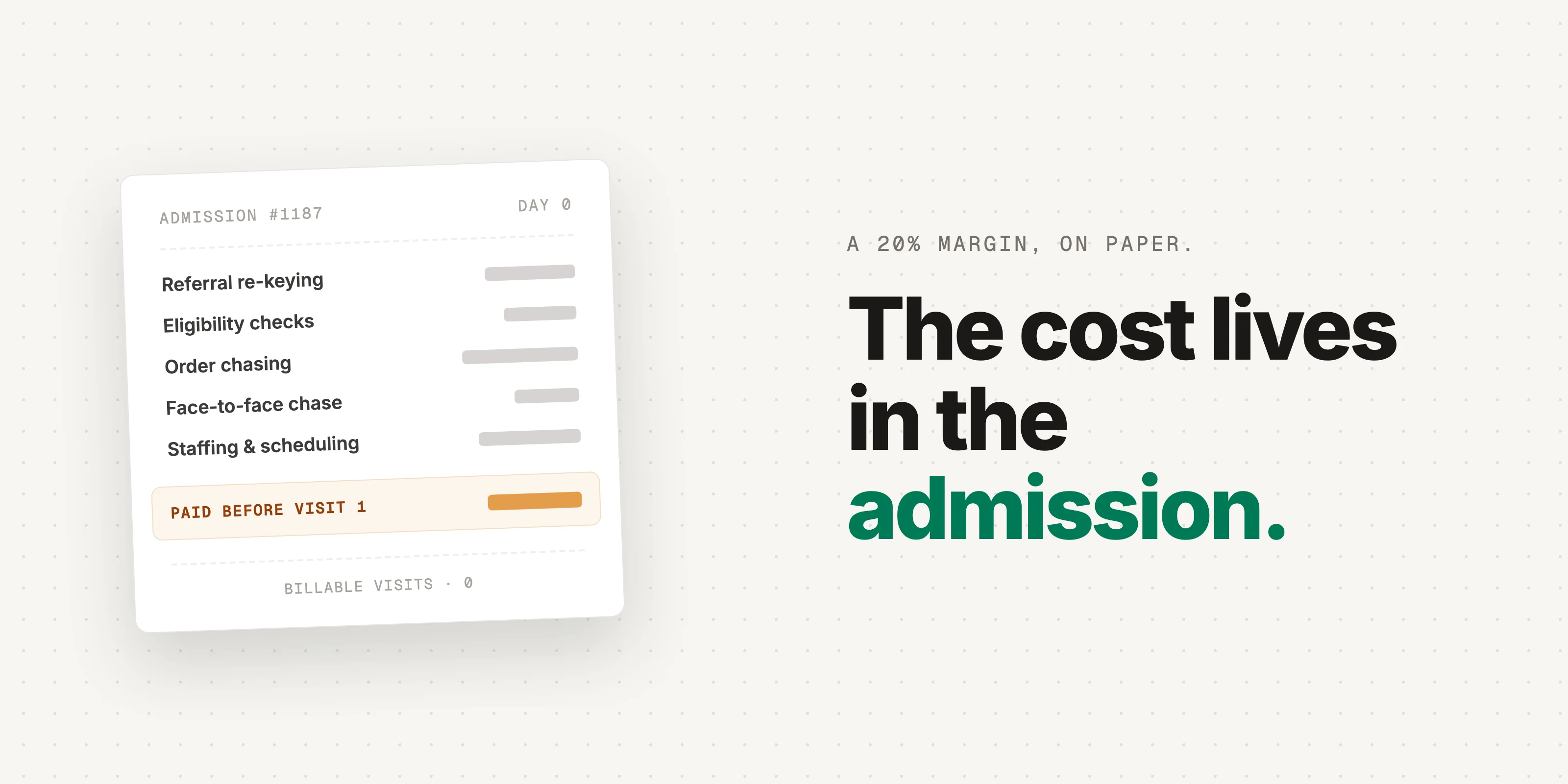
What a Home Health Admission Really Costs, Even at 20% Margins
The margin lives in the visits. The cost lives in the admission.
SchedulingAugust 14, 2026
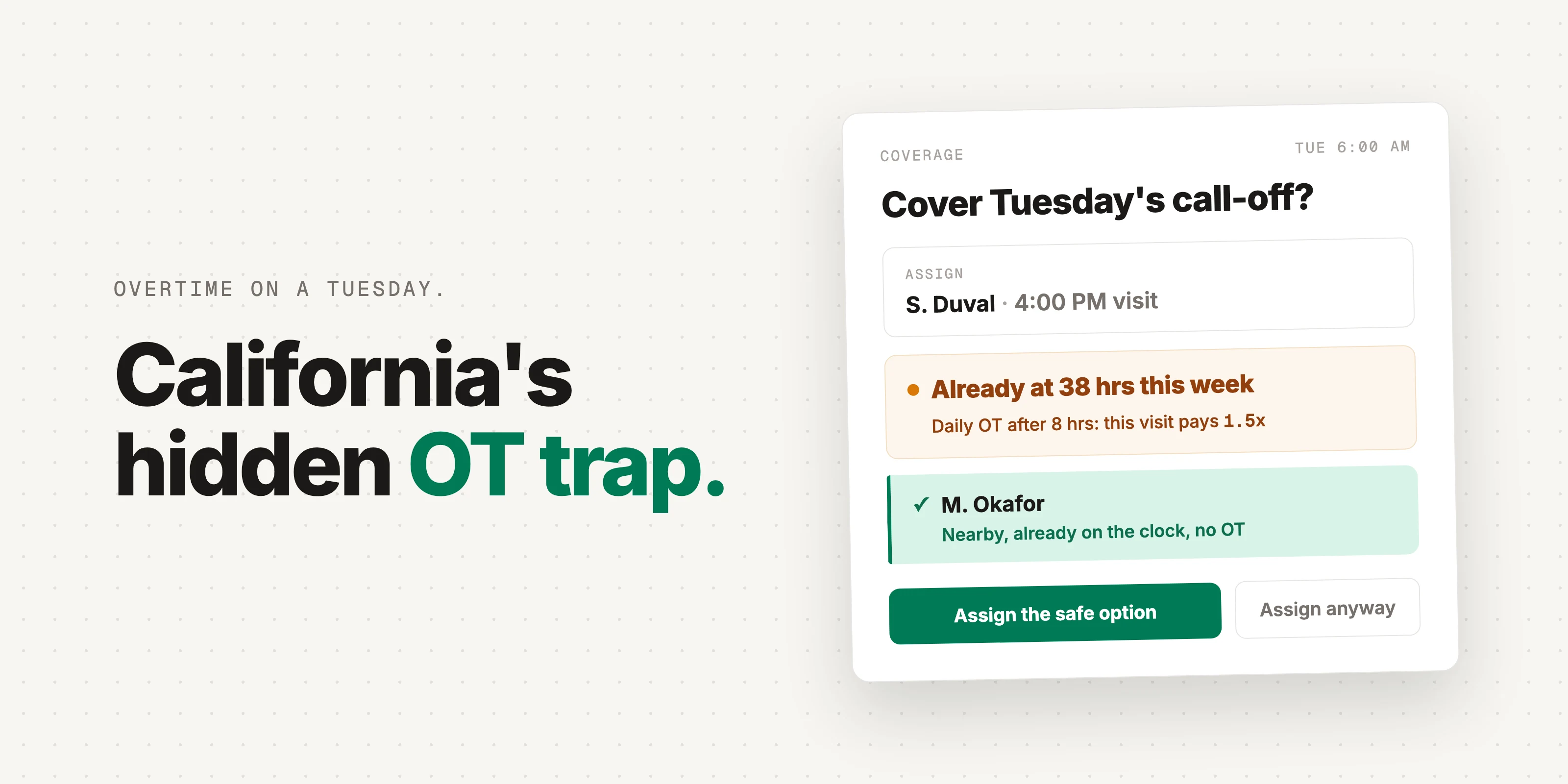
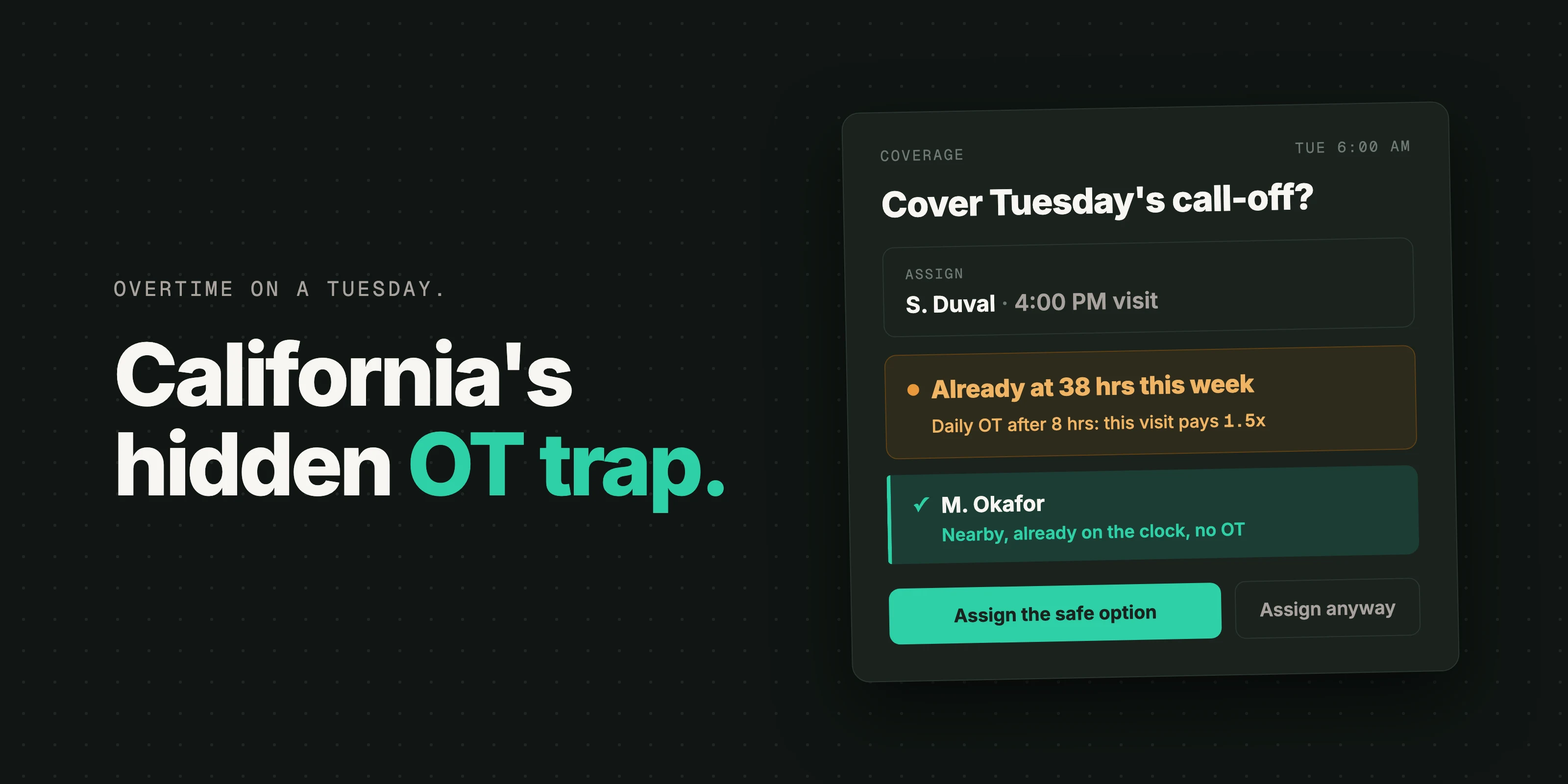
The California Overtime Trap: How Scheduling Blind Spots Quietly Eat Your Margin
In California, a caregiver can hit overtime on a Tuesday. Most agencies don't see it until payroll, when it's already money gone.
IndustryAugust 12, 2026
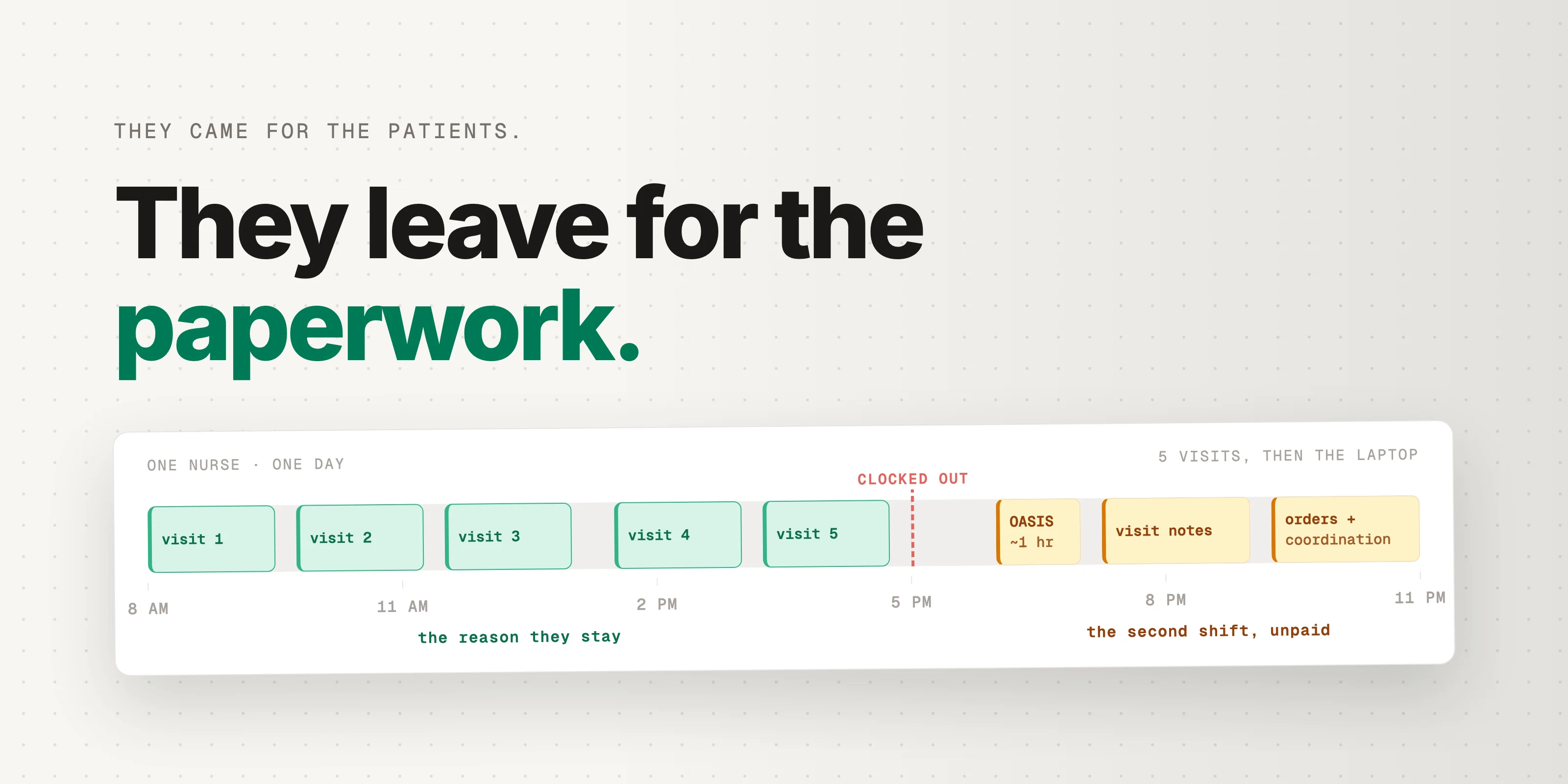
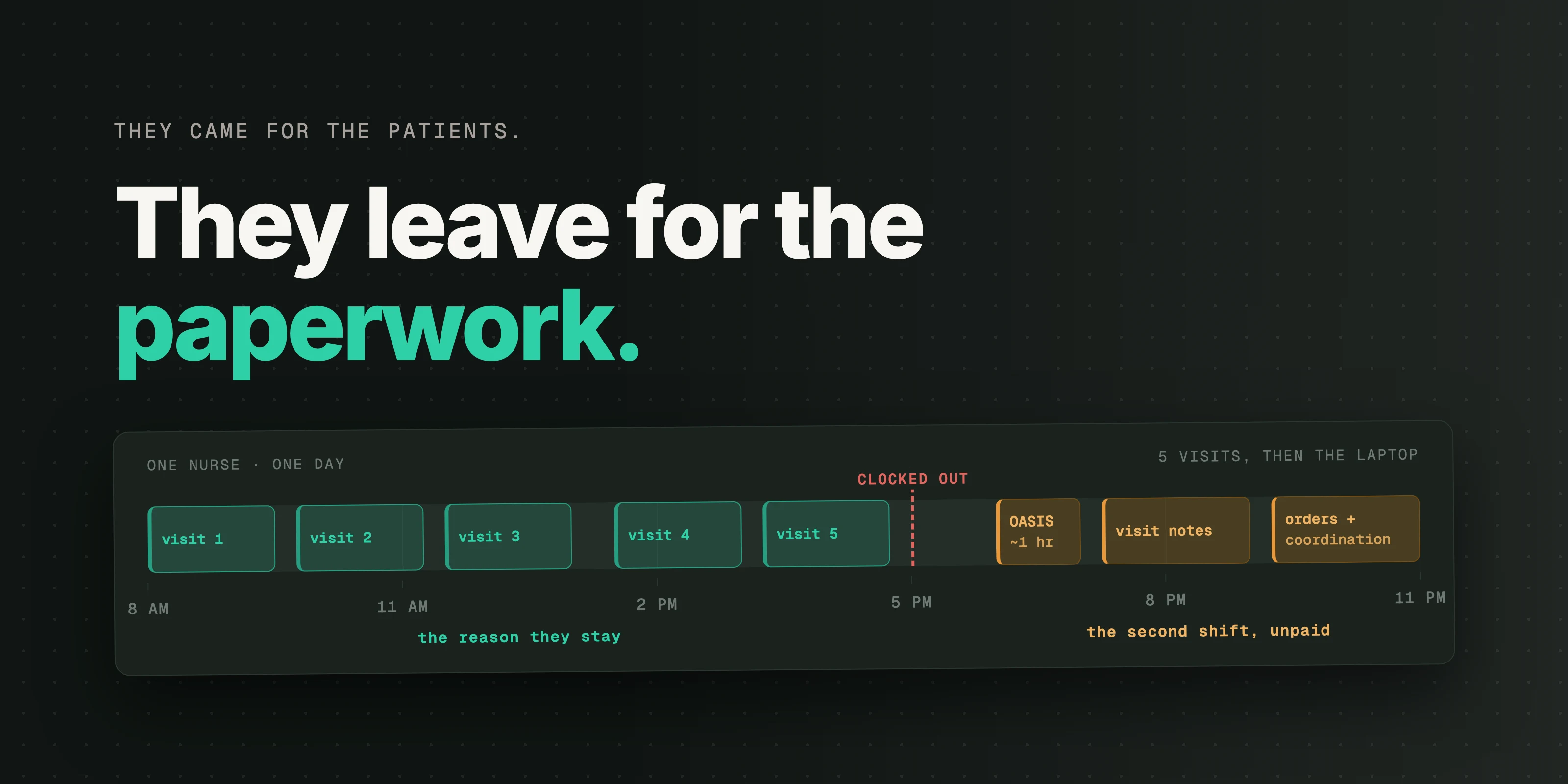
Why Home Health Nurses Quit (It's the Paperwork, Not the Patients)
Nurses don't leave home health because of the patients. They leave because of everything the software makes them do around the patients.