Summary
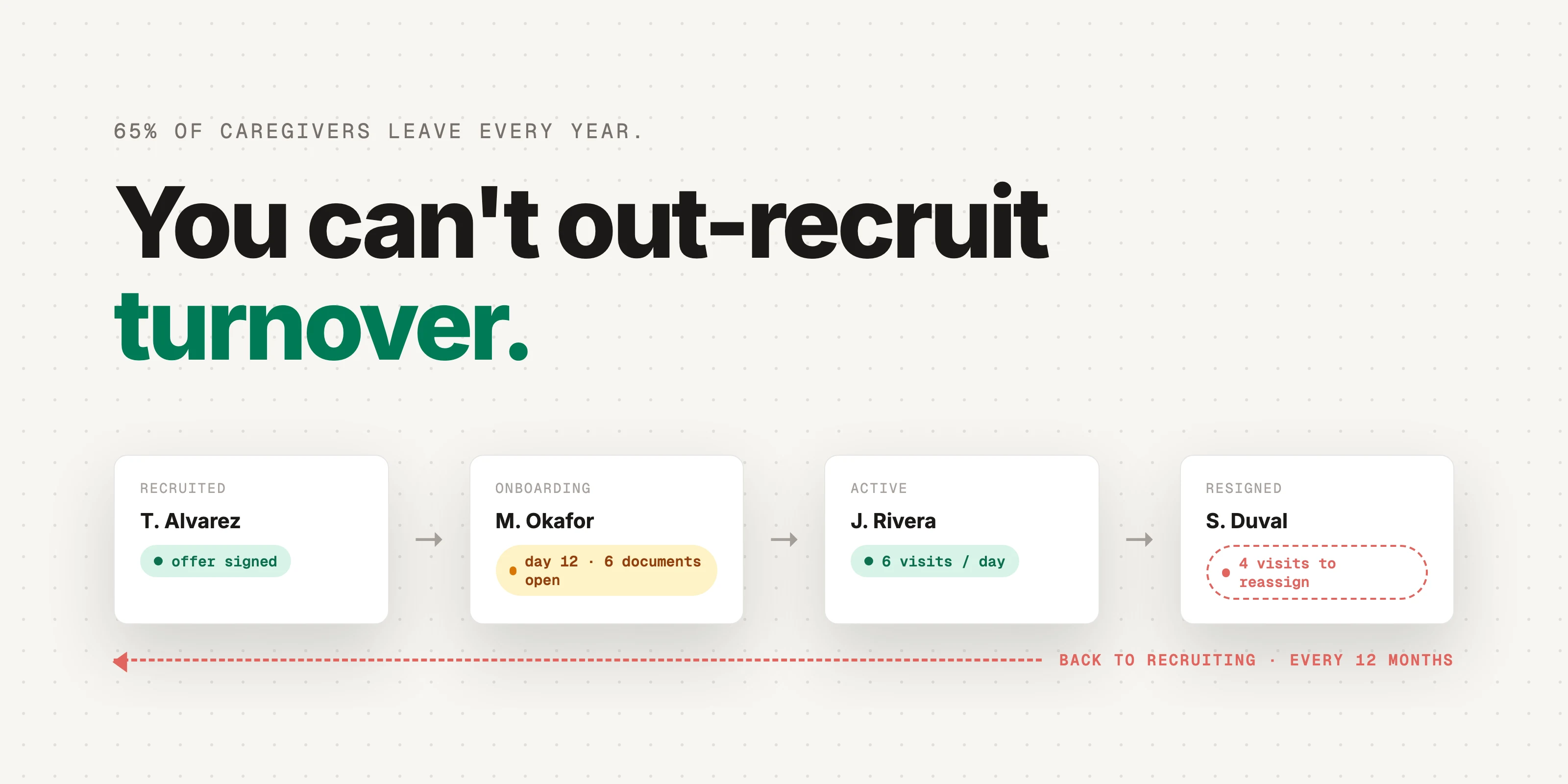
Caregiver turnover runs around 65% a year in home care, and treating it as a recruiting problem misses where the money leaks: onboarding and rescheduling.
Every home care agency owner I've met can tell you their turnover number, and it's always brutal. Industry benchmarking puts caregiver turnover around 65% a year, and plenty of agencies run well north of that. Think about what that actually means: you rebuild most of your field workforce, from scratch, every single year. The back office, for comparison, turns over at roughly half that rate.
The instinct, everywhere, is to treat this as a recruiting problem. Post more jobs. Raise the rate a dollar. Add a signing bonus. And sure, you have to recruit. But recruiting harder is treating the symptom. The disease is that every departure sets off a chain of expensive, invisible work that has nothing to do with finding the next person.
What does caregiver turnover actually cost?
Far more than the recruiting, and most of it lands behind the desk. When a caregiver quits, here's what actually happens, and none of it is "go find a new caregiver":
- Their visits have to be reassigned today, to someone else who's licensed and available
- The clients they covered get a stranger, or a gap in care
- A new hire has to be credentialed, background-checked, and trained before their first visit
- Every one of those steps runs through the back office by hand
Recruiting fills the top of the funnel. But the cost lives in everything that happens after someone says yes, and after someone leaves. That's where the hours go.
How long does it take to onboard a new caregiver?
Ask an agency how long it takes to get a new caregiver from "hired" to "seeing their first client," and the honest answer is usually weeks. Credentialing, compliance paperwork, scheduling, matching them to clients near where they live. It's the bottleneck nobody measures, and in a business with 65% turnover, that lag is not a one-time cost. It's a tax you pay on most of your workforce, every year.
So the math is ugly. You can't stop people from leaving an industry that pays close to minimum wage for hard, personal work, and there aren't enough new caregivers entering the workforce to make up the difference. If you can't lower the turnover, the only lever left is to make the churn radically cheaper: onboard in days instead of weeks, and re-cover a dropped visit in seconds instead of a frantic morning of phone calls.
You can't out-recruit 65% turnover. You can only make each departure cost you less.
Where we come in
This is a big part of why we started Cardon with intake and scheduling. When onboarding a new caregiver and re-covering a dropped shift are nearly instant, turnover stops being an existential threat and becomes a cost you manage, which is the difference we like to show on an agency's own roster when they book a demo. The people problem is real, and it isn't going away. But a huge share of what turnover actually costs an agency isn't the leaving. It's the manual scramble that follows, and that part is software.
See your true cost of turnover
Most agencies track the turnover rate but never the hours it burns. Bring last month's schedule changes to a 20-minute conversation and we'll put a real number on it: book a demo.
Keep reading
IndustryAugust 12, 2026
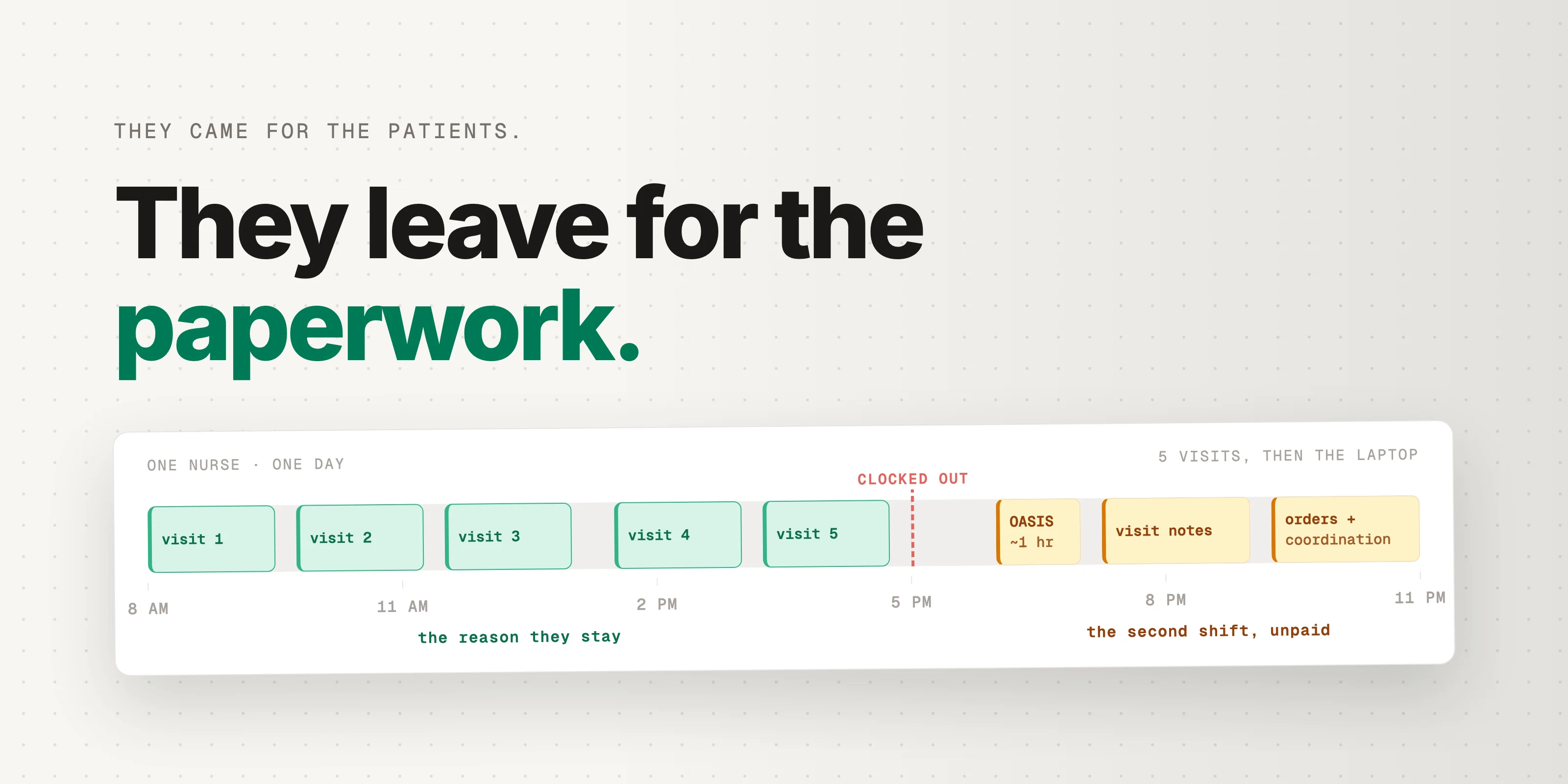
Why Home Health Nurses Quit (It's the Paperwork, Not the Patients)
Nurses don't leave home health because of the patients. They leave because of everything the software makes them do around the patients.
IndustryAugust 3, 2026
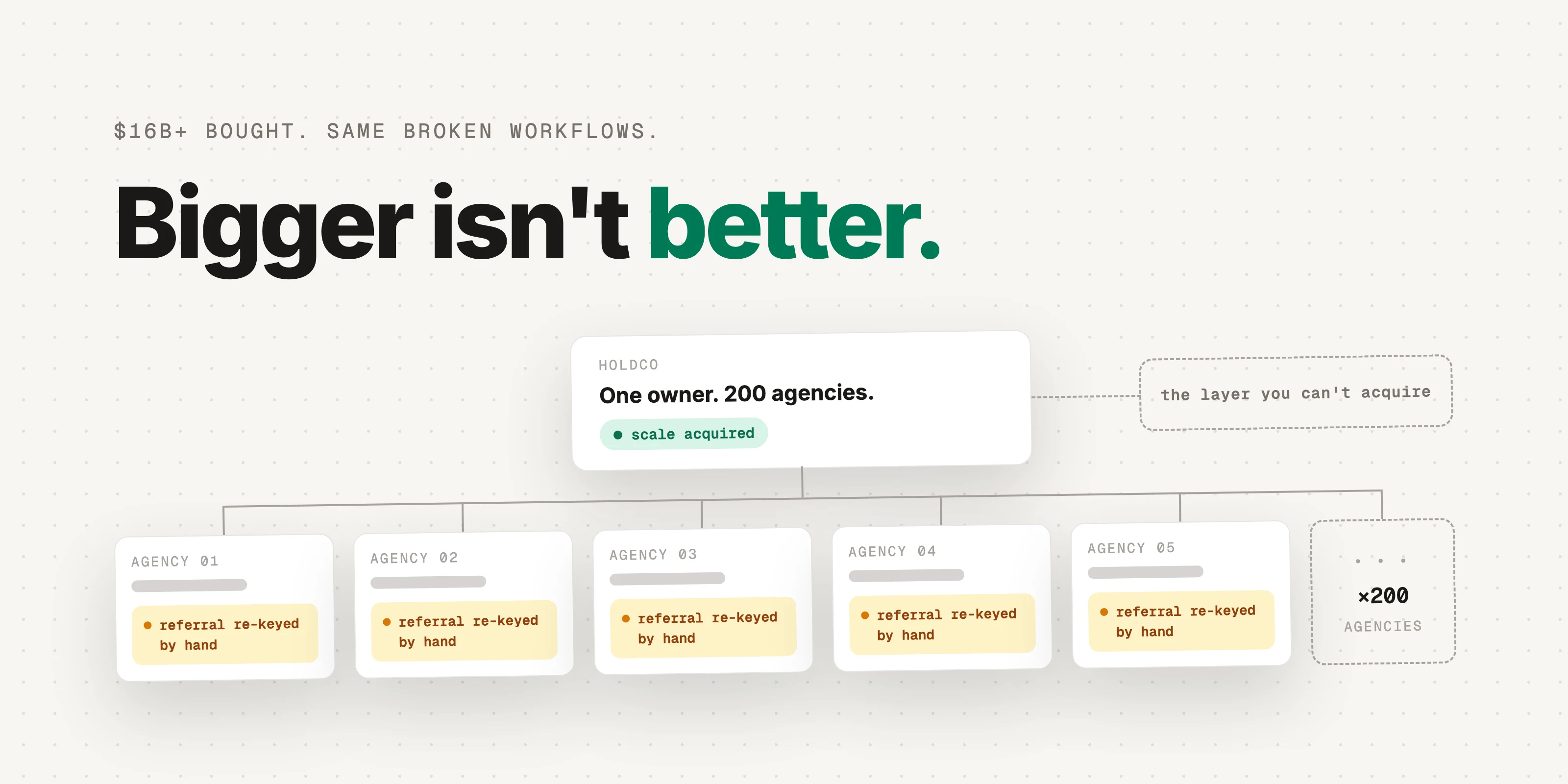
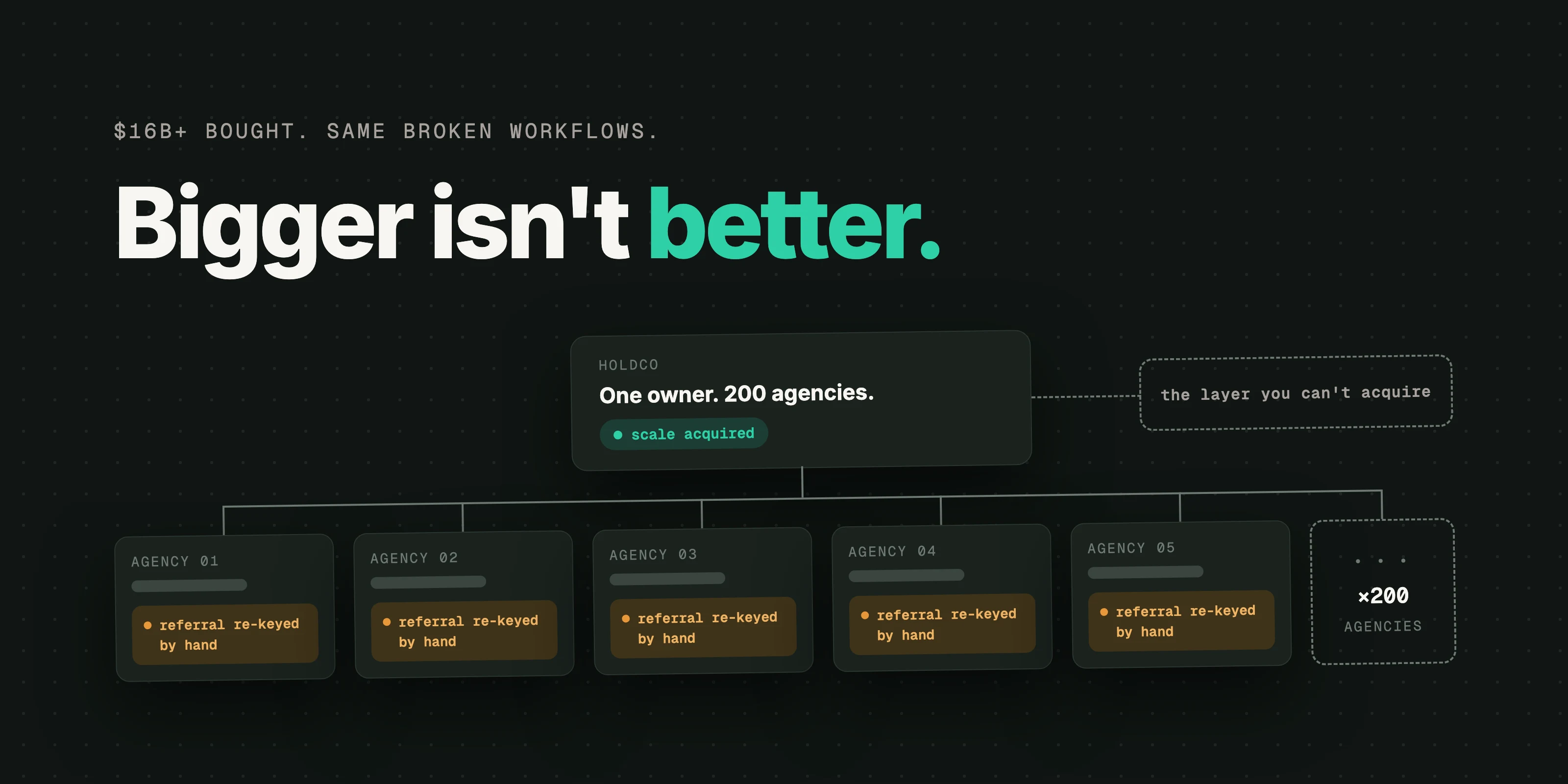
Private Equity Is Buying Up Home Health and Hospice. What It Gets Wrong.
You can roll up 200 agencies and still run every one of them on the same broken workflows.
IndustryJuly 29, 2026
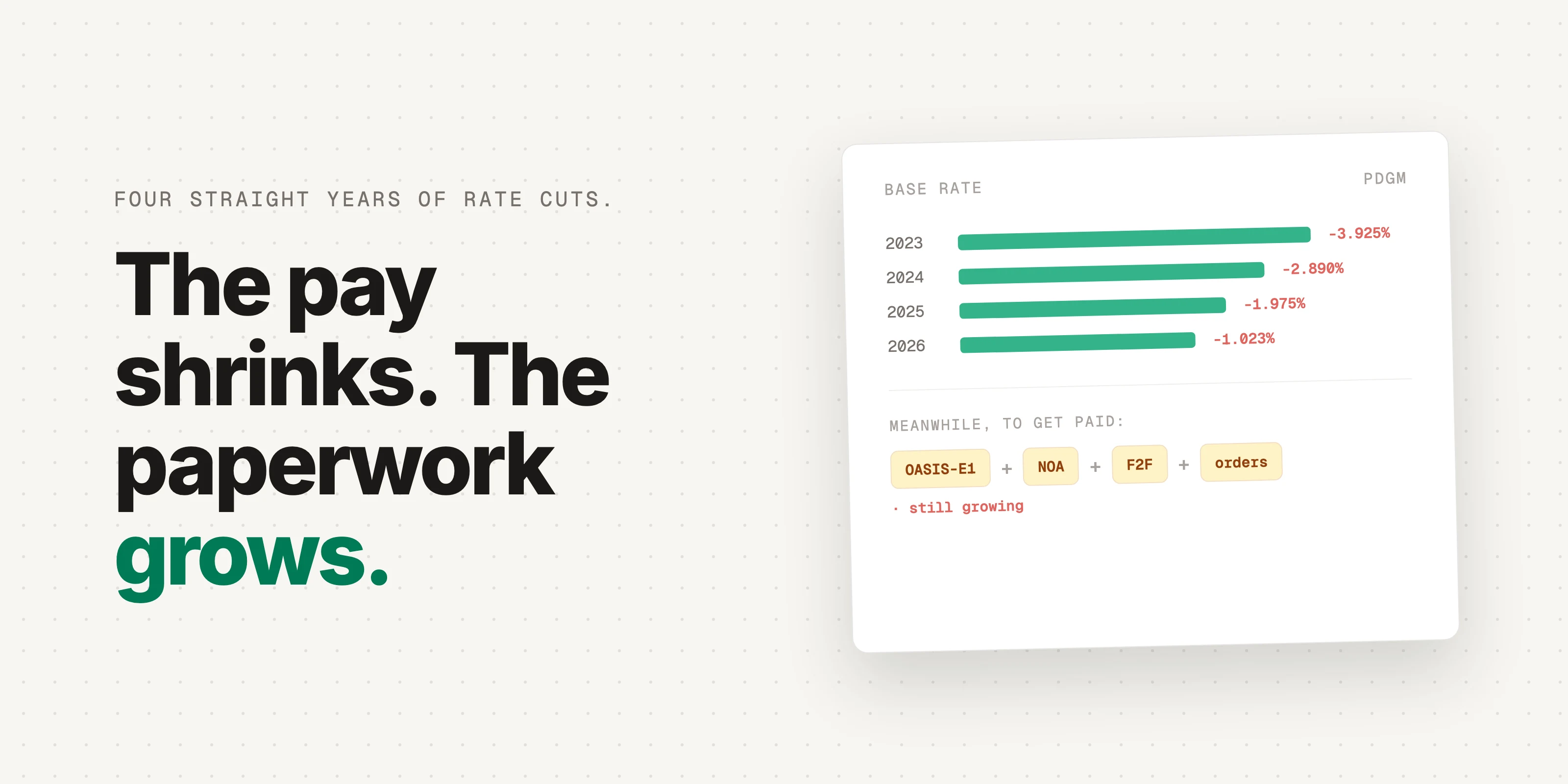
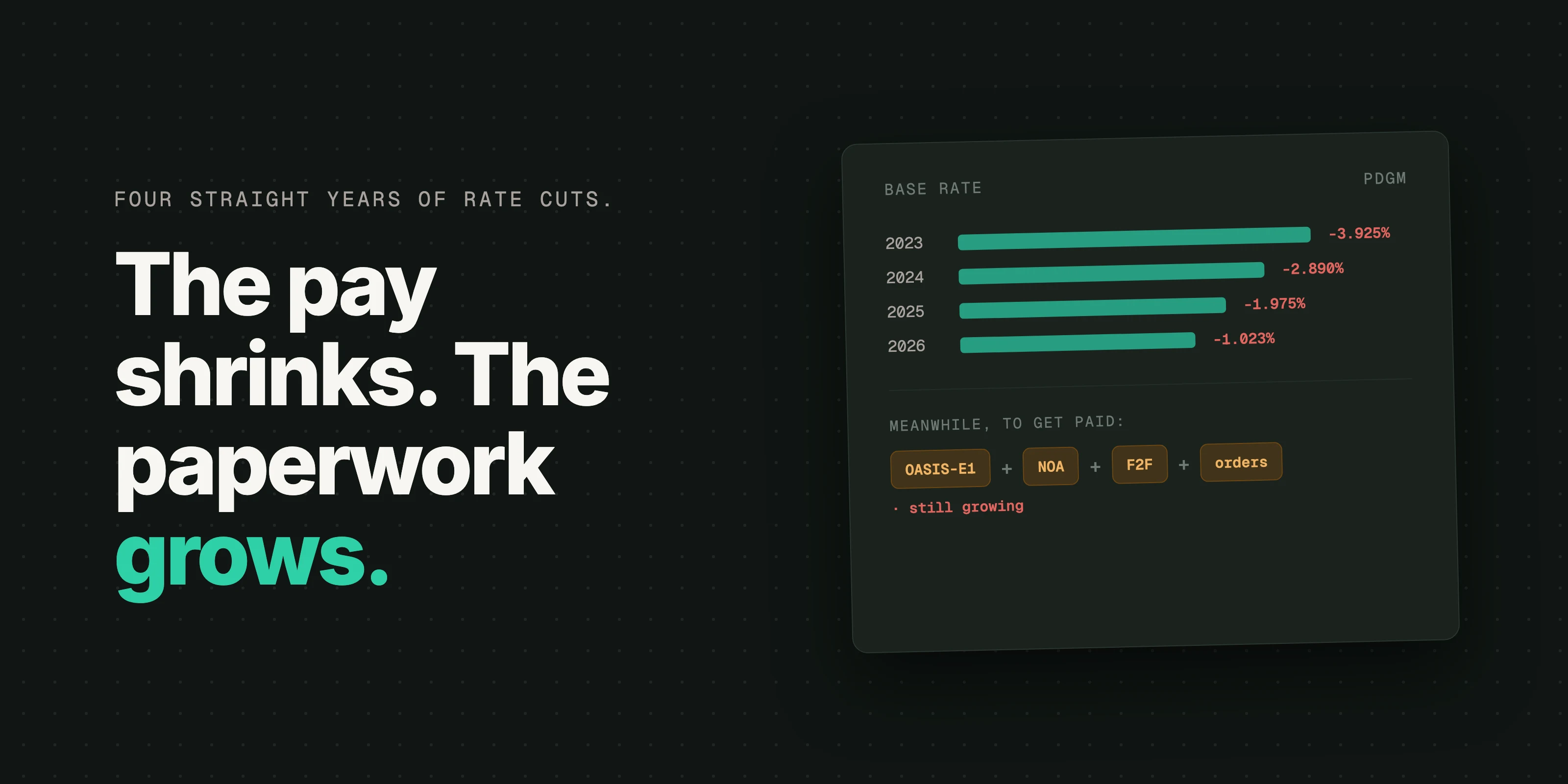
Medicare Home Health Cuts Keep Coming. The Paperwork Keeps Growing.
Falling rates, rising paperwork. That's the vise every home health agency is stuck in.