Summary
Geography-first schedulers optimize drive time. An AI scheduling teammate reads the schedule the way your revenue cycle does, against LUPA thresholds, recert windows, and frequency orders, and flags the risk while you can still act on it.
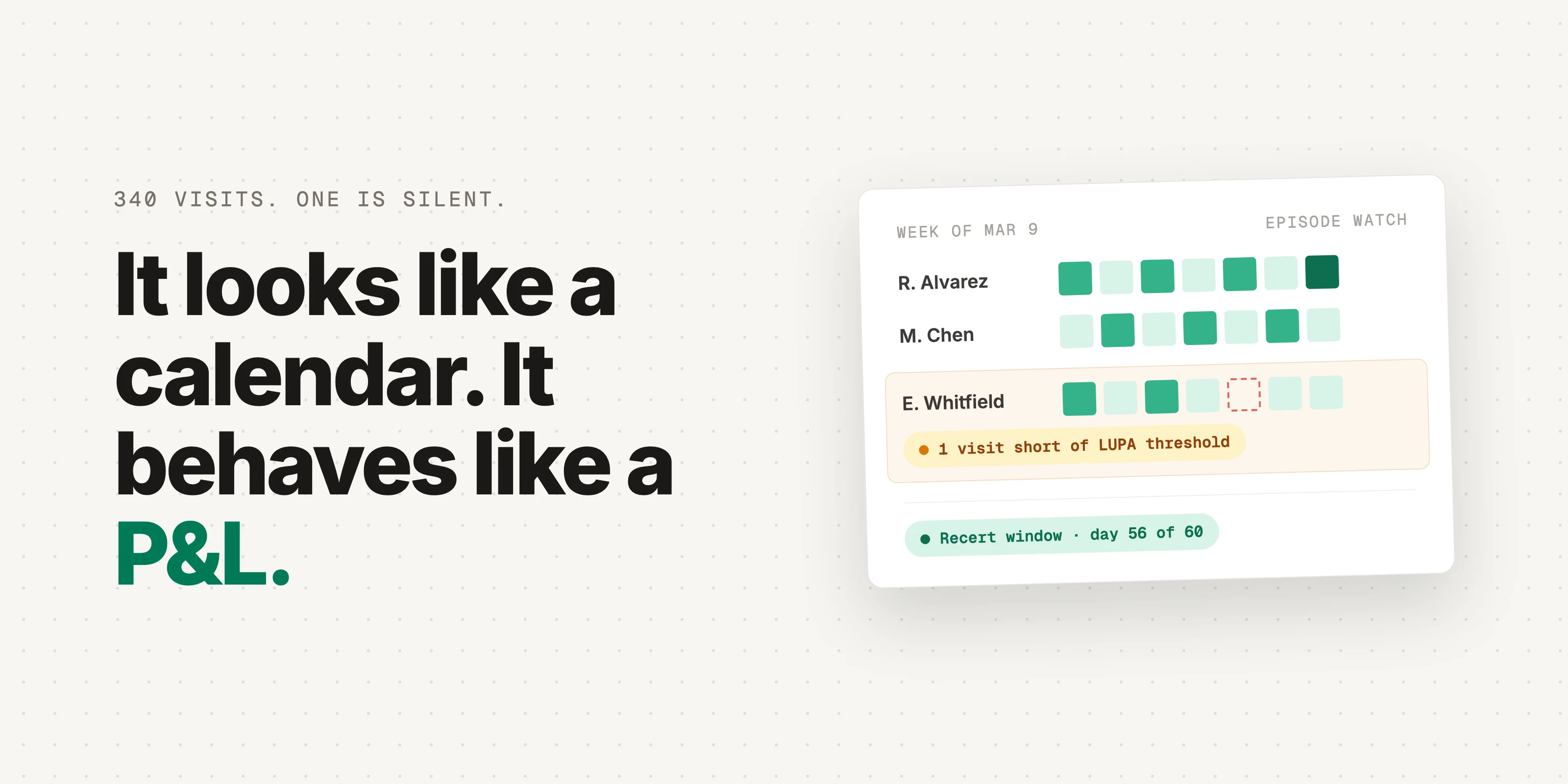
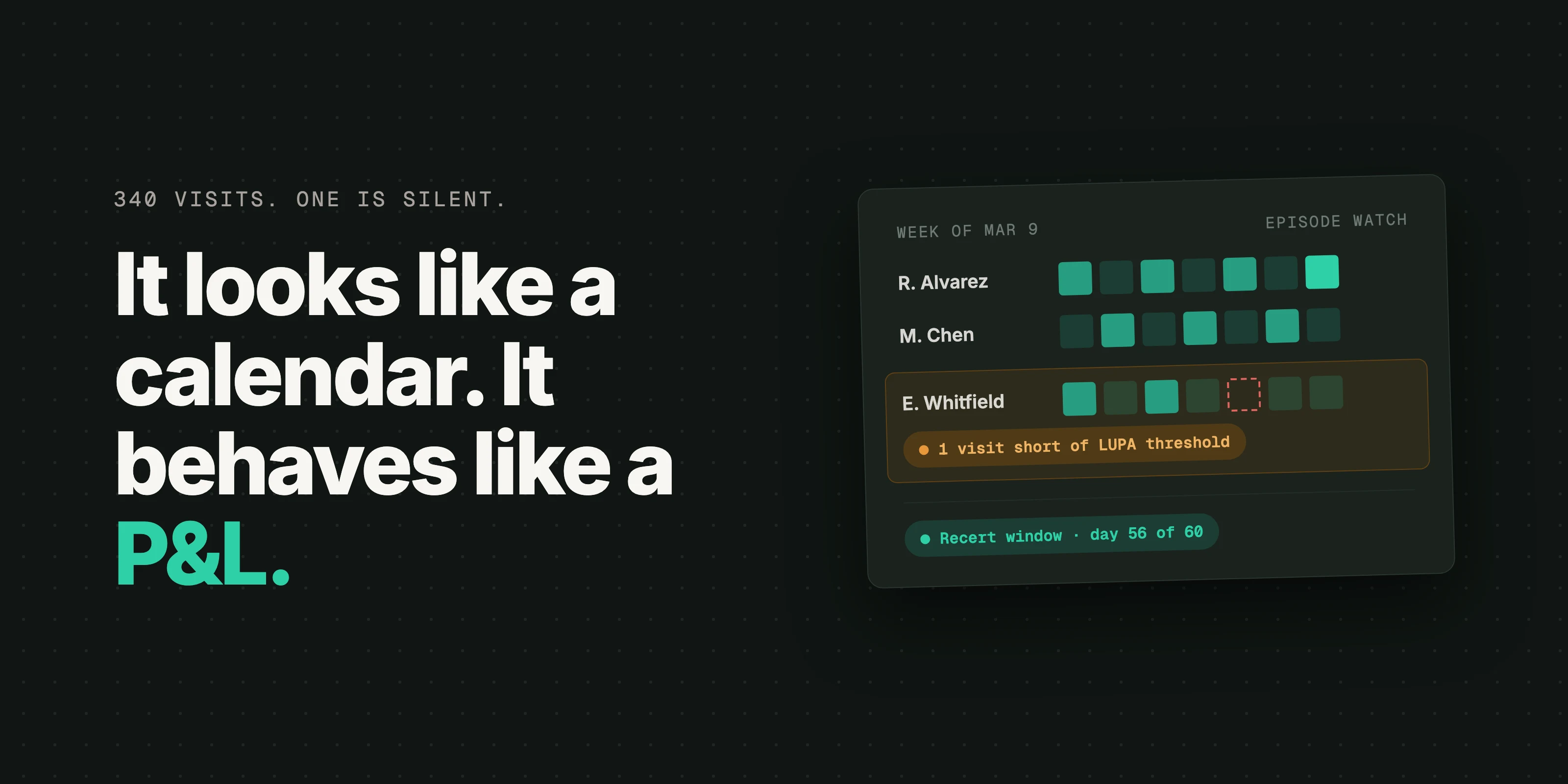
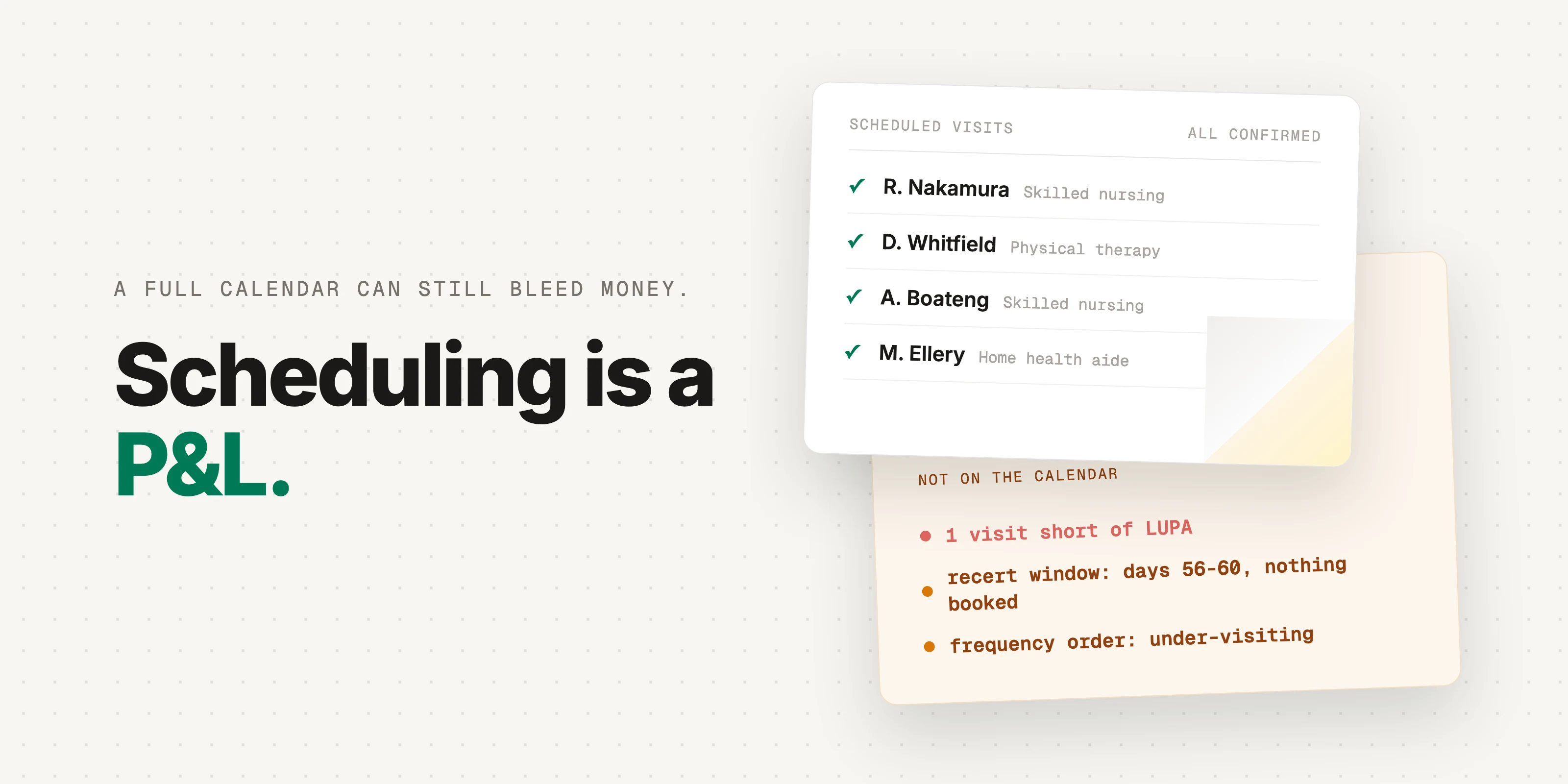
It's 7:42 on a Monday morning. Your scheduler has been at her desk since 7:00, and she already has three problems: an LPN called out sick with four visits on her board, a physical therapist is stuck waiting on an authorization, and somewhere in the 340 visits scheduled this week there is an episode quietly drifting one visit short of its LUPA threshold. She will solve the first two problems before lunch, because they're loud. The third one is silent. Nobody finds out about it until the period closes, the claim pays as a per-visit LUPA instead of a full episode, and the difference, often four figures, is gone.
That's the thing about a home-health schedule: it looks like a calendar, but it behaves like a P&L.
The spreadsheet behind the schedule
Most scheduling tools treat visits as pins on a map. Drive time, territories, caseload balance: real problems, and mostly solved ones. But in home health under PDGM, the schedule carries a second layer of information that has nothing to do with geography:
- Every 30-day period has a LUPA threshold set by its case-mix group. Fall one ordered visit short and the payment changes category entirely.
- Every 60-day episode has a recertification window at days 56-60. If no recert visit happens inside it, the episode can't continue, and the paperwork can't be backdated.
- Every discipline is working against a physician frequency order. Delivering fewer visits than ordered is a compliance finding; delivering more is unpaid work.
None of this is exotic knowledge. Your best scheduler knows all of it. The problem is arithmetic at scale: hundreds of episodes, each with its own thresholds, windows, and orders, changing daily as visits complete, get missed, or get rescheduled. A person can check any one episode. Nobody can re-check all of them, every day, on top of the phones. That gap, not drive time, is what to test when you're comparing scheduling tools.
What does an AI scheduling teammate actually do?
An AI scheduling teammate doesn't schedule. It reads continuously, across every episode, the way your revenue-cycle team would if they had infinite time:
- LUPA-risk radar. Every visit counted against its case-mix threshold, with the dollar difference attached, so a short period gets flagged while there's still time to add an ordered visit, not after the claim drops.
- Recert-window guardian. Days 56-60 of every episode, watched. If the window is approaching and no recert visit is on the books, someone hears about it before the window closes, not after.
- Frequency-order adherence. Planned versus delivered for every order, per discipline, so both under-visiting and over-visiting surface as they develop.
- Missed and unassigned, ranked. Missed visits and open authorized visits scored by what they cost, handed to your scheduler as a worklist instead of a surprise at period close.
The output isn't a dashboard your team has to remember to check. It's a short, ranked list of the episodes where action today changes what the agency gets paid this month.
What it deliberately doesn't do
The fastest way to make a scheduler distrust software is to let it rearrange their board. Scheduling is judgment: this nurse and this patient don't click, that caregiver won't drive past the county line, this family only opens the door after 10am. That knowledge lives in your scheduler's head, and it should keep living there.
So the teammate is read-only on day one. It reads from the EHR you already run (Axxess, WellSky, or HCHB) and writes back only the lightweight changes your team explicitly accepts. The EHR stays the source of truth. Nobody migrates anything. The scheduler stays in charge of the board; the teammate just makes sure nothing on it costs money silently.
The first thirty days
Because it reads your existing schedule instead of replacing it, the ramp is unglamorous by design: connect, and the risk that was always in the schedule becomes visible. Most agencies find something in the first week: an episode inside its recert window with nothing booked, a period one visit under threshold, a frequency order quietly running behind. Not because anything was broken, but because no human could re-run that arithmetic across every episode every morning.
That's also the honest ROI frame. One caught LUPA can be a four-figure swing on a single episode. One caught recert window keeps an episode billable at all. The question isn't whether that risk exists in your schedule. Under PDGM, it structurally does. The question is whether anyone is looking for it before it becomes a remittance-advice surprise.
The schedule you already have
Your schedulers don't need replacing. They need the silent third problem, the one that never rings the phone, to show up on their board with the loud ones, while it's still cheap to fix.
Bring a week of your real schedule and we'll show you what's hiding in it, in 20 minutes: book a demo.
Keep reading
SchedulingAugust 14, 2026
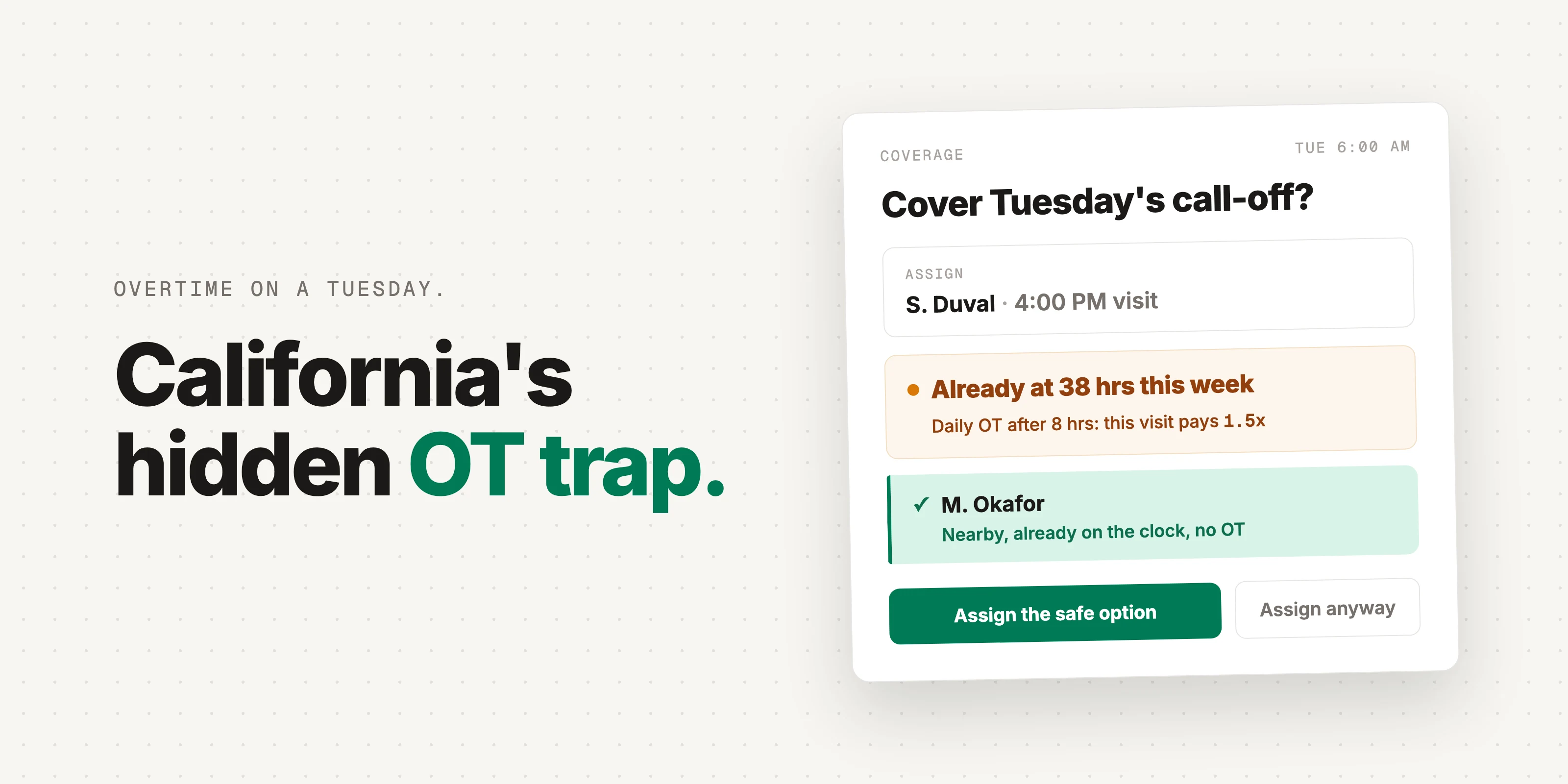
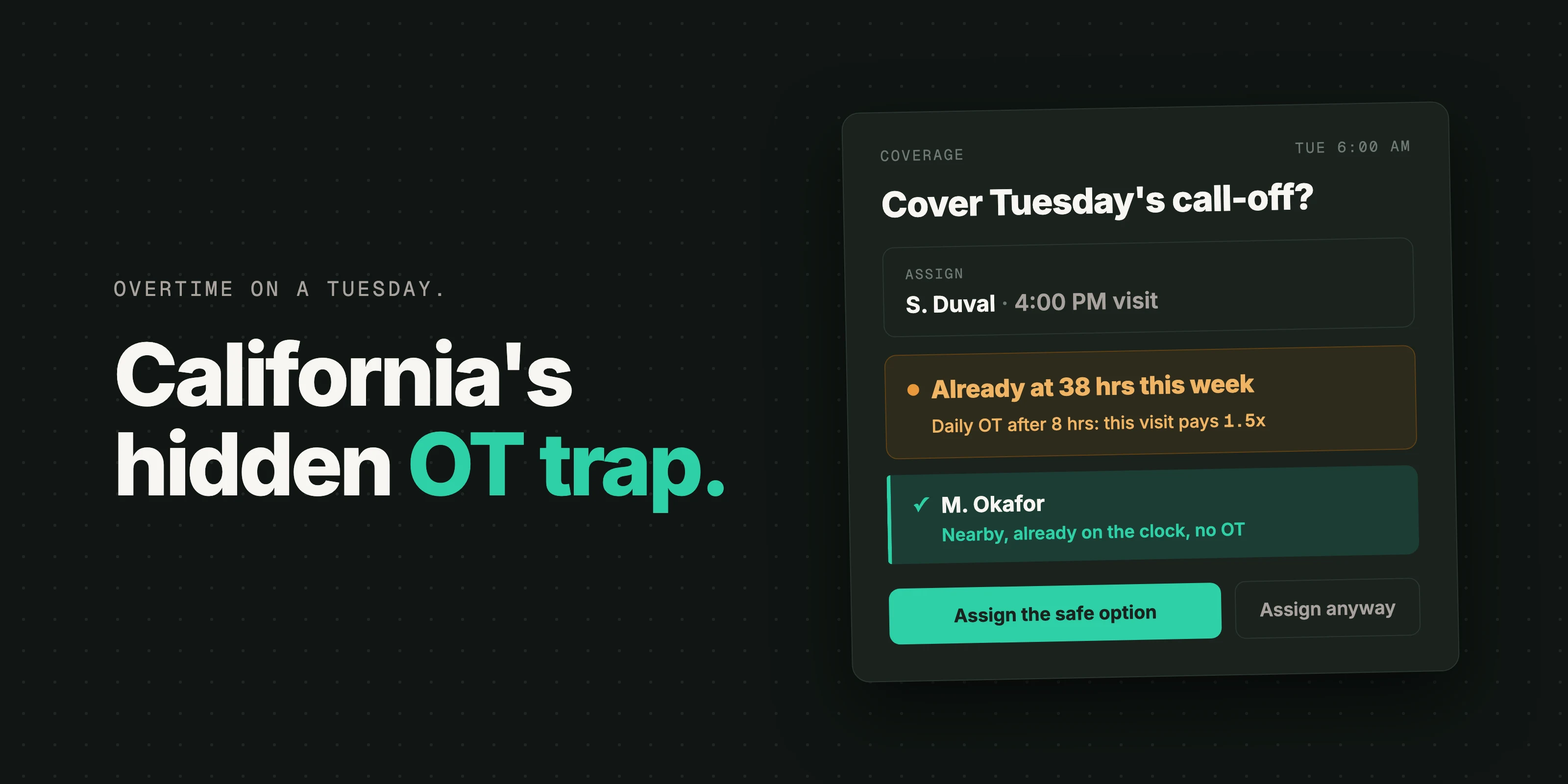
The California Overtime Trap: How Scheduling Blind Spots Quietly Eat Your Margin
In California, a caregiver can hit overtime on a Tuesday. Most agencies don't see it until payroll, when it's already money gone.
SchedulingAugust 7, 2026
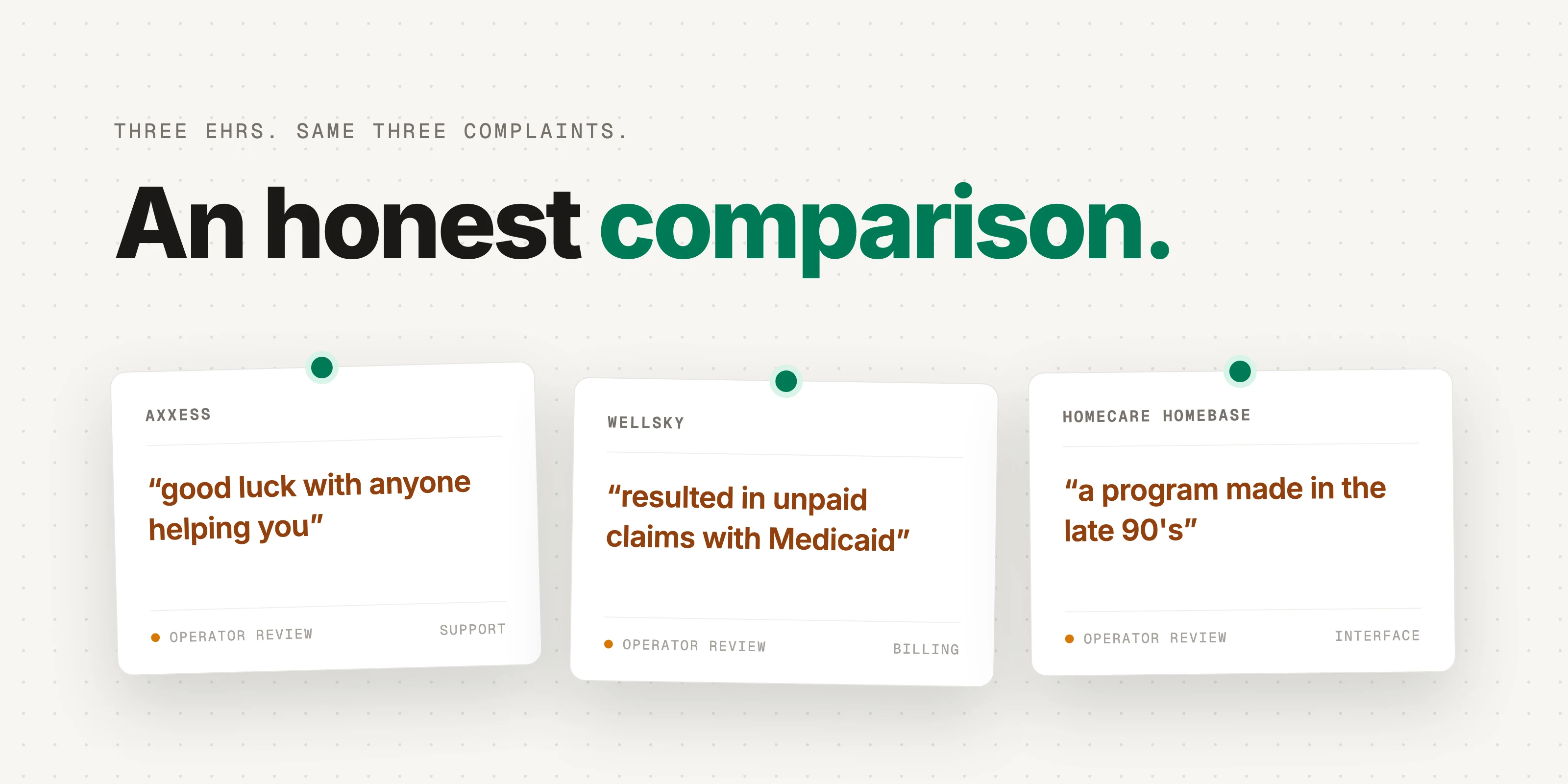
Axxess vs WellSky vs Homecare Homebase: An Honest Comparison for Agency Owners
Axxess, WellSky, and Homecare Homebase run most of home health between them. Here's an honest read on where each wins, where operators say they hurt, and what their AI actually does.
SchedulingAugust 5, 2026
Home Health Scheduling Is Broken. Here's What Good Looks Like.
Good scheduling in home health isn't about drive time. It's about catching the money and compliance risk hiding in the visit counts.