Summary
Most scheduling tools optimize drive time and call it a day. In home health, the schedule is where revenue and compliance are quietly won or lost. Here's the standard a scheduling system should actually hold to.
Ask most software what "good scheduling" means and you'll hear about drive time, territories, and caseload balance. Those are real problems, and they're mostly solved. But in home health, the schedule carries a second layer of information that has nothing to do with maps, and that's the layer where agencies actually win or lose money. Almost no tool treats it as the point. That's why scheduling feels broken even when the calendar looks full.
The schedule is a financial document
Under PDGM, every 30-day period and every 60-day episode is governed by numbers that live inside the schedule, not on a map:
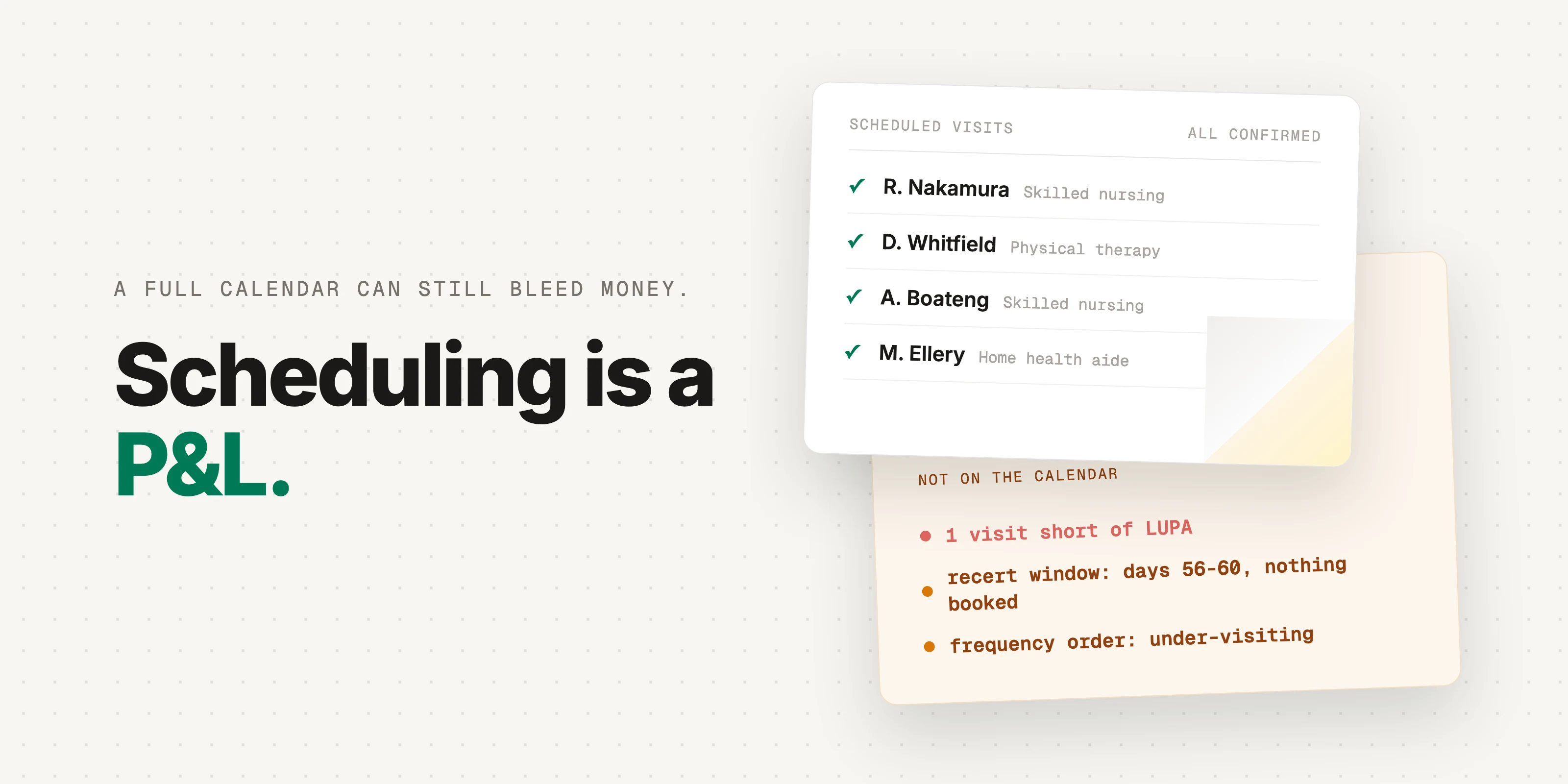
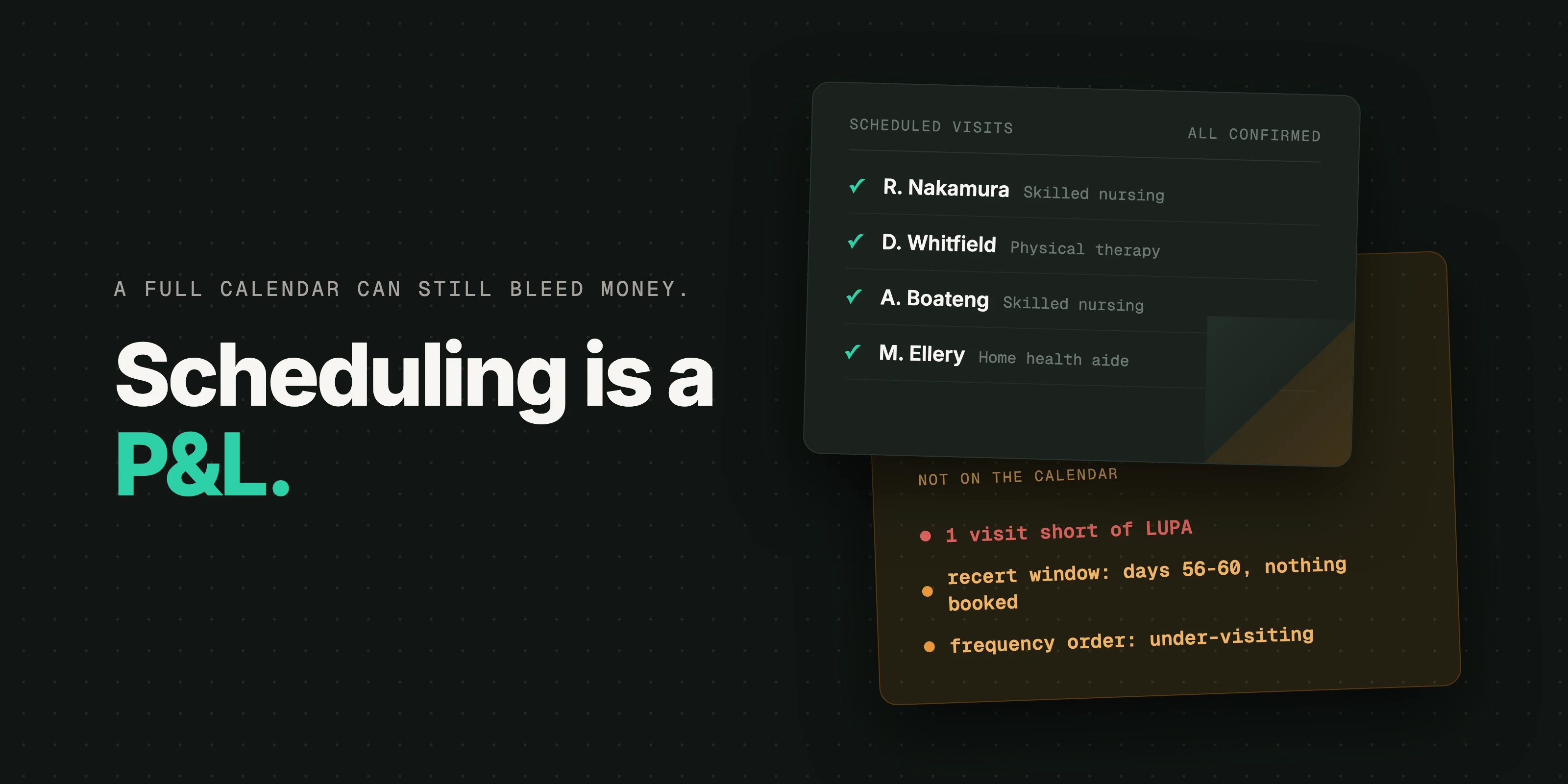
- Every period has a LUPA threshold set by its case-mix group. Fall one ordered visit short and the payment changes category entirely.
- Every episode has a recertification window at days 56–60. Miss it and the episode can't continue, and the paperwork can't be backdated.
- Every discipline is working against a physician frequency order. Under-visit and it's a compliance finding; over-visit and it's unpaid work.
None of that shows up as a scheduling conflict. A calendar can be perfectly "full" and still be bleeding money on all three counts. Good scheduling means the software is watching those numbers, not just the time slots.
Why the manual version can't win
Your best scheduler knows all of this. The problem is arithmetic at scale. An agency with a few hundred active episodes, each with its own thresholds, windows, and orders, changing every day as visits complete or get missed, cannot be re-checked by hand every morning on top of the phones. So the checks happen at period close, which is exactly when it's too late to fix anything. The work isn't hard. It's just impossible to do reliably at volume with a person and a spreadsheet.
What "good" actually looks like
A scheduling system worth having does four things a calendar never will:
- Scores every visit against its LUPA threshold, with the dollar difference attached, while there's still time to add an ordered visit.
- Watches days 56–60 on every episode and flags any recert window with nothing booked inside it.
- Compares planned versus delivered visits against each frequency order, so both under- and over-visiting surface as they develop.
- Hands the scheduler a short, ranked worklist of the episodes where acting today changes what the agency gets paid this month.
Notice what's not on that list: rearranging anyone's board. Scheduling is judgment, and the knowledge of which nurse fits which patient lives in your scheduler's head, where it should stay.
The bar, in one sentence
Good scheduling surfaces the silent financial problem next to the loud logistical ones, while it's still cheap to fix. Everything else is a nicer-looking calendar. That distinction is the whole thing we built Cardon's scheduling around, and it's what we show agencies when they book a demo.
See what your schedule is hiding
Bring a week of your real schedule and we'll show you the LUPA, recert, and frequency risk sitting in it right now, in about 20 minutes: book a demo.
Keep reading
SchedulingAugust 14, 2026
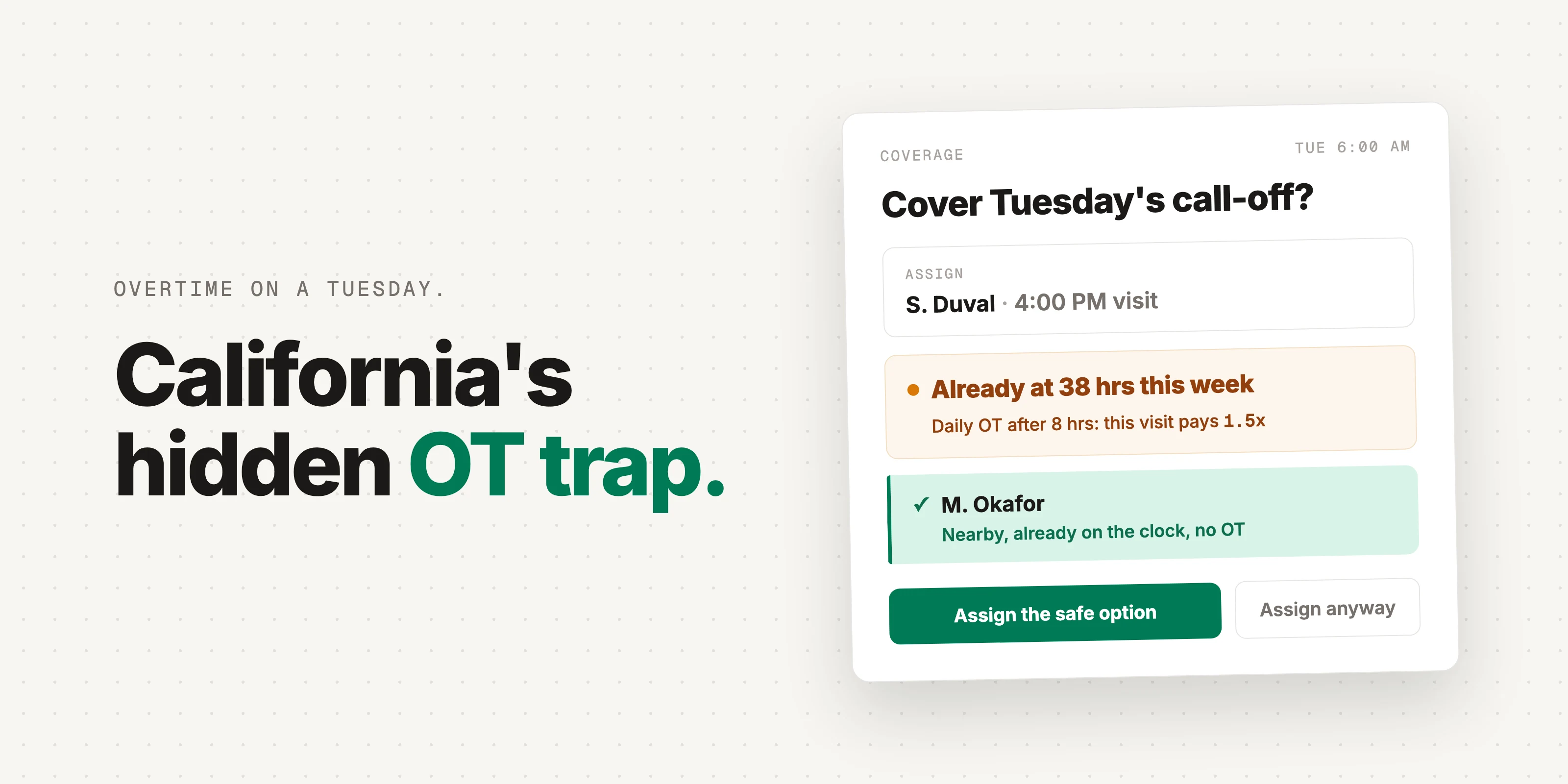
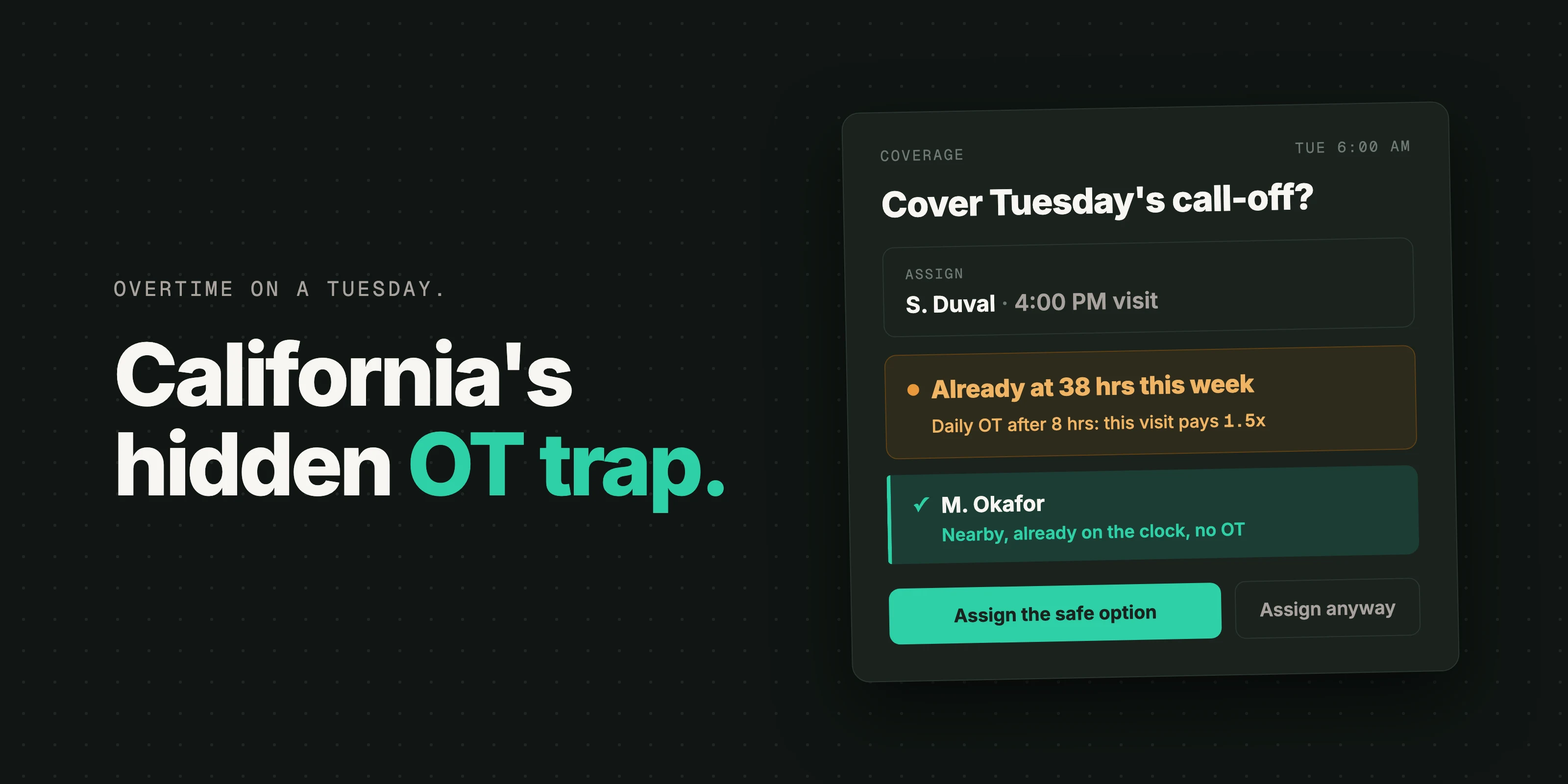
The California Overtime Trap: How Scheduling Blind Spots Quietly Eat Your Margin
In California, a caregiver can hit overtime on a Tuesday. Most agencies don't see it until payroll, when it's already money gone.
SchedulingAugust 7, 2026
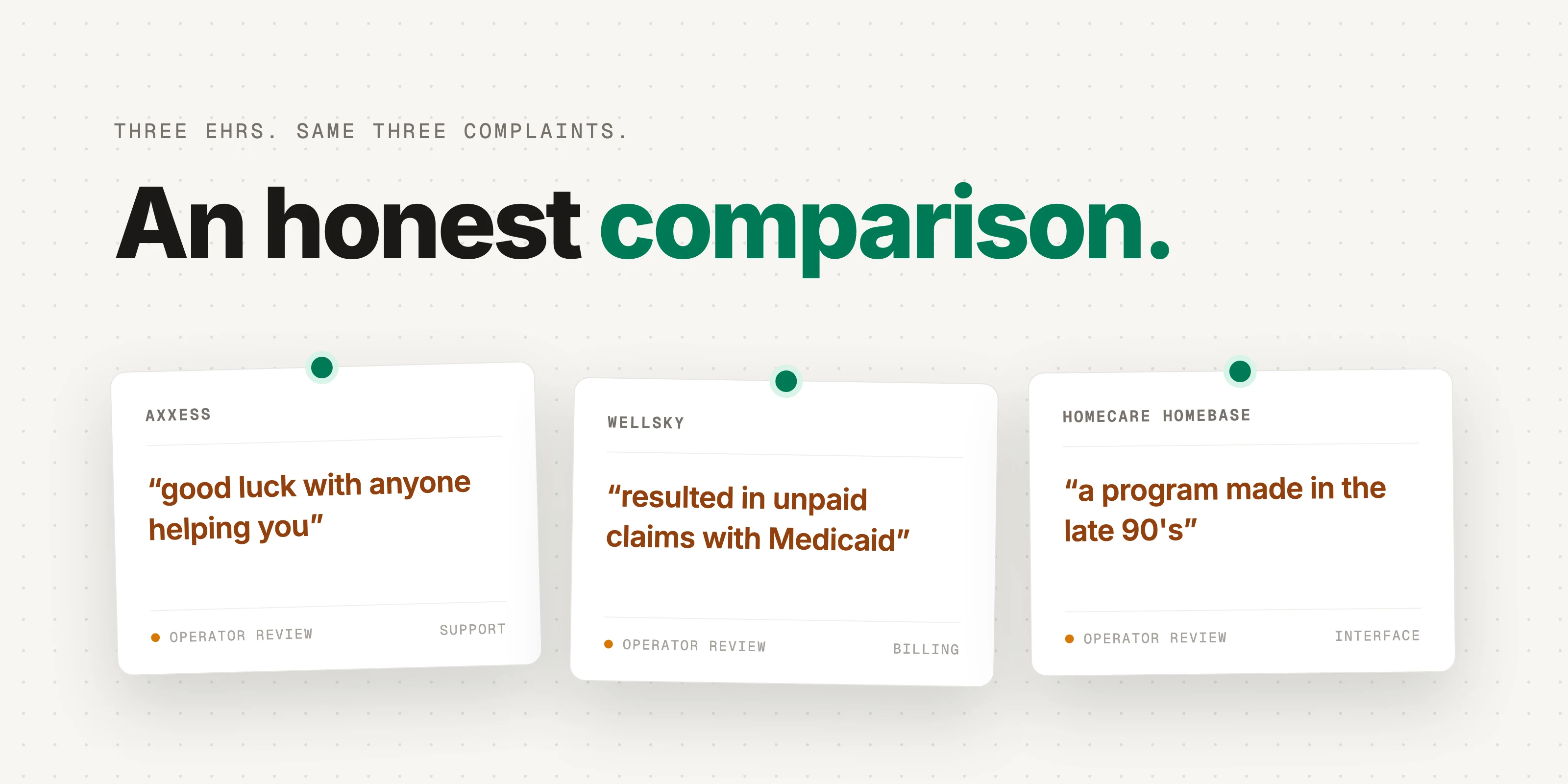
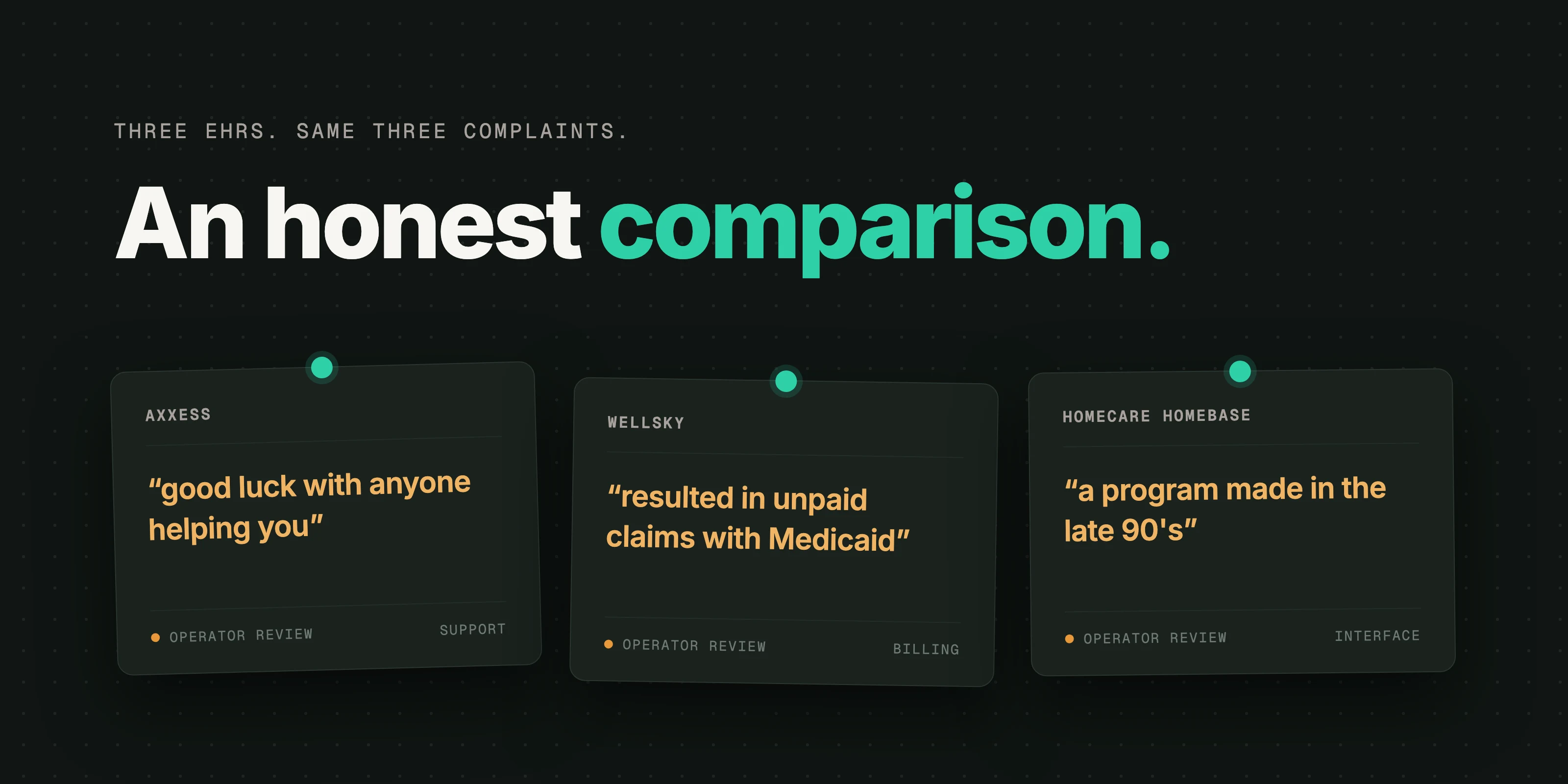
Axxess vs WellSky vs Homecare Homebase: An Honest Comparison for Agency Owners
Axxess, WellSky, and Homecare Homebase run most of home health between them. Here's an honest read on where each wins, where operators say they hurt, and what their AI actually does.
SchedulingJuly 19, 2026
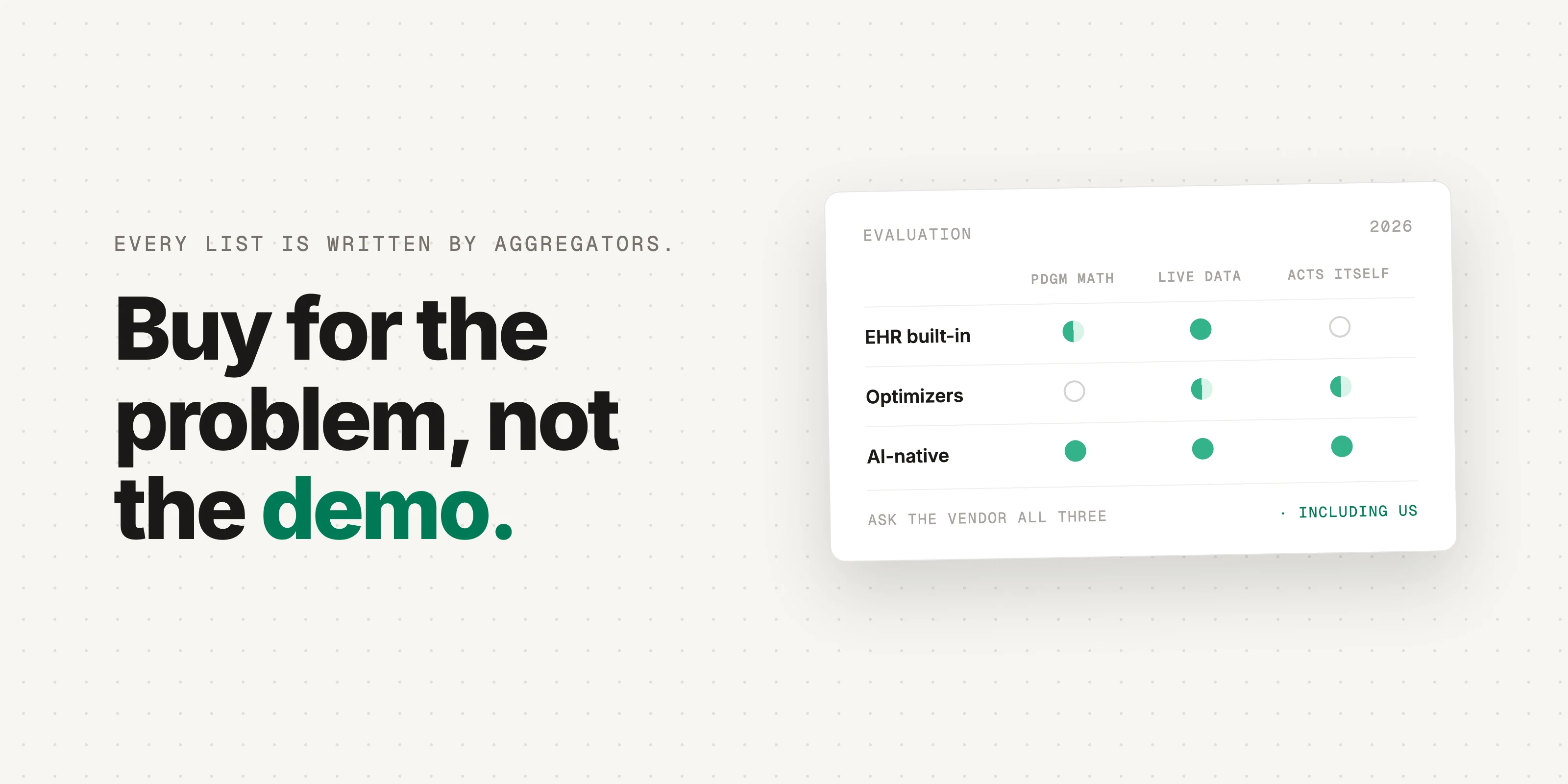
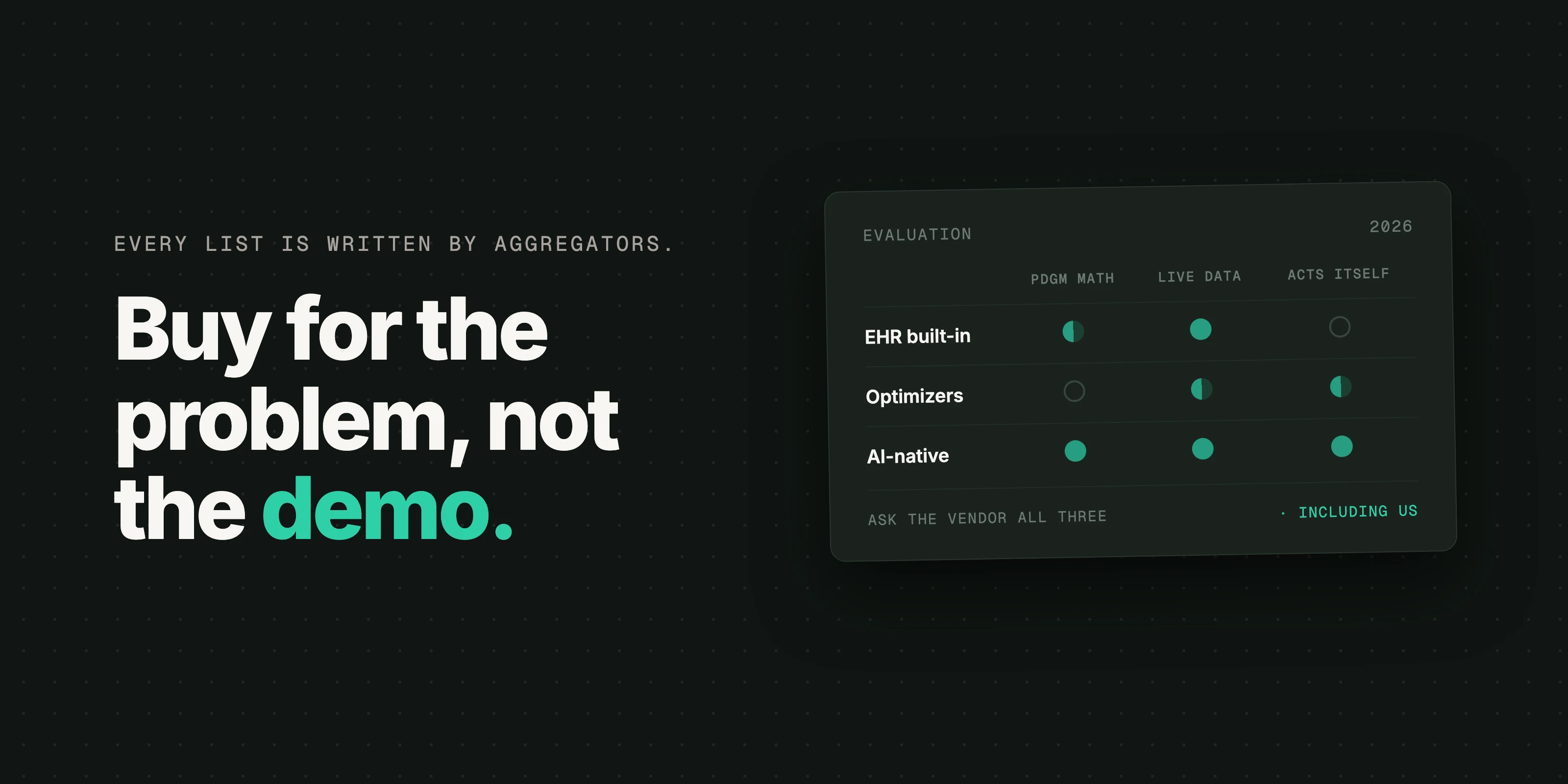
Best home health scheduling software in 2026
The honest answer to 'what's the best scheduling software' is: it depends which problem is killing you. Here's how to tell, and how the 2026 options stack up.