Summary
The three biggest home health EHRs, compared the way an operator would: what each is good at, what agencies actually complain about in their own reviews, and how their new AI stacks up. Written by a competitor, so judge the bias accordingly.
Three platforms run most of home health: Axxess, WellSky, and Homecare Homebase. If you're evaluating or thinking about switching, the listicles ranking them are mostly written by aggregators who've never run an agency. Here's an operator's version, with a disclosure up front: we build software in this market, so we're not neutral. That's exactly why the quotes below come from these vendors' own users on public review sites, not from us.
None of the three is bad software. They're big, mature systems that thousands of agencies run every day. The question isn't which one is best in the abstract. It's which one fits the problem costing you the most, and what you're signing up for.
Axxess
What it is: a cloud EHR spanning home health, hospice, and home care, aimed at everything from small agencies to large ones.
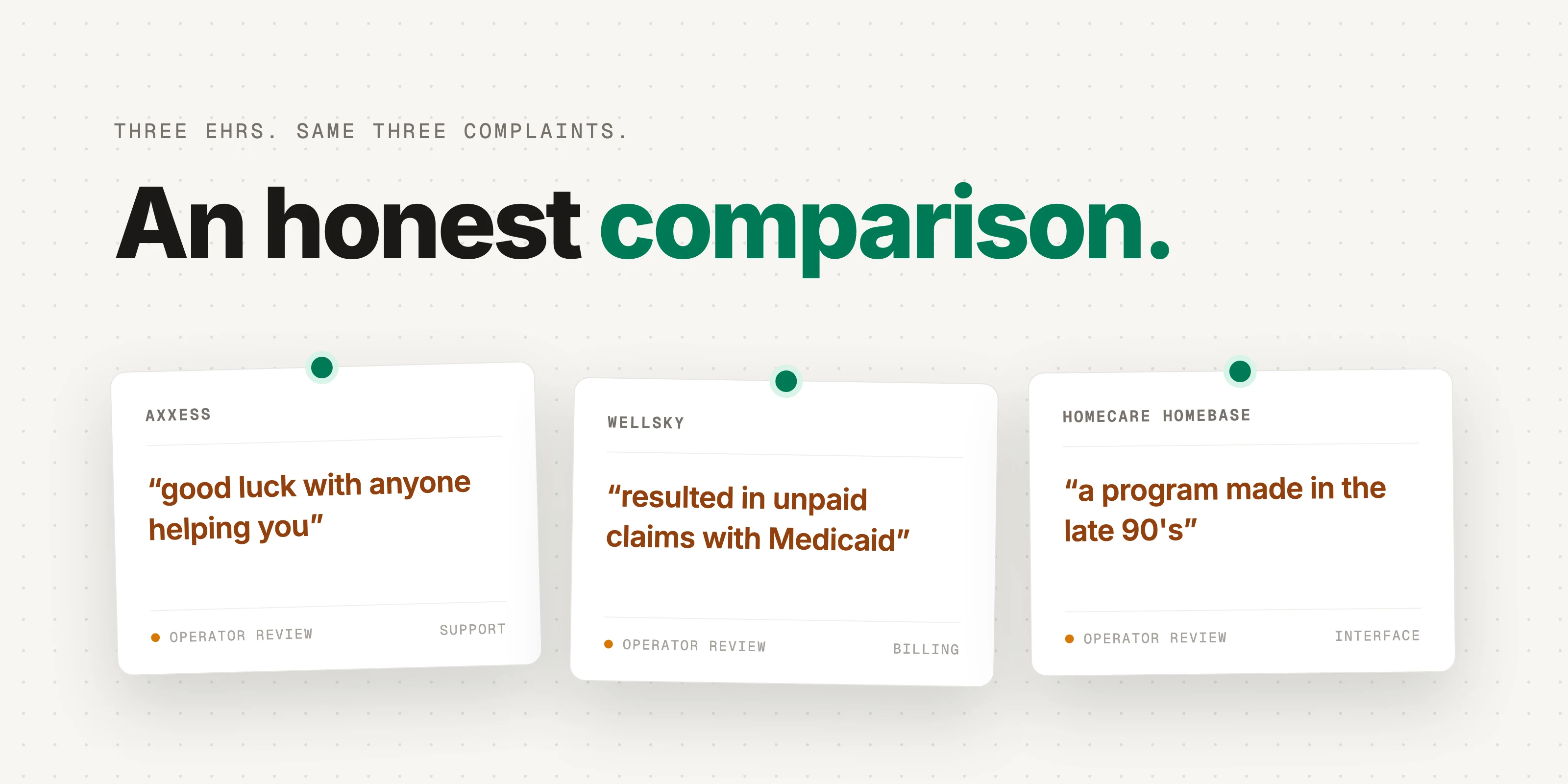
Where operators push back: the recurring theme in reviews is support and stability once something breaks. A Capterra reviewer wrote that "if you never need assistance, the software works as it should but once as there is an outstanding problem, good luck with anyone helping you". Another described a glitch that made hundreds of plans of care unviewable and forced a re-submission scramble. The praise is real too, especially on reporting depth.
AI in 2026: Axxess is shipping "Axxess Intelligence," including an OASIS Scrubber, visit-route optimization, claim validation, auto-generated narratives, and an "Ask Axxess" assistant.
WellSky
What it is: the EHR at the center of a large post-acute suite covering home health, hospice, and personal care.
Where operators push back: recent reviews center on support responsiveness and billing pain. A director wrote on Capterra in January 2026 that they "create multiple tickets for their customer service team regarding critical issues and no one resolves," and, separately, that an unresolved EVV problem had "resulted in unpaid claims with Medicaid." Others praise how easily clinicians can chart in the home.
AI in 2026: WellSky launched SkySense AI referral intake in January 2026, which scores inbound referrals and can auto-accept, auto-decline, or route them, pulling data off documents to cut manual entry.
Homecare Homebase
What it is: a platform built exclusively for home-based care (home health and hospice), serving agencies from startup to enterprise.
Where operators push back: the durable complaint is the dated interface and duplicate work. One Capterra reviewer said the interface felt "as though I was using a program made in the late 90's," and another that the system "forced me to do every part of my job twice." It's also widely credited for the strongest thinking on the staffing shortage.
AI in 2026: HCHB announced Curate: Scribe, an ambient documentation tool embedded in the EHR, alongside intake screening and hospitalization-risk tools.
What the reviews have in common
Read enough of them and the same three themes surface across all three vendors: support that goes quiet when something critical breaks, interfaces that make people enter the same thing twice, and billing or EVV problems that turn into unpaid claims. That's not a knock on any one product. It's the shape of a category built on software architecture that predates the problems agencies now have. Every one of these vendors is now bolting AI onto that architecture.
Where we fit, honestly
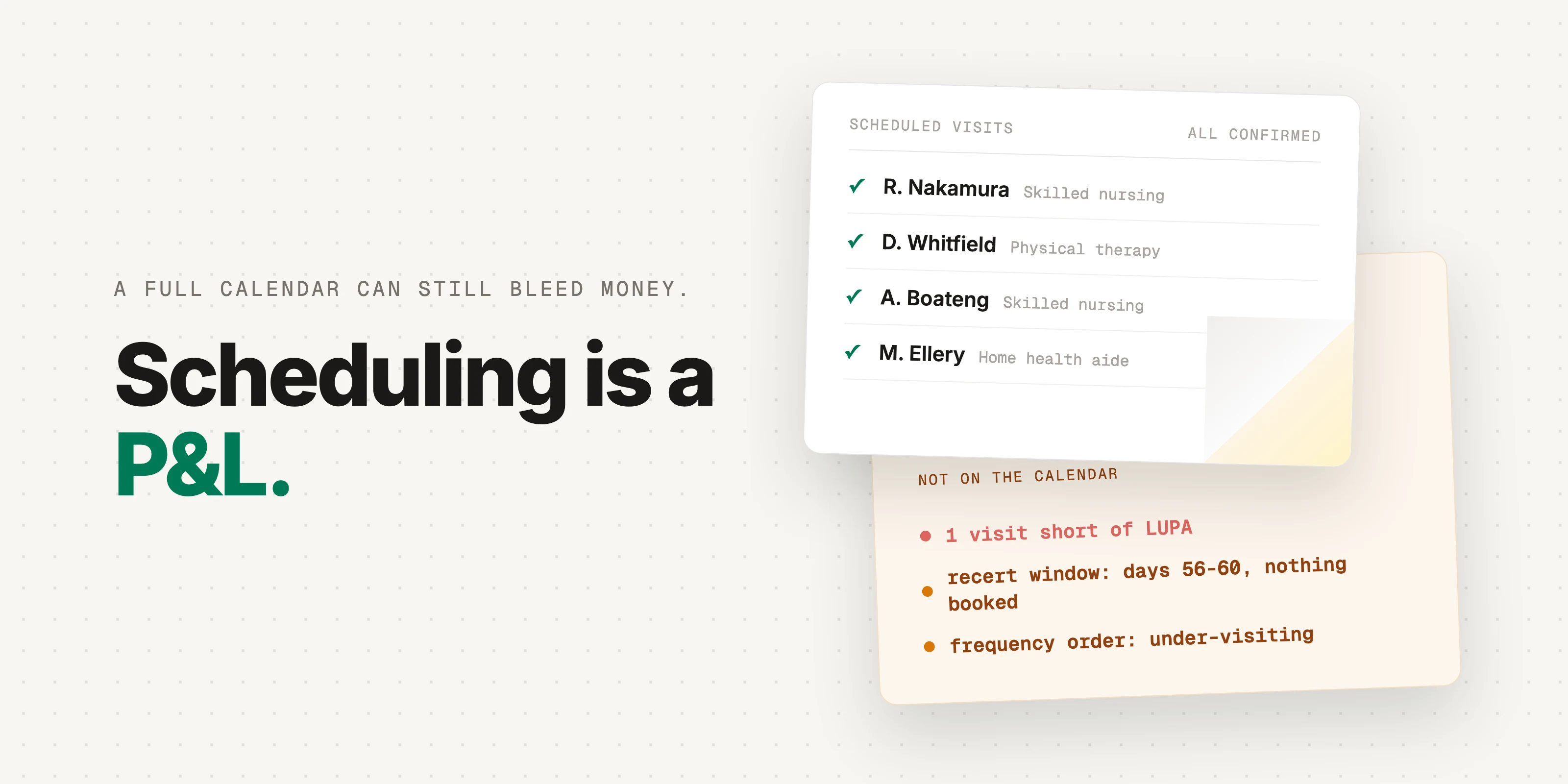
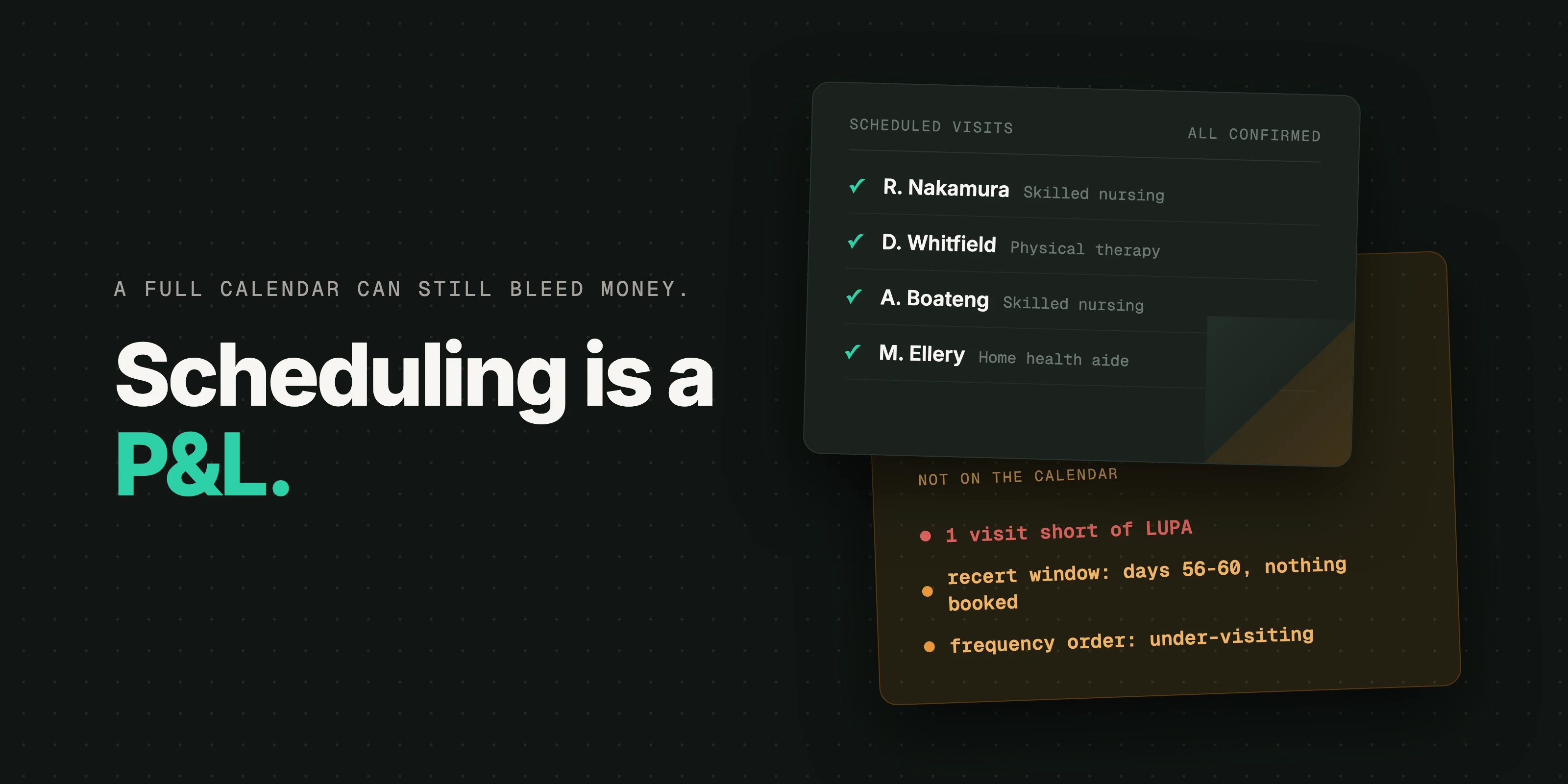
We're one option in this market, and we built Cardon differently on purpose: not to replace your EHR, but to ride on top of the Axxess, WellSky, or HCHB system you already run, read-only on day one, and watch the schedule for the money and compliance risk none of them lead with (LUPA thresholds, recert windows, frequency orders, with dollars attached). That makes us the right call when the schedule's silent revenue leak is your problem, and the wrong call if you need a full EHR replacement today. We won't rank ourselves first on a page we wrote. We'll just show you, on your own data, what we catch: book a demo.
How to actually decide
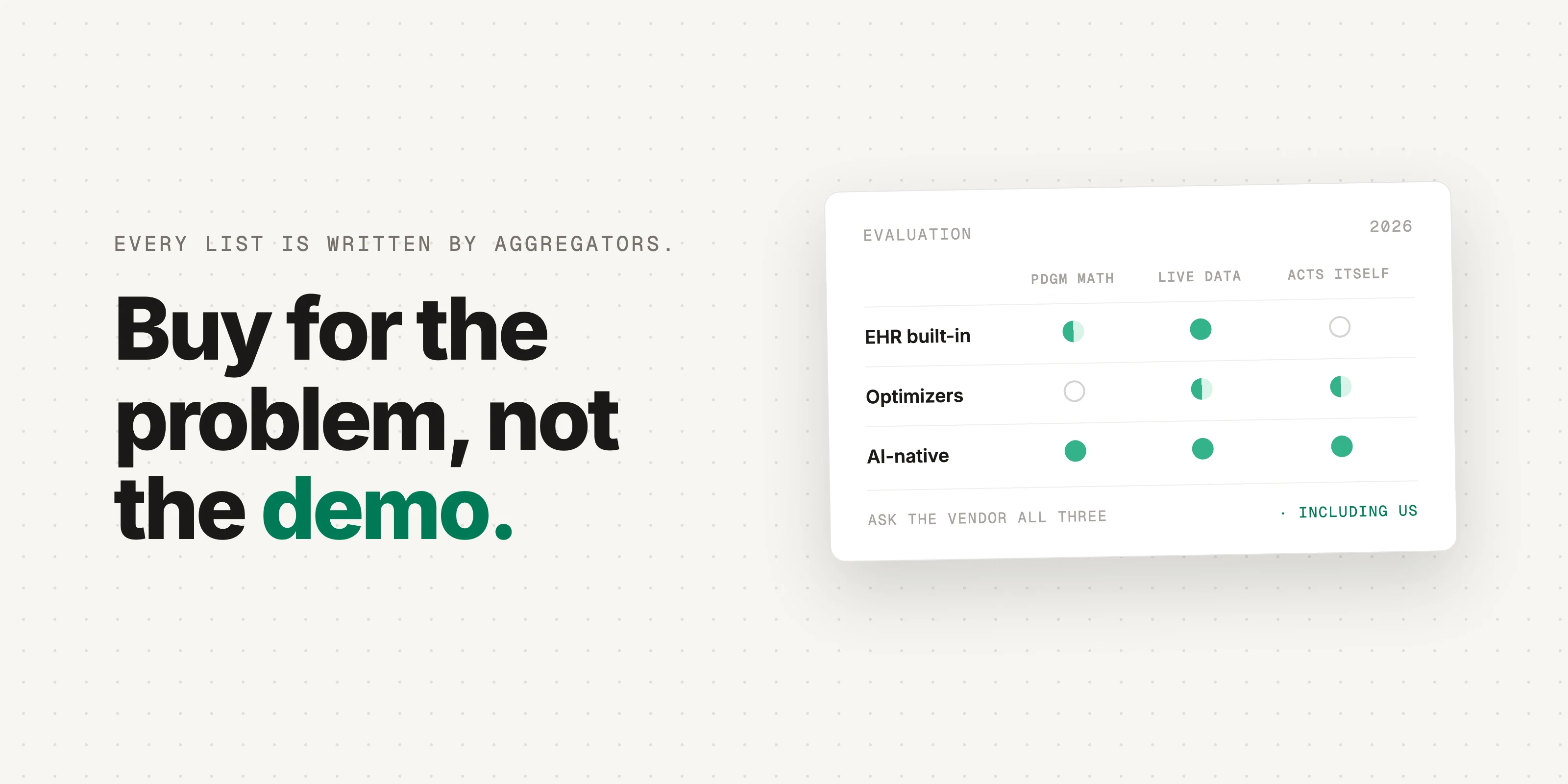
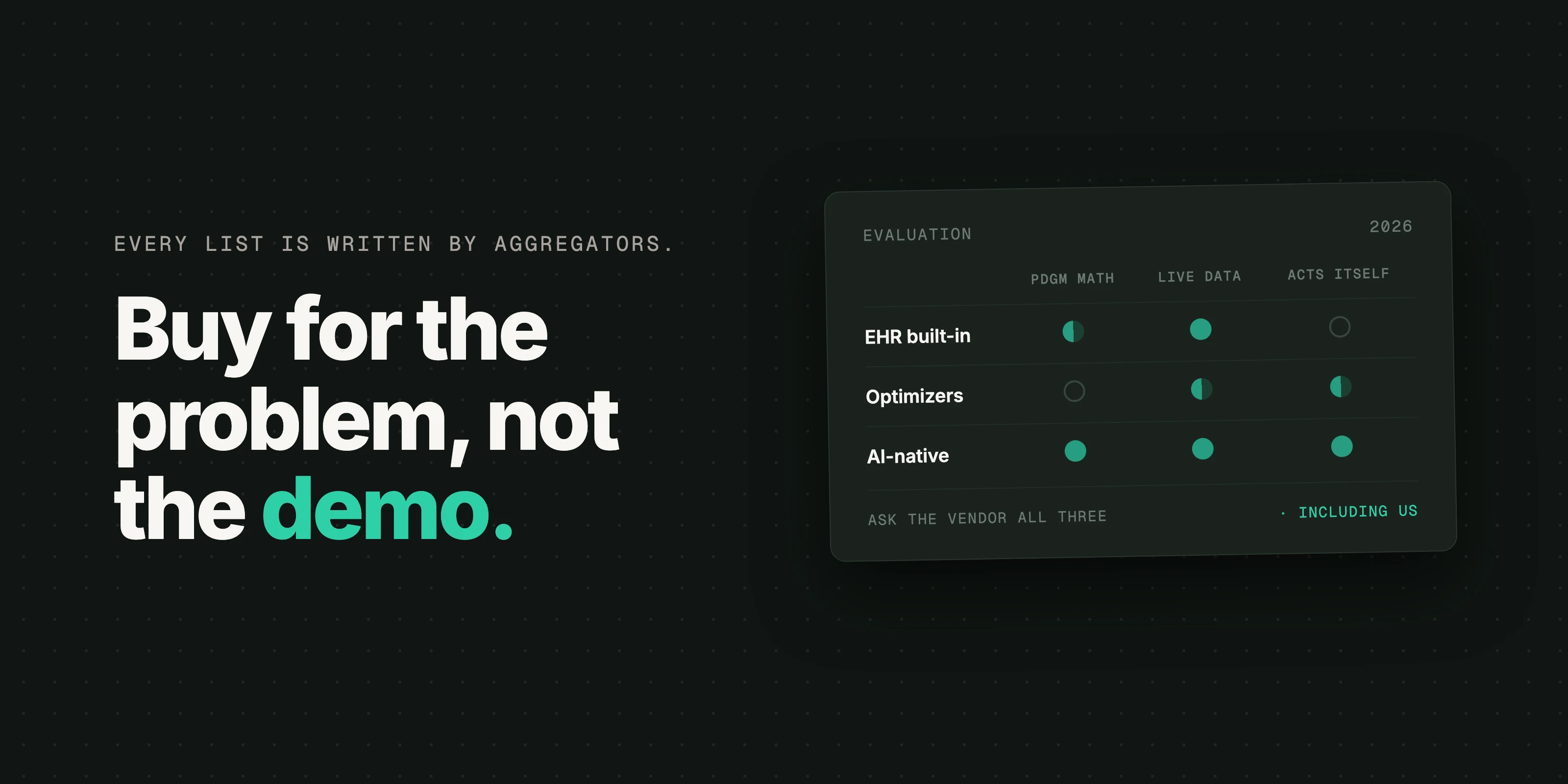
Pricing for all three is quote-based, not public, so ignore the aggregator numbers and get real quotes. Then make every vendor demo the one problem costing you the most this quarter, on your real data, and watch what their AI actually does versus what the slide says. That's the whole evaluation: book a demo if you want ours to be one of them.
Keep reading
SchedulingAugust 14, 2026
The California Overtime Trap: How Scheduling Blind Spots Quietly Eat Your Margin
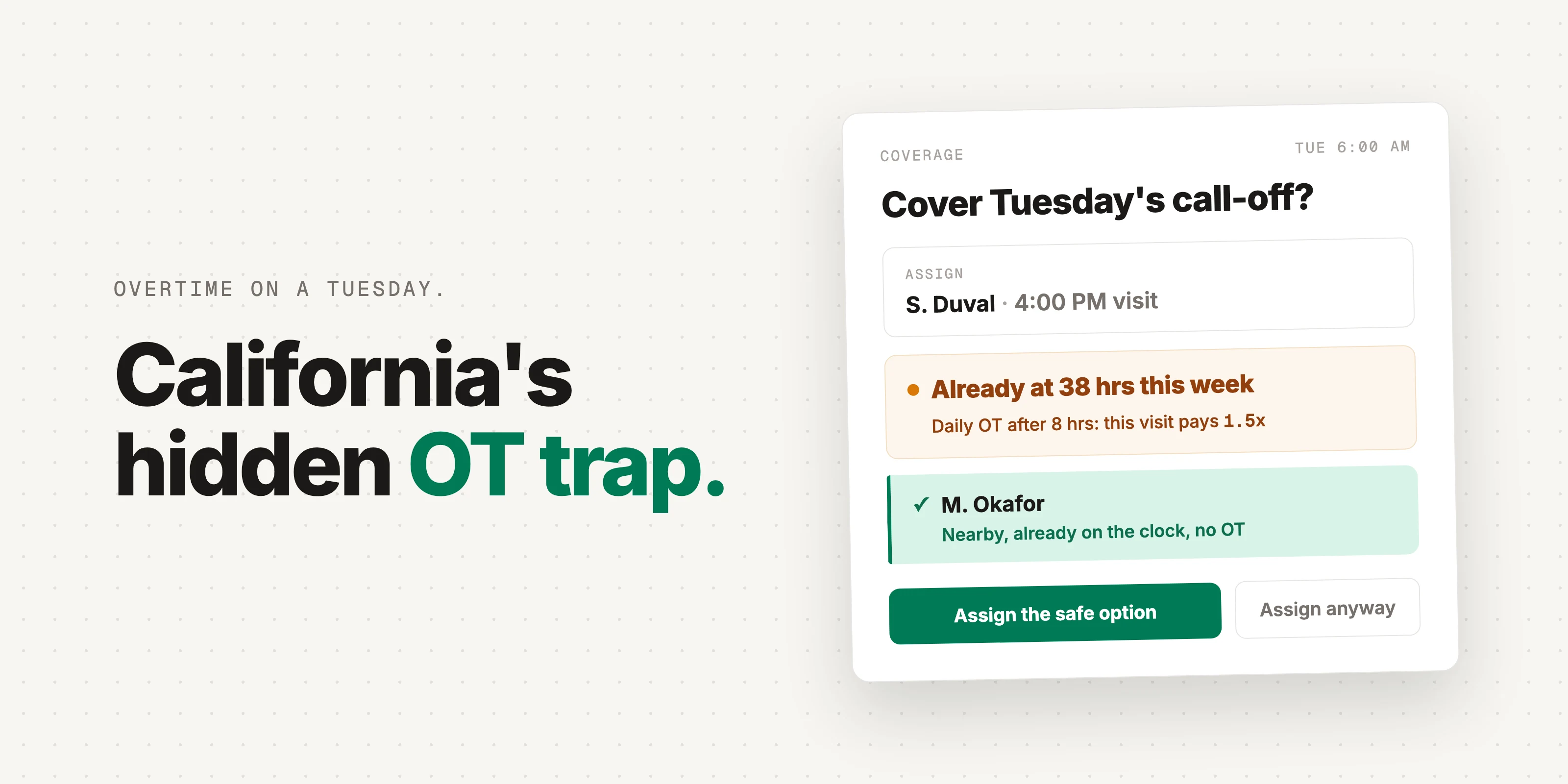
In California, a caregiver can hit overtime on a Tuesday. Most agencies don't see it until payroll, when it's already money gone.
SchedulingAugust 5, 2026
Home Health Scheduling Is Broken. Here's What Good Looks Like.
Good scheduling in home health isn't about drive time. It's about catching the money and compliance risk hiding in the visit counts.
SchedulingJuly 19, 2026
Best home health scheduling software in 2026
The honest answer to 'what's the best scheduling software' is: it depends which problem is killing you. Here's how to tell, and how the 2026 options stack up.